
Sink guide
Stainless steel sink gauge: what it means and which gauge is best
Gauge is the thickness of the sheet of stainless the bowl is pressed from. The scale runs backwards, so the lower the number, the thicker the steel.
16 gauge stainless is 0.0625 of an inch (1.59 mm), which is exactly one sixteenth of an inch. 18 gauge is 0.0500 of an inch (1.27 mm). The whole argument people have about 16 versus 18 is a difference of 0.0125 of an inch, about 0.32 of a millimeter.
Which is best:for a full size kitchen sink, and especially a large single bowl, 16 gauge is the one worth having. The bottom of the bowl flexes less under a heavy pot and drums less under a running faucet. For a bar sink, a prep bowl or a bathroom sink, 18 gauge is genuinely fine and the upgrade buys you very little. Below 18 you start to feel it, and thicker than 16 in a house is commercial spec you'll never use.
The part most gauge articles skip: two sinks with the same number on the box can be very different sinks. The grade of the stainless and the sound deadening on the underside of the bowl decide more about how a sink feels to live with than the thickness does. Both are further down this page.
What this means for your kitchen
If you landed here while planning countertops rather than shopping for a sink on its own, the gauge decision changes less about our end of the job than you would expect. A 16 gauge bowl and an 18 gauge bowl of the same size get the same opening cut in the stone. Three other things about the sink do change the top:
- The mount. Undermount, drop-in and apron front are each finished differently at the shop, and an apron front sink has to be sitting in the cabinet before we template.
- The bowl layout. A large single bowl takes more of the length out of the top than a 50/50 double, which often decides where a seam can sensibly land.
- The reveal. How much stone shows over the rim of an undermount bowl is a choice somebody has to make, and most customers are never asked.
All three are further down this page, in what a stainless sink changes about the countertop. Every other sink material, and what each one does to the top, is on the sink guide. If the countertops are the real project, start there instead.
Stainless steel sink gauge chart
Thickness for stainless sheet, in inches and millimeters. The last column is the same gauge number in mild steel, and it's there to make a point covered below: the two aren't the same scale.
| Gauge | Stainless, inches | Stainless, mm | Mild steel, inches | In practice |
|---|---|---|---|---|
| 14 gauge | 0.0781″ | 1.98 mm | 0.0747″ | Thicker than a normal residential sink. Mostly a commercial spec. |
| 16 gauge | 0.0625″ | 1.59 mm | 0.0598″ | Exactly one sixteenth of an inch. The usual answer for a full size kitchen sink. |
| 18 gauge | 0.0500″ | 1.27 mm | 0.0478″ | One fiftieth of an inch thinner than 16. Common, and fine in a lot of kitchens. |
| 20 gauge | 0.0375″ | 0.95 mm | 0.0359″ | Thin enough that a big bowl starts to flex and drum under water. |
| 22 gauge | 0.0313″ | 0.79 mm | 0.0299″ | Bar sinks, utility sinks, and the bottom of the price range. |
Three things gauge charts online get wrong
The scale is inverse, and it's easy to state backwards. A bigger gauge number is thinner metal. 22 gauge is thin, 14 gauge is thick. If a listing tells you a higher gauge is a heavier sink, stop reading it.
Stainless and mild steel aren't the same scale at the same number. 18 gauge stainless is 0.0500of an inch. 18 gauge mild steel is 0.0478 of an inch. Galvanized steel at 18 gauge is different again, at 0.0516. The gauge number is a label attached to a different table for each metal, which is exactly why quoting a single thickness for “18 gauge” without saying which metal is how these charts end up contradicting each other.
The comparison to a car body panel doesn't hold up.You will see sink gauge explained as being the same thickness as the fenders on your car. It sounds right and it isn't dependable. Body panel steel varies by manufacturer, panel and model year, and modern panels are commonly thinner than a 16 gauge sink rather than the same. Actual thickness in inches and millimeters is a fact you can check. A car comparison is not.
Worth knowing that the standards bodies aren't fans of gauge numbers either. ASTM, which writes the specification covering stainless sheet, discourages the use of gauge numbers and prefers a stated decimal thickness, on the grounds that there's no general agreement about what a gauge number means. So if a sink is quoted in decimal inches or millimeters rather than a gauge number, that's the more precise spec, not a vaguer one.
The number nobody puts on the box: the grade
Gauge tells you how thick the steel is. Grade tells you what the steel is, and for corrosion that matters more. Two grades cover almost every sink you will look at.
- 304 stainless
- The grade most kitchen sinks are made from. The numbers are the recipe: roughly 18% chromium and 8 to 10% nickel. The nickel is what buys the corrosion resistance, and it's also the expensive part. Non-magnetic, so a fridge magnet won't stick to it.
- 430 stainless
- A cheaper grade with the chromium but effectively none of the nickel. It costs less and it resists corrosion less well, which is why it shows up on appliance panels and budget sinks. It's magnetic, so the fridge magnet trick actually tells you something.
What the gauge number leaves out
Four things that change how a stainless sink feels to use, none of which appear in a gauge chart.
The grade of the steel
Two sinks can both be 16 gauge and be made of different stainless. Grade decides how well the metal shrugs off salt, bleach and hard water; gauge only decides how thick it is. A thick sink in a cheap grade is a thick sink that spots.
Sound deadening
Most of what people call a cheap-feeling sink is noise, not thickness. Pads glued to the underside of the bowl and a sprayed undercoating kill the drumming when the faucet hits stainless. A well padded 18 gauge bowl sounds better than a bare 16 gauge one, and that's the single biggest reason two sinks with the same number on the box feel different in a showroom.
Bowl depth and corner radius
A deep bowl hides dishes and swallows a stock pot. A tight corner radius, the near-square zero radius look, is the current style and it is harder to wipe out than a softer R10 or R15 corner. Neither has anything to do with gauge, and both change how the sink feels to use every day.
How it is mounted
An undermount bowl hangs off the underside of the stone on clips and adhesive. Get that wrong and no gauge saves you. It's also why we tell every customer the same thing we say on our care page: an undermount sink is not a shelf and it isn't a step stool.
Does stainless rust? Not easily, and not never
Plenty of sink pages will tell you stainless steel never rusts. It's a good sales line and it isn't true. Stainless resists corrosion because chromium forms a thin passive layer on the surface, and that layer can be beaten. Three normal kitchen habits are how it happens, and all three are easy to avoid once somebody tells you.
- Bleach left standing in the bowl
- This is the common one. Chlorine attacks the passive chromium layer that makes stainless stainless. A quick rinse of diluted bleach that gets washed away is one thing; a capful sitting in the bottom of the bowl overnight is how you get pits that never come out. Rinse it out and dry it.
- Steel wool and wire pads
- Scrub stainless with steel wool and you leave tiny carbon steel particles behind in the finish. Those particles rust, and it looks exactly like your sink is rusting. Use a non-scratch pad or a nylon brush instead, and work with the grain of the finish.
- Salt and hard water sitting on it
- Salt is a chloride too. Wet salt, brine from a thawing bag, or hard water left to evaporate in the same spot every day all get to a stainless surface eventually. None of this is dramatic, and none of it happens in a week. It's just the reason the answer to "does stainless rust" is "not easily, and not never".
None of that makes stainless a delicate material. It's the toughest everyday sink surface on the market. It just isn't immune, and a page telling you otherwise has told you one thing you can check and got it wrong. Our full countertop and sink care guidance, including the caulk joint round the bowl, is on the care page.
What a stainless sink changes about the countertop
This is the half of the sink decision that a plumbing retailer has no reason to mention, and it's the half we deal with.
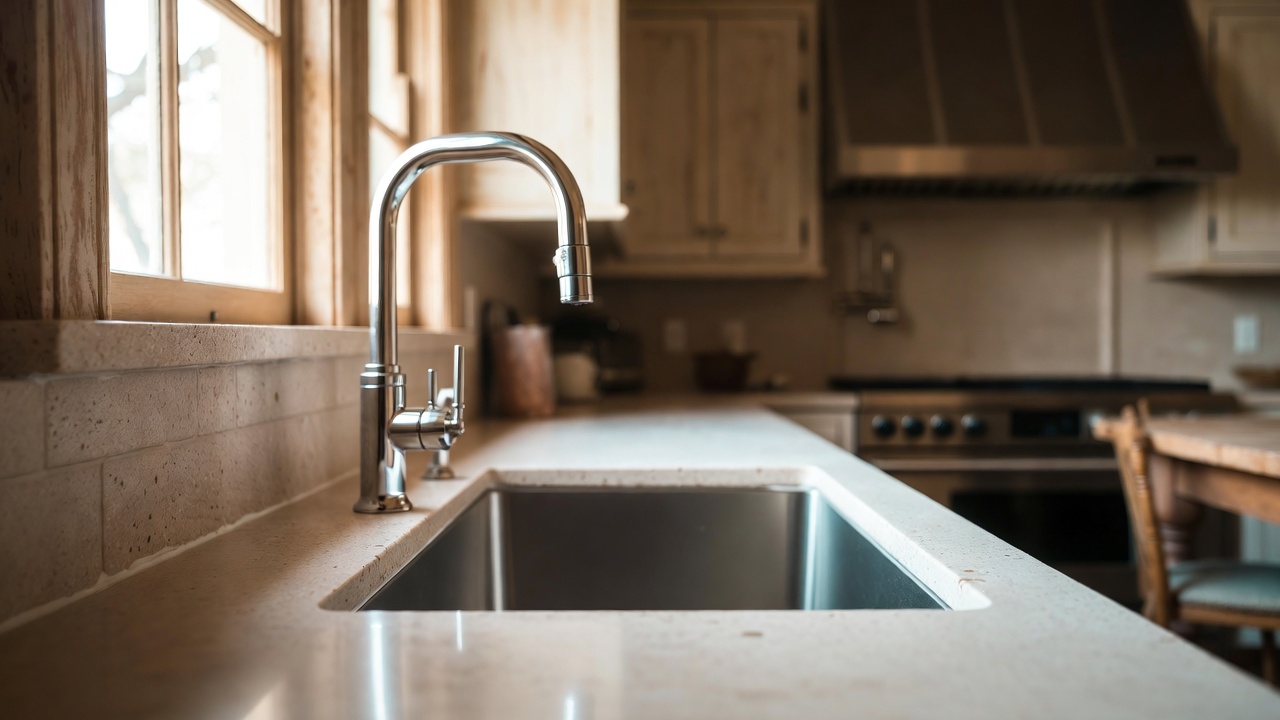
The reveal. On an undermount sink, how much stone shows over the rim of the bowl is a choice made at the shop with a router. A positive reveal leaves a visible ledge of stone inside the opening. A zero reveal follows the rim exactly. A negative reveal cuts slightly inside the rim so the stone overhangs the bowl and you can wipe straight in with nothing to catch on. Most customers have never been asked which one they want.
Bowl layout and the seam. A big single bowl and a 50/50 double take a different amount of the run out of the top, which changes where a seam can sensibly land. On a long run with an island, the sink position is often what decides the seam, not the other way round.
The drain and the corner radius.An offset drain changes what fits in the cabinet underneath. A tight, near-square corner radius is the current look and it's more work to wipe out than a softer corner. Neither has anything to do with gauge, and both show up every day.
Where our work stops
We cut and fit the countertop for the sink and we set the bowl to the stone. We never reconnect plumbing, electrical or gas. The supply lines, the drain and the disposal are your plumber's work, so plan on booking them for after our install day rather than the same morning.
Sink gauge questions, answered straight
- What does sink gauge mean?
- It's the thickness of the stainless sheet the bowl is pressed from. The scale is inverse, so the lower the number the thicker the steel. 16 gauge stainless is 0.0625 of an inch, or 1.59 mm. 18 gauge is 0.0500 of an inch, or 1.27 mm. Gauge is a nominal figure rather than a measured thickness, which is part of why the standards bodies would rather everyone quoted a decimal thickness instead.
- Is 16 or 18 gauge better for a stainless steel sink?
- 16 gauge is thicker, by 0.0125 of an inch or about a third of a millimeter. In a large single bowl that difference is worth having: the bottom of the bowl flexes less underfoot of a heavy pot and drums less under a running faucet. In a smaller bowl, a bar sink or a bathroom sink, 18 gauge is genuinely fine and paying for 16 buys you very little. What you should not do is pick 16 gauge and ignore the grade of the steel and the sound deadening, because those two decide more about how the sink feels than the thickness does.
- Is a lower gauge always better?
- No, and it stops mattering fairly quickly. Going from 22 gauge to 18 is a large, obvious improvement. Going from 18 to 16 is a real but modest one. Going below 16 in a house sink is mostly buying commercial spec you'll never use. A thick bowl in a cheap grade of stainless, badly mounted, with no pads on the underside is a worse sink than a thinner one that gets all three of those right.
- Does granite composite have a gauge?
- No. Gauge is a sheet metal measurement, so it only describes metal sinks. A granite composite bowl is crushed stone in a resin binder, molded rather than pressed, so there's no sheet and no gauge number. If you want to compare two composite sinks, compare wall thickness and weight. If a listing quotes a gauge for a composite sink, whoever wrote it copied the spec from a steel one.
- Does stainless steel rust?
- Not easily, and not never. Stainless resists corrosion because chromium forms a thin passive layer on the surface, and that layer can be beaten. The three normal ways it happens in a kitchen are bleach left standing in the bowl, chlorides like wet salt or brine, and carbon steel particles left behind by scrubbing with steel wool, which then rust in place and look like the sink is rusting. Rinse the bowl out, keep steel wool away from it, and none of the three ever comes up.
- What is the difference between 304 and 430 stainless?
- 304 has nickel in it, roughly 8 to 10%, which is what buys most of its corrosion resistance. It's what better kitchen sinks are made from and it isn't magnetic. 430 has the chromium but effectively no nickel, so it costs less and resists corrosion less well. It's magnetic, so a fridge magnet that sticks firmly to a sink is a small clue about which one you are looking at.
Cayce, South Carolina
We cut the hole, so we see how this ends
Most of what's on this page came from cutting stone to fit sinks in the Midlands rather than from a spec sheet. If you're local and planning countertops, the sink question is an easier one to settle standing in front of a slab.
If you want to make one visit count, bring rough measurements or a cabinet layout if you have one. That's enough for us to talk about bowl size, the seam and the cutout with the actual stone in front of you, instead of guessing at it.
All sink materials, and what each does to the top →
Showroom hours and address in Cayce →