
Stone, straight
Why the dust risk lives in fabrication, not the finished countertop
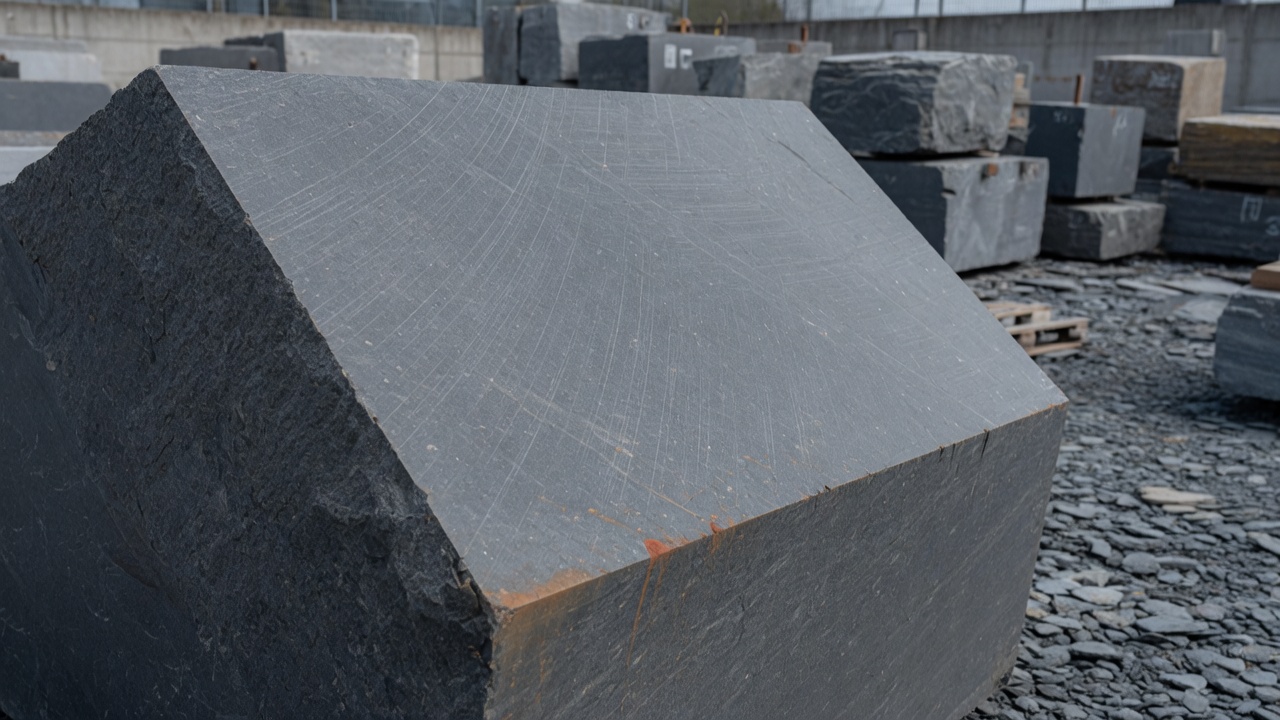
The most useful thing to understand about silica and countertops is also the simplest: the dust comes from disturbing the stone, not from the stone existing. Once you have that, most of the confusion clears up on its own.
Respirable silica is made, not emitted
Crystalline silica is locked into the stone. It becomes a breathing hazard only when the material is mechanically broken down into fine particles, which happens when you cut it, grind it, drill it, or polish it. That is what produces respirable crystalline silica, the fraction fine enough to reach deep into the lungs.
A cured, intact, installed slab is not doing any of that. It is not shedding respirable dust into your kitchen air while it sits there. This is why a finished, installed, undisturbed countertop in normal household use does not release respirable crystalline silica, and why cooking, cleaning, and daily living with it are not exposure risks.
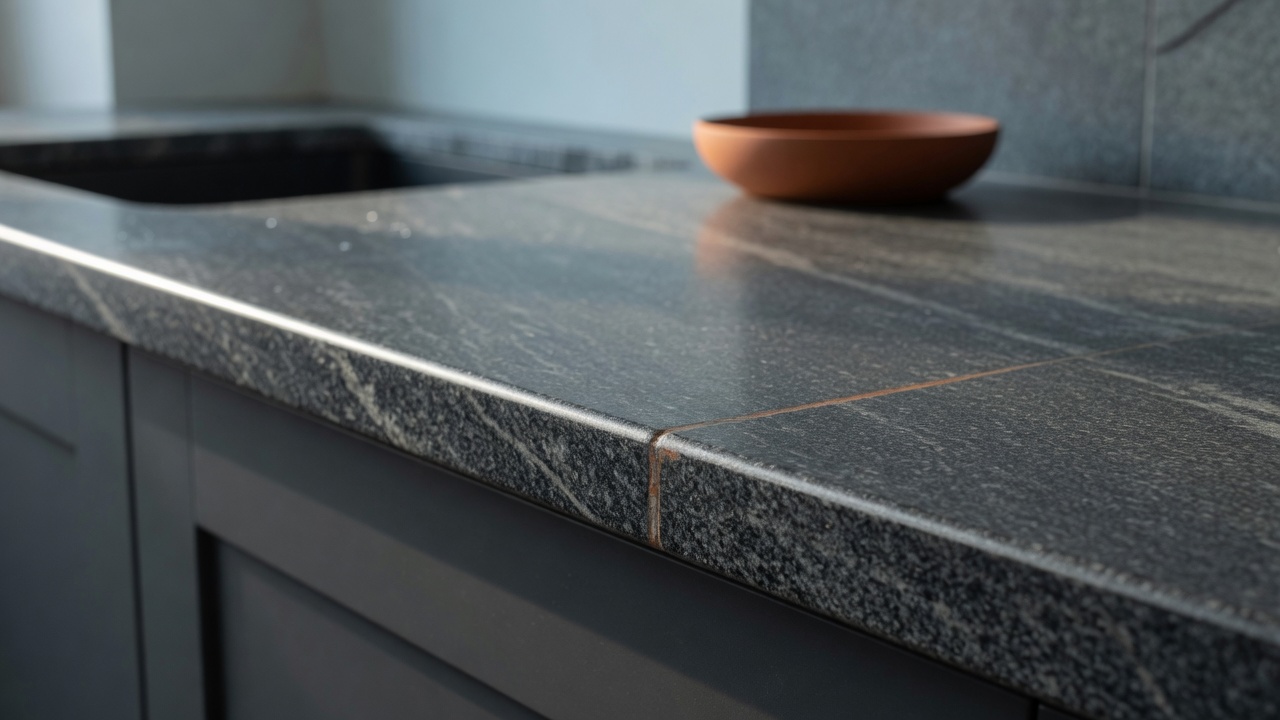
The finished, installed surface does not release respirable silica in normal use. Illustration.
So the exposure point is the shop
If the dust is made by disturbing the stone, then the exposure point is wherever the disturbing happens: fabrication. Cutting a slab to size, cutting the sink and cooktop openings, shaping and polishing the edges, all of it generates dust. Repeat that day after day, and without controls it becomes the occupational hazard behind silicosis.
That is also why the work is regulated and why it is skilled. The OSHA silica standard is built around keeping that dust out of the air: cutting and grinding wet so water knocks the dust down, capturing dust right at the tool, using respiratory protection based on an exposure assessment, and cleaning up without stirring dust back into the air. Done that way, the same task that is dangerous dry becomes controlled.
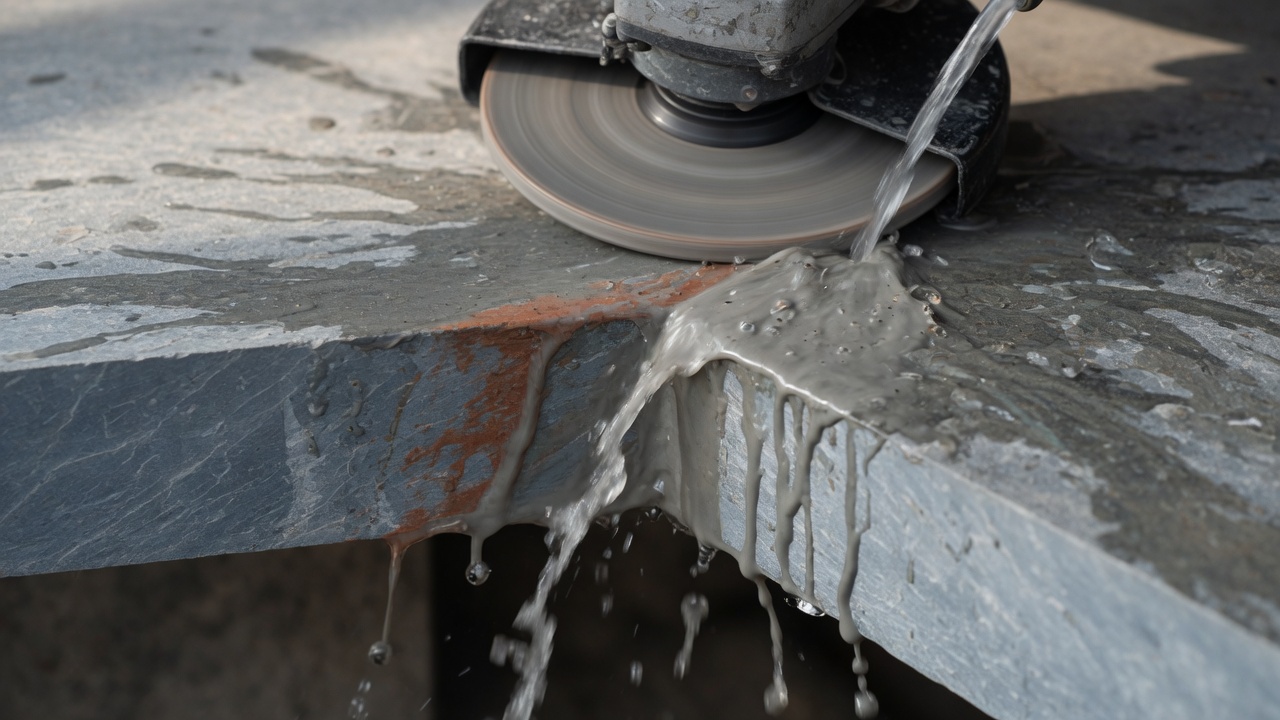
Wet shaping and polishing suppress the dust at the source, one of the core controls a responsible shop uses alongside ventilation and respiratory protection. Illustration.
The one honest caveat: do not become the fabricator
Because the risk is about disturbing the stone, there is a real edge case worth stating plainly. If someone cuts, grinds, sands, or drills an installed countertop, that produces respirable silica, right there in the home. The usual culprit is a well-meaning DIY change: enlarging a sink cutout, drilling for a new faucet, or grinding a chipped edge.
So the rule is simple. Do not dry-cut, grind, sand, or drill your countertop yourself. If a counter needs to be modified, repaired, or removed, including during a renovation or demolition years down the road, have that done by professionals using wet methods and dust control. The finished product is safe to live with in normal household use. The moment anyone starts cutting into it without protection, they have recreated the fabrication hazard in the kitchen, and that is the situation to avoid.
This article is general educational information about stone and stone safety. It is not medical, occupational-safety, industrial-hygiene, or legal advice. For workplace safety, rely on OSHA, NIOSH, and a qualified industrial hygienist; for a health concern, see a physician. Information is current as of publication and may change.
Sources: OSHA Respirable Crystalline Silica standard (29 CFR 1910.1053 and 1926.1153) and OSHA Fact Sheet 3768, plus the 2026 OSHA/NIOSH hazard alert on engineered stone; NIOSH and CDC guidance on silica and silicosis; the Massachusetts Department of Public Health safety alert (2025); the IARC classification of crystalline silica; and Safe Work Australia for the engineered-stone ban. In South Carolina, the silica standard is enforced through the SC State Plan (SC OSHA).