
Buying guides
Why quartzite like Taj Mahal costs more, straight from the quarry math
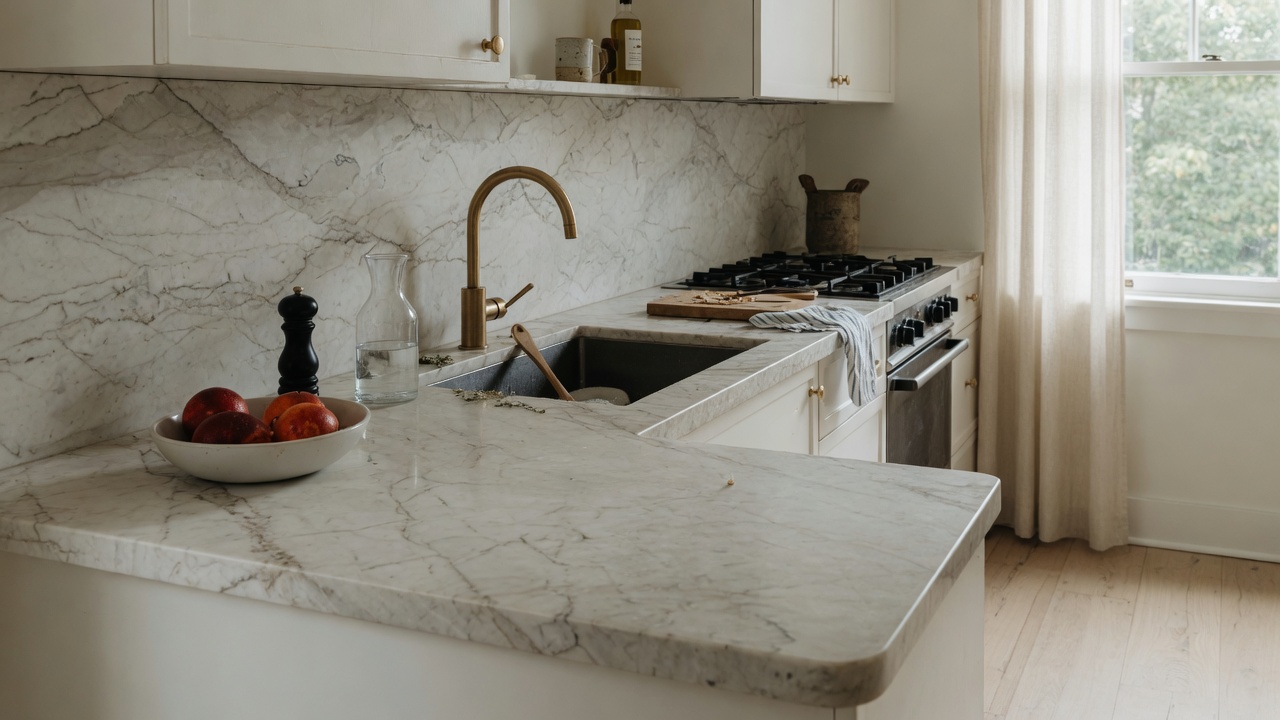
Customers ask me this a lot when they see the price tag on Taj Mahal or a similar quartzite next to a granite that looks almost as good. Here's how I explain it, because it's not just a marketing story. It comes down to math at the quarry and hours in our shop.
So why does Taj Mahal cost more than a granite that looks similar?
It starts in the ground. When a quarry cuts a block of quality quartzite, a lot of that block doesn't make it to slab form. Fractures, color inconsistency, and weak spots get cut away or the whole block gets rejected. On a good granite deposit, yield is high, most of what comes out of the ground turns into sellable slabs. On a premium quartzite deposit, it's common for less than half the material to come out usable. That's not a guess we make up to justify price, that's just how these deposits form. You're paying for the whole block, not just the pretty slab that survived it.
But once the slab exists, why does it still cost more to install?
Because the slab that made it to market still isn't easy to work with. Quartzite is hard, but hard isn't the same as forgiving. It can have natural fissures running through it that look like cracks but aren't, until you cut it wrong and they become cracks. Our fabricators have to slow down. They pick their cuts more carefully, they support the slab differently while cutting, and they handle it with more people during install because a crack risk is real if it gets flexed the wrong way. A granite job might move through our shop in a normal production window. A tricky quartzite slab takes longer at every step: template, cut, polish, and set. That time isn't padding, it's what keeps the slab from breaking on the way to your kitchen.
Is Taj Mahal actually worth paying more for, or is it just the name?
The name gets attention, but the reason it holds value is the look and the way light moves through it, that soft, warm movement that a lot of granites can't match. Whether it's "worth it" is personal. Some homeowners want that specific look and are glad to pay for it. Others get a granite or a different quartzite that gets them 90% of the look for meaningfully less money. I'll tell you straight which one you're looking at when you're standing at the slab, because trade names get slapped on a lot of different stones and Taj Mahal from one quarry can behave differently than Taj Mahal from another.
Does the higher price mean it performs better in my kitchen?
Not exactly, and this is where I want to be careful. Quartzite is one of the harder stones we work with and it resists scratching better than marble, but even quartzite can scratch if you try hard enough, so use a cutting board. It also needs sealing like other natural stone and more often, and it should get resealed periodically, usually about once a year for most kitchens. Price reflects how hard the material was to get out of the ground and how carefully it had to be handled, not some added toughness once it's sitting on your cabinets. A cheaper quartzite and an expensive one can both hold up fine day to day if they're the same species of stone underneath the trade name.
Could I get burned buying a "quartzite" that isn't really earning that price?
Yes, and this happens more than people think. Some slabs sold as quartzite are actually a softer calcite stone that etches like marble, meaning it can dull if lemon juice or vinegar sits on it. If you're paying quartzite prices, you should be getting quartzite performance. We go by how the stone actually behaves, not just what's printed on the sticker at the slab yard. If you want that reassurance, bring a lemon wedge with you or ask us to show you a test spot on a scrap piece before you buy.
Is there a way to get the Taj Mahal look without the full price?
Sometimes. There are quartzites with similar movement that come from deposits with better yield, so they cost less to bring to market. There are also granites and some quartz options that mimic the warm, veined look. None of them are identical, stone is stone, but if budget matters more to you than having the exact named slab, tell us that up front and we'll show you what's close.
If you want to see what I mean about the difference in slab quality and price firsthand, come by 2015 Charleston Hwy in Cayce. I'll walk you past a few quartzite blocks and show you exactly where the yield problem shows up on the slab, it's easier to see than to explain.