
Buying guides
Undermount vs drop-in sinks: what stone counters need from each
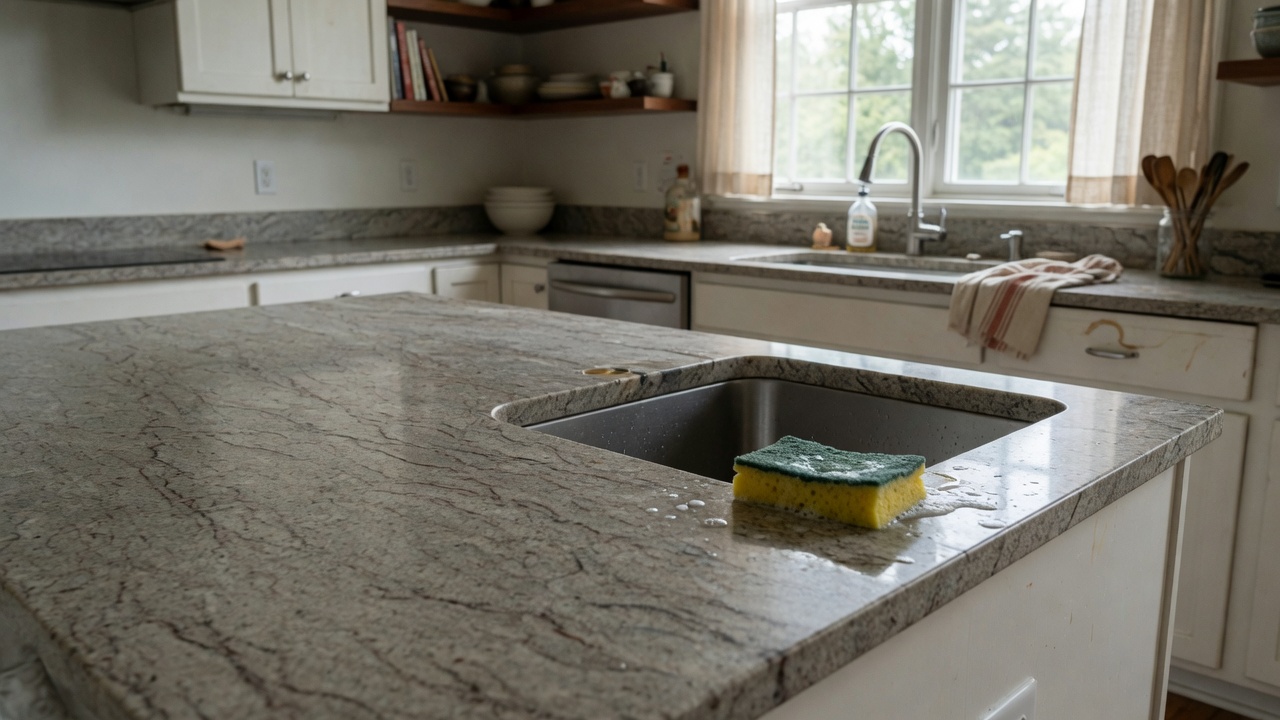
When you pick a sink for a stone countertop, you're really picking a fabrication process too. Here's how each one plays out from start to finish, so you know what you're signing up for before we ever cut the slab.
Step one: templating
For an undermount sink, we template after the sink is on site or we have exact spec drawings for it. The cutout has to match the sink's rim precisely, because the sink hangs from clips and silicone under the stone with no lip to hide small gaps. Get the template wrong and you'll see it.
For a drop-in (also called self-rimming), the sink itself has a flange that sits on top of the counter and covers the cutout edge. Templating is more forgiving here since the sink's rim does the covering work, not the stone edge.
Step two: cutting the opening
Drop-in cutouts are simple, straight cuts sized to the sink's flange. Undermount cutouts take more work. We polish the underside edge of the opening because it's visible from below the rim, and on some jobs we polish part of the cutout edge from above too, especially at the front, so it looks clean where the counter meets the sink.
This is also where stone choice matters. Granite and quartzite hold up well to the extra edge work an undermount needs. Softer or more fragile stones need extra care and sometimes reinforcement around the cutout so the edge doesn't chip during use.
Step three: mounting
Undermount sinks get set before the counter goes in, then the stone drops on top and gets sealed to the sink with silicone from underneath, plus mounting clips or an epoxy bond depending on the sink material. It's a two-person, careful install. Cast iron sinks are heavy, and getting the reveal even all the way around takes real attention.
Drop-in sinks go in after the counter is set. They sit in the hole, clip down from underneath, and get a bead of caulk around the rim where it meets the stone. Simpler mechanically, and easier to swap out later if the sink ever needs replacing.
Step four: living with it (cleaning and daily use)
This is where the two options really diverge for a homeowner. With an undermount sink, there's no rim. You can wipe crumbs and water straight off the counter into the sink with one swipe of a sponge. No seam to catch grime, no rim to scrub.
With a drop-in, that rim is a permanent line where water sits and gunk collects. It's not a dealbreaker, plenty of kitchens run drop-in sinks for decades, but it's more edge to clean and reseal over time. The caulk line at the rim can also wear and need to be redone every few years to keep water from getting underneath.
Step five: how it looks
Undermount reads cleaner and more modern. The stone edge continues right into the basin, which shows off a nice edge profile and lets the counter be the star. It's the standard choice in most kitchen remodels we do now.
Drop-in sinks show their rim, which some people like for a more traditional look, and they're common in older homes or budget remodels. If you're keeping an existing drop-in sink and just replacing the countertop, that's a valid reason to keep the drop-in style rather than change everything at once.
Step six: cost and what drives it
Undermount installs cost more, mainly from the extra edge polishing and the more involved mounting process. Drop-in installs are cheaper on the fabrication side since the cutout work is simpler. The sink itself factors in too. Either style is available in stainless, cast iron, granite composite, and more, and sink price can swing the total more than the mounting style does.
One more thing worth knowing: not every stone works with undermount the same way. Thinner slabs or more brittle stones may need extra support at the cutout, so if you've got your heart set on a specific stone and an undermount sink, it's worth asking us about that combination before you commit.
If you're not sure which way to go, bring your sink dimensions (or the sink itself) by our shop at 2015 Charleston Hwy in Cayce. We can look at the stone you're considering and tell you straight what it'll take to make undermount work, or whether drop-in makes more sense for your setup.