
Care and maintenance
Sealing travertine: when, how often, and how to test it
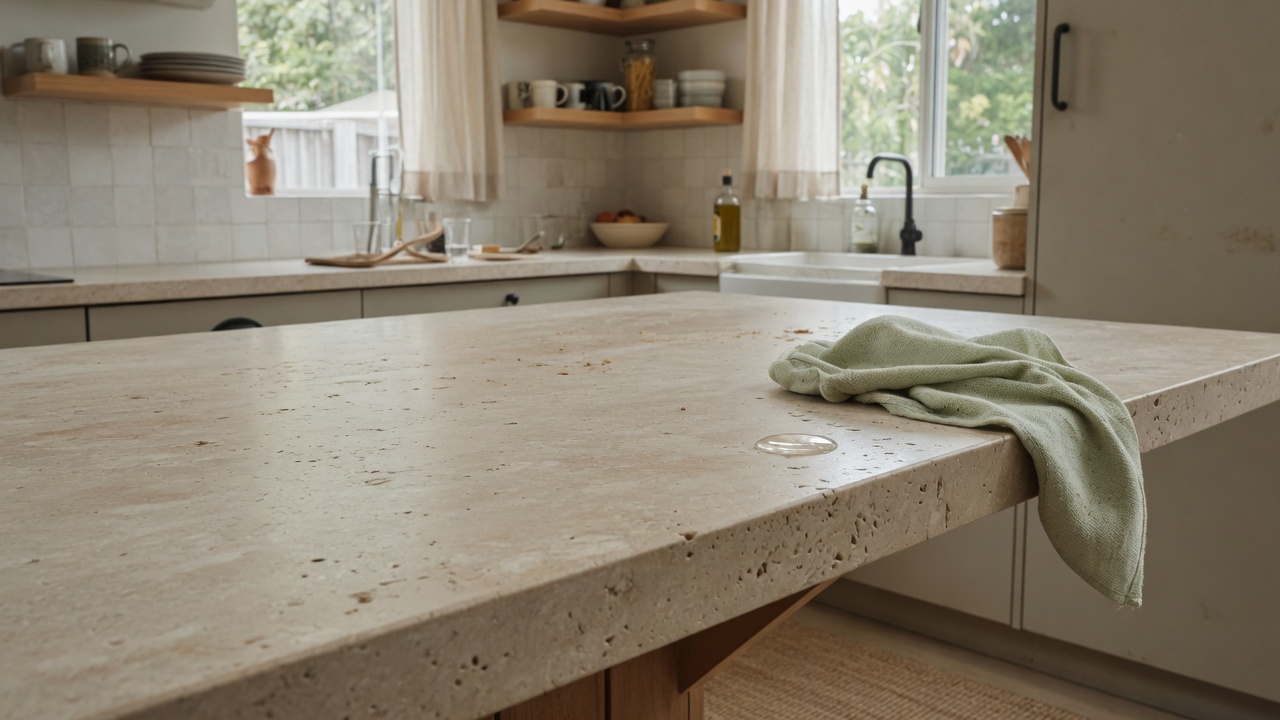
Travertine has those natural pits and holes running through it, sometimes filled with resin at the factory, sometimes not. That structure is part of what gives it character, but it also means it drinks up liquid faster than granite or quartzite. Sealing isn't optional here the way it might be a light lift on a denser stone. Here are the questions we get most.
Does travertine really need sealing, or is that just an upsell?
It needs it. Travertine is porous, more so than most granites and even most marbles, because of that natural pitting. A sealer sits in the pores near the surface and slows down how fast liquid soaks in, which buys you time to wipe up a spill before it stains. We seal every job at install with a good sealer, applied by installers we train to do it right. That first seal is the most important one and it's already done when we hand you the keys. After that, it's on you to keep up with it over the years.
How do I know if it's time to reseal?
Run the water test. Pour a small puddle of water, maybe a tablespoon, on the countertop and watch it. If it beads up and sits there for a few minutes, your seal is still doing its job. If it starts soaking in and darkening the stone within a minute or two, it's time to reseal. Do this in a few spots, especially near the sink and stove where the surface sees the most action, because sealer can wear unevenly across a counter.
How often does that actually work out to, in real months?
For most kitchens, once a year is a reasonable habit for travertine. Bathroom vanities and low-traffic areas can often stretch longer, sometimes two years, since they don't see oil, wine, and citrus juice on a daily basis. But don't just go by the calendar. The water test takes two minutes and tells you more than a guess does. If you're wiping the counter down every day with the same harsh cleaner, you might be stripping sealer faster than average and need to check more often.
Can I seal it myself, or does it need to be a pro?
Most travertine owners can reseal it themselves. Clean the surface well first, let it dry completely (this matters more than people think, sealing over trapped moisture doesn't work well), then apply a penetrating sealer made for natural stone following the label directions. Usually that's wipe on, let it sit a few minutes, wipe off the excess, and let it cure. If your travertine has open pits with no resin fill, you may notice the sealer needs a little extra attention in those spots since they're the most absorbent part of the stone.
If I seal it well, does that mean it won't stain or etch?
No. Sealing slows absorption, it doesn't stop it completely. A glass of wine left sitting overnight can still leave a mark even on a freshly sealed counter. And if your travertine is a calcite-based stone, which most is, acids like lemon juice and vinegar can still etch it, leaving a dull spot. That's a different reaction than staining, it's the acid reacting with the calcite in the stone, and no sealer stops it. Most travertine owners just live with some etching over time as part of the stone's natural patina. The fix for both stains and etching is the same low-effort habit: wipe up spills when they happen instead of letting them sit.
Is travertine worth the extra sealing effort compared to granite?
Depends what you want out of the counter. Travertine has a warm, matte, old-world look that granite and quartz don't really replicate. If you like that look and don't mind an annual water test and occasional resealing, it's a fine tradeoff. If you'd rather not think about it at all, we can walk you through granite or quartzite slabs that ask less of you day to day. Come by 2015 Charleston Hwy in Cayce and we'll show you a few travertine slabs in person so you can see the texture and pitting up close before you decide.