
Care and maintenance
Heat, scratches, and travertine: what's actually true
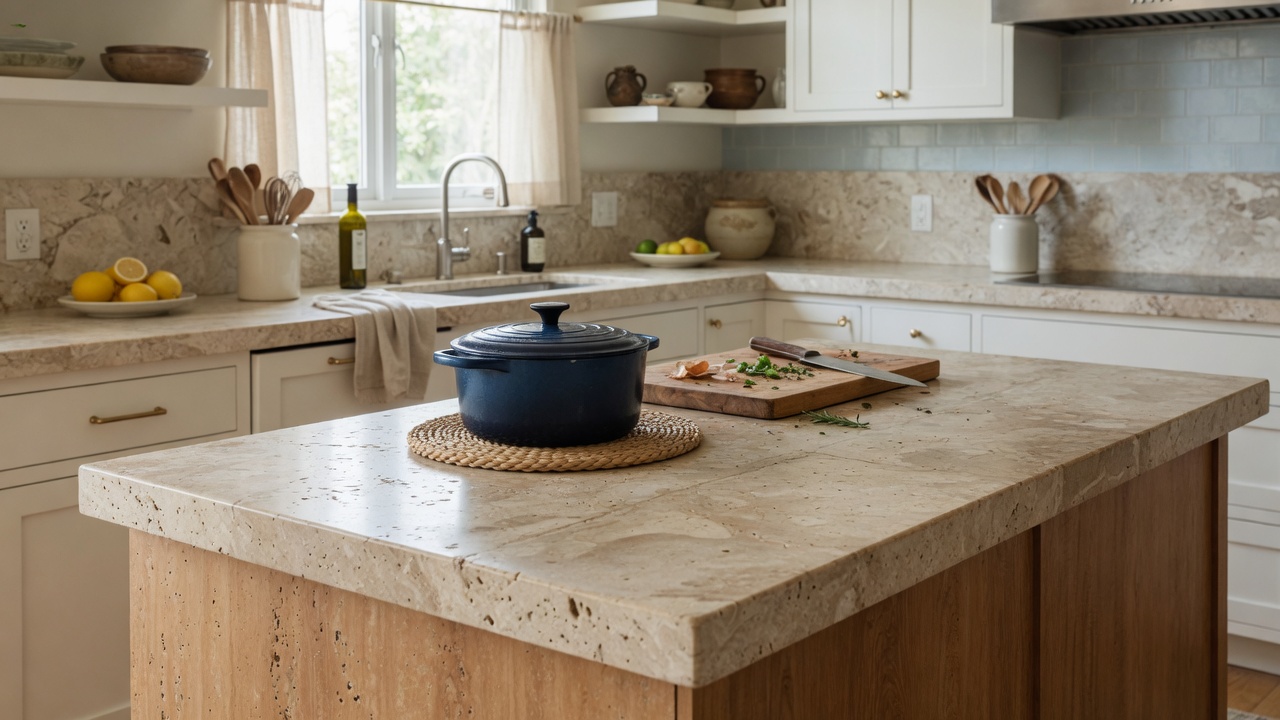
Travertine gets a lot of guesses thrown at it. People assume it behaves like granite because it's a natural stone pulled from the ground, or they assume it's fragile because it's got that soft, chalky look. Neither guess is quite right. Let's go myth by myth.
Myth: travertine is heatproof because it's stone
You'll hear this one a lot, usually from someone who just set a hot pan down on their travertine counter and it turned out fine. Once.
Here's the real picture. Travertine is a calcite stone, similar in makeup to marble and limestone. It's formed from mineral deposits, often with natural holes and pits that get filled during fabrication. That structure means it doesn't handle sudden temperature swings as gracefully as granite or quartzite. A hot pan straight from the stove can cause thermal shock in a stone like this, and repeated heat exposure in the same spot can weaken the fill material or the stone around it over time.
We're not saying a warm pot will crack your counter. We're saying travertine isn't heatproof, and there's no version of this stone where a trivet becomes unnecessary. Use one every time. It's a cheap habit that protects an expensive surface.
Myth: travertine scratches easily because it's soft
This one goes the other direction, and it's also not quite right. Travertine sits in the mid-range on hardness, softer than granite or quartzite, but it's not the flimsy stuff people imagine. Day to day handling, plates, glasses, normal kitchen traffic, it holds up fine.
What it doesn't hold up well to is a knife blade dragged straight across the surface. Direct cutting can leave marks, especially on a honed or filled finish where the surface is more exposed. So can dragging a heavy cast iron pot across it without lifting. Travertine resists everyday wear better than people expect, but it's not scratch-proof, and treating it like a cutting surface will eventually show up as thin lines you can't buff out.
A cutting board fixes this completely. It's not a workaround, it's just how you use any natural stone counter if you want it to look new in ten years instead of five.
What travertine actually does well
Travertine has real strengths. It's got a warm, layered look that people love for a reason, and it takes a honed or filled finish beautifully, which most stones can't match. It's also a stone we can seal to help resist stains from wine, oil, and citrus, though sealing doesn't make it stain-proof either. Wipe up spills when they happen, especially anything acidic, since travertine (like marble) can etch from lemon juice or vinegar. That's a chemical reaction with the calcite, not a flaw in the stone or the sealer.
The bottom line
Travertine is a good countertop choice for people who love the look and are willing to treat it like the natural stone it is. That means:
- Trivet or hot pad, every time, no exceptions for "just a minute"
- Cutting board, always, never the bare stone
- Wipe spills reasonably promptly, especially wine and citrus
- Reseal periodically, usually about once a year for a kitchen in regular use
None of that makes travertine high maintenance. It makes it a natural material that rewards a little basic care, same as any other stone we sell. If you're weighing travertine against granite or quartzite for your kitchen, come by 2015 Charleston Hwy in Cayce and put your hands on actual slabs. Seeing the finish and feeling the texture tells you more than any spec sheet will.