
Care and maintenance
Does travertine stain, and what should you do about it
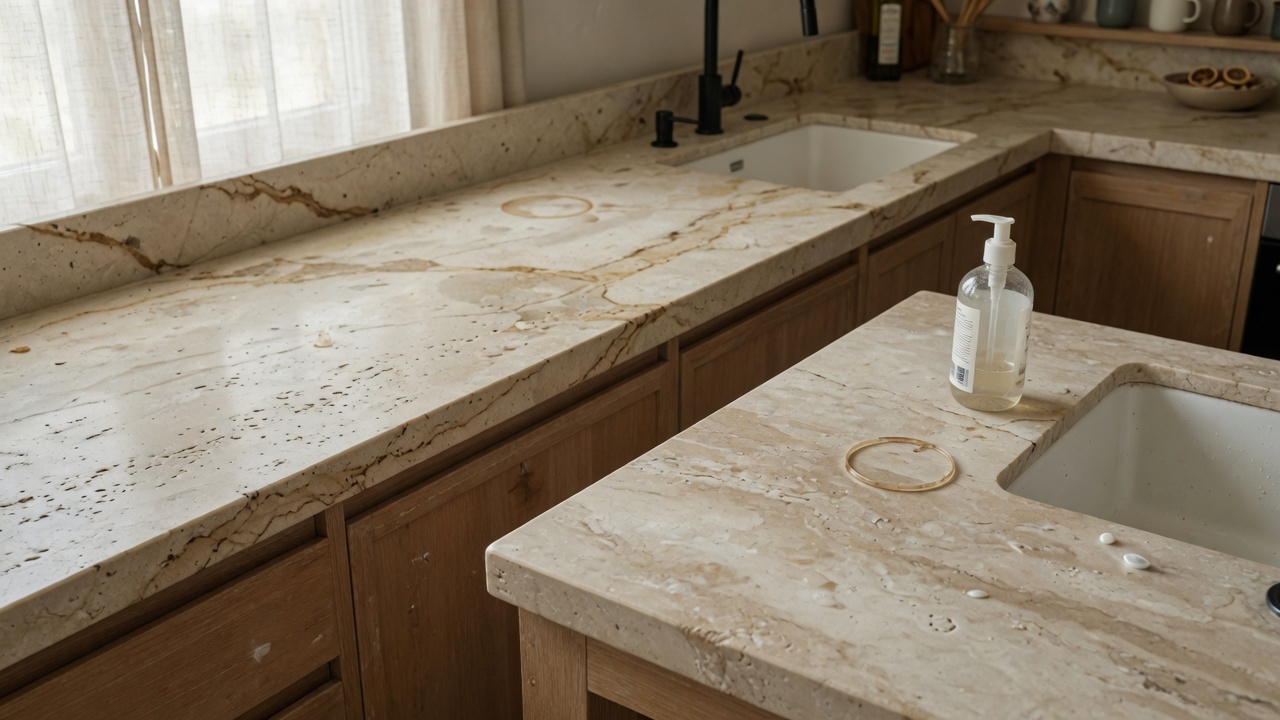
Travertine is a calcite stone full of tiny natural holes, the same holes that give it that pitted, layered look people love. Those holes are also where staining starts. Here's what we tell customers straight, point by point.
Yes, it can stain. Here's why.
Travertine forms from mineral deposits around hot springs and cave systems, and that process leaves it full of small pores and pockmarks. Some of those get filled at the factory (filled travertine), others stay open (unfilled or honed-open). Either way, the stone is porous. Porous means liquid can soak in if it sits there long enough. That's not a flaw, it's just what this stone is.
What actually stains it, in real kitchens and baths
- Oil. Cooking oil, salad dressing, hand lotion, even the oils in your skin over time. Oil stains show up as a darker, slightly translucent patch and they're the most common complaint we hear.
- Wine and coffee. Dark pigmented liquids left overnight can leave a shadow, especially on unsealed or lightly sealed stone.
- Standing water in a shower or tub surround. Hard water and soap scum build up in the pores over time and can leave a dull film that looks like a stain even though it's mineral buildup.
- Rust. Metal cans, planters, or old razors left on a travertine sill or vanity can leave an orange stain that's tough to pull out. This one's more about the metal than the stone.
What doesn't stain it, but people confuse with staining
Travertine also etches, because it's a calcite stone like marble. Lemon juice, vinegar, and other acids can dull the surface or leave a light mark that looks like a stain but is actually a chemical reaction eating into the polish. Sealing helps with staining. It doesn't do anything for etching. If you've got a dull spot near where the lime juice landed, that's an etch, not a stain, and it needs a different fix (light polishing, not stain removal).
Sealing is your main defense, but it's not a forever fix
We seal every travertine job at install with a good sealer, applied properly. That seal fills the surface pores enough to slow liquid from soaking in, buying you time to wipe up a spill before it sets. It doesn't make the stone immune to stains, and no sealer does that for any natural stone. Reseal travertine periodically, we usually tell people to plan on about once a year for kitchen counters, longer for lower-traffic surfaces like a bathroom vanity or fireplace surround. A quick way to check: drop a little water on the surface. If it beads up, you're still good. If it soaks in dark within a minute or two, it's time to reseal.
Habits that matter more than the sealer
- Wipe up oil, wine, coffee, and sauce as soon as you notice them. Sealed stone gives you a window, not forever.
- Use coasters under wine glasses and oily bottles like salad dressing or olive oil.
- Use a cutting board. It's less about staining and more about the finish, but food juices from raw cutting can sit in knife marks and stain faster than they would on a smooth surface.
- In a shower, squeegee the walls or floor after use to cut down on standing water and soap film.
- Keep metal objects (planters, cans, tools) off travertine sills and ledges, or set them on a mat.
If you already have a stain
Oil stains usually respond to a poultice, a paste made for pulling oil out of stone, left on the spot and covered for a day or two. It draws the oil back out instead of scrubbing it in deeper. Water stains and mineral film often come out with a stone-safe cleaner and some patience. Rust stains are the hardest and sometimes need a professional. Don't reach for a generic bathroom cleaner or anything with bleach or vinegar. Vinegar is an acid and will etch the stone further right where you're trying to fix it.
Filled vs. unfilled travertine, and why it matters for staining
Filled travertine has the natural holes filled with resin or a matching grout at the factory, which gives you a smoother, more closed surface that's a little more resistant to liquid soaking in fast. Unfilled travertine keeps the open, textured look but has more surface area exposed for spills to find. Neither one is immune to staining, but if staining worries you and you love the travertine look, filled and well-sealed resists spills better and is the more forgiving choice for a kitchen. Just remember to wipe up spills when they happen either way.
Travertine has held up in homes for centuries when it's cared for, and most of what goes wrong with it comes down to a spill left too long or a seal that's overdue. If you're weighing travertine for a kitchen or bath, come look at some slabs with us at 2015 Charleston Hwy in Cayce. We'll show you filled and unfilled side by side and talk through what upkeep really looks like before you commit.