
Buying guides
Picking the right travertine slab: reading color and veining
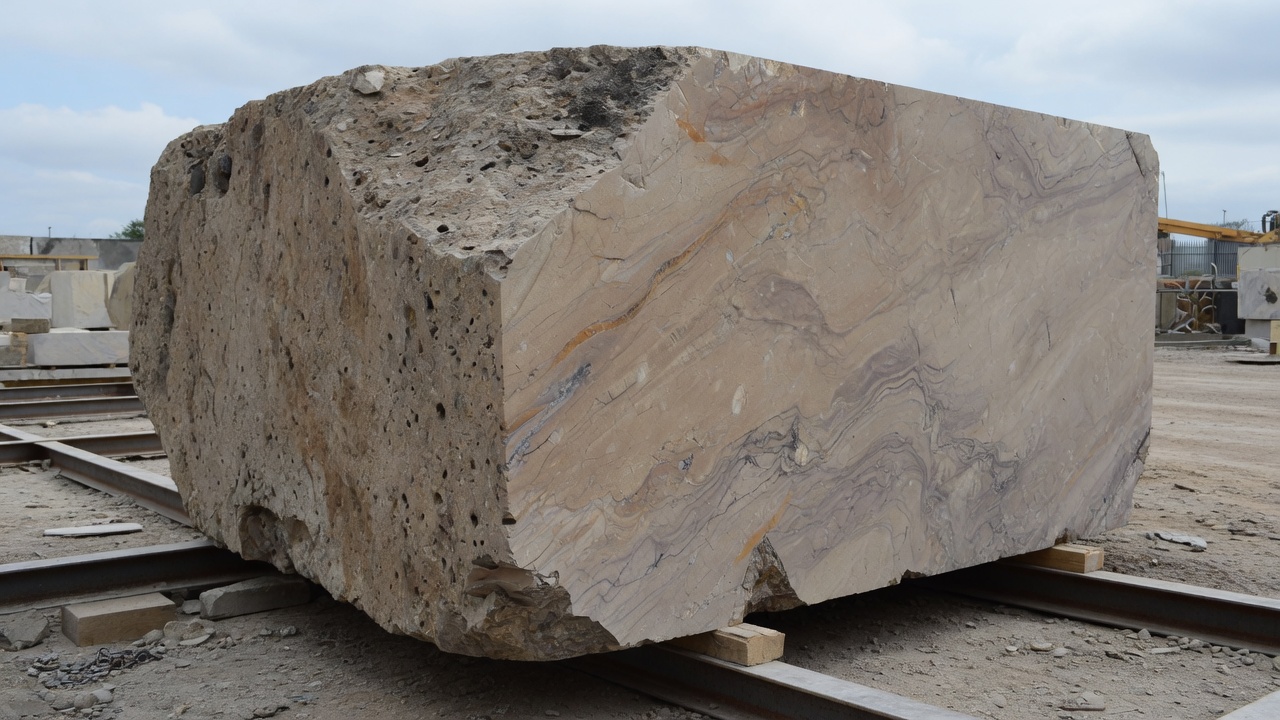
Why one travertine slab looks nothing like the next
Travertine forms in mineral springs, in layers laid down over long stretches of time, with gas bubbles and gaps that get filled in later (or not). That's why one slab can be soft and even in tone while the next from the same quarry has bold streaks or open pockets. There's no way around this variation. It's the nature of the stone, not a flaw in any one piece.
Start with color family, not a paint chip
Travertine runs from pale ivory to gold, walnut, silver gray, and darker rust tones. Don't try to match it to a paint swatch or a photo online. Look at the overall color family first (warm ivory versus cool silver versus deep walnut) and pick the family that fits your kitchen or bath before you get picky about the exact shade. Lighting changes everything with this stone, more on that below.
Reading the veining and fill
Travertine has two basic looks:
- Vein cut, which is sliced along the layers and shows long, straight lines like wood grain
- Cross cut (sometimes called fountain cut), which is sliced across the layers and shows a cloudier, more circular pattern
Most slabs also have small holes or pits from the way the stone formed. Fabricators usually fill these with a resin or matching filler before the slab is polished or honed. Ask whether the slab you're looking at is filled or unfilled, and look closely at the fill color. A good fill blends in; a rushed one stands out as a different color dot against the stone.
Why you need to see the actual slab
A sample chip or a photo can get you in the right neighborhood, but travertine's pattern moves too much across a slab to judge from a small piece. We keep full slabs on the floor so you can see the whole thing at once, walk around it, and picture where the seams and edges will fall in your layout. Bring your cabinet door or a paint sample with you. Natural light versus your kitchen's overhead lighting can shift how warm or cool the stone reads, so if you can, look at it near a window too.
Matching it to your cabinets and light
A few things that tend to work:
- Warm ivory or gold travertine pairs well with wood tones and warmer whites
- Silver or gray travertine leans more modern and pairs well with cooler cabinet colors
- Rooms with a lot of natural light show off subtle veining better; darker or north-facing rooms often need a slab with more contrast to avoid looking flat
One more honest note: travertine is a softer, more porous stone than granite or quartzite. It should be sealed at install and resealed periodically, and it can etch from acids like lemon juice or vinegar the same way marble does. That's part of living with it, not a defect in the stone.
If you're picking travertine for a project, come look at what we've got on the floor at 2015 Charleston Hwy in Cayce. Bring a cabinet door if you've got one. Seeing the real slab next to your actual colors saves a lot of second-guessing later.