
Care and maintenance
Caring for travertine countertops: real questions we get at the shop
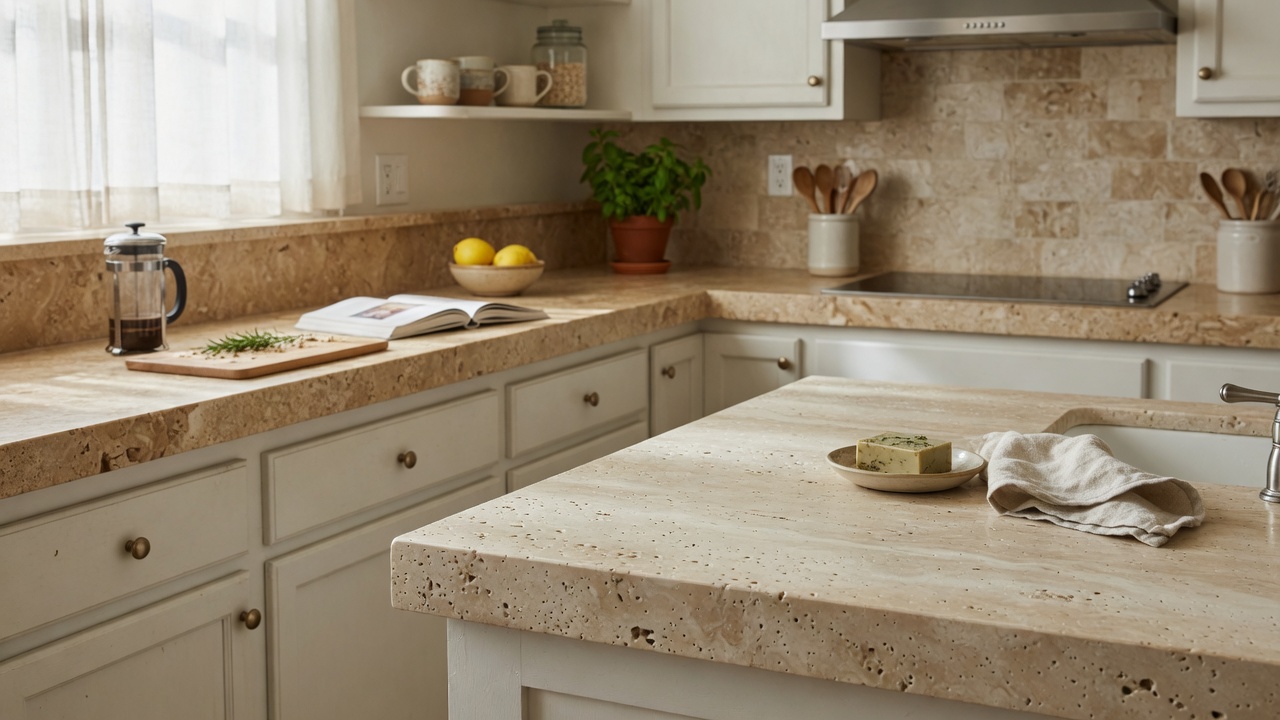
Travertine shows up in our showroom a lot for bathrooms and outdoor kitchens, and sometimes for a warm-toned kitchen counter. It's a calcite stone, like marble, so a lot of the care questions overlap. Here are the ones we hear most.
Is travertine the same as marble for care purposes?
Close enough that you should treat it the same way. Travertine forms from mineral deposits around hot springs, and it's calcite based, so it reacts to acids the same way marble does. If you're used to caring for granite or quartz, travertine asks for a different mindset. Wipe spills, use coasters, and don't expect it to shrug off lemon juice.
What's the daily cleaning routine?
Warm water, a few drops of mild dish soap, and a soft cloth or sponge. Wipe up spills as they happen rather than letting them sit. Dry the surface after cleaning so water doesn't pool in the pits (more on that below). Skip anything with vinegar, citrus cleaners, or bleach. Those are acidic or harsh and will dull the finish over time.
Does travertine need to be sealed?
Yes. Travertine is porous, often more porous than granite because of its natural holes and pits, and it should be sealed at install and resealed periodically, usually about once a year for a kitchen or a busier bathroom. Sealing helps it resist stains and buys you time to wipe up a spill before it soaks in. It doesn't stop etching, though. Etching is an acid reaction on the calcite itself, and no sealer blocks that.
Will it etch like marble does?
It can. Lemon juice, vinegar, wine, and other acids can leave a dull spot on travertine the same way they do on marble. That's just how calcite stone reacts, not a defect in your slab. If you're putting travertine in a kitchen, plan on some etching over time as part of the material's character, not a flaw to chase after.
What are those little holes in the surface?
Travertine naturally forms with holes and pits from gas bubbles escaping while it was forming. Most slabs sold for countertops come "filled," meaning the holes are filled with a resin or color-matched filler at the quarry, which gives you a smoother surface. Over years of use and cleaning, some fillers can wear thin or pop out in a spot or two. That's repairable, and it's a normal part of owning filled travertine, not a sign something went wrong.
Can I cut directly on it or set down a hot pan?
Use a cutting board every time. Travertine is softer than granite or quartzite, and a knife blade can scratch it, especially right along the filled pits. For heat, travertine handles brief contact with a warm pan better than some surfaces, but it's still a natural stone with fillers that can be affected by direct heat, so use a trivet or hot pad every time. It's not about one bad experience, it's just not worth the risk to the finish.
How does it hold up in a real kitchen over the years?
It depends on how it's used. In a lower-traffic kitchen, or a bathroom vanity, travertine can look great for a long time with regular sealing and gentle cleaning. In a hard-working kitchen with a lot of acidic cooking (tomatoes, wine, citrus) and daily knife work right on the counter, you'll likely see some etching and wear show up faster than you would on granite or quartzite. A lot of our customers actually like that worn-in, matte look on travertine. Others find it frustrating. It's worth being clear with yourself about your kitchen habits before you commit.
If you're weighing travertine against granite, marble, or quartzite for your project, come by 2015 Charleston Hwy in Cayce. Seeing a filled slab in person, and feeling the texture yourself, tells you more than any description can.