
Care and maintenance
Sealing Taj Mahal quartzite: when, how often, and the water test
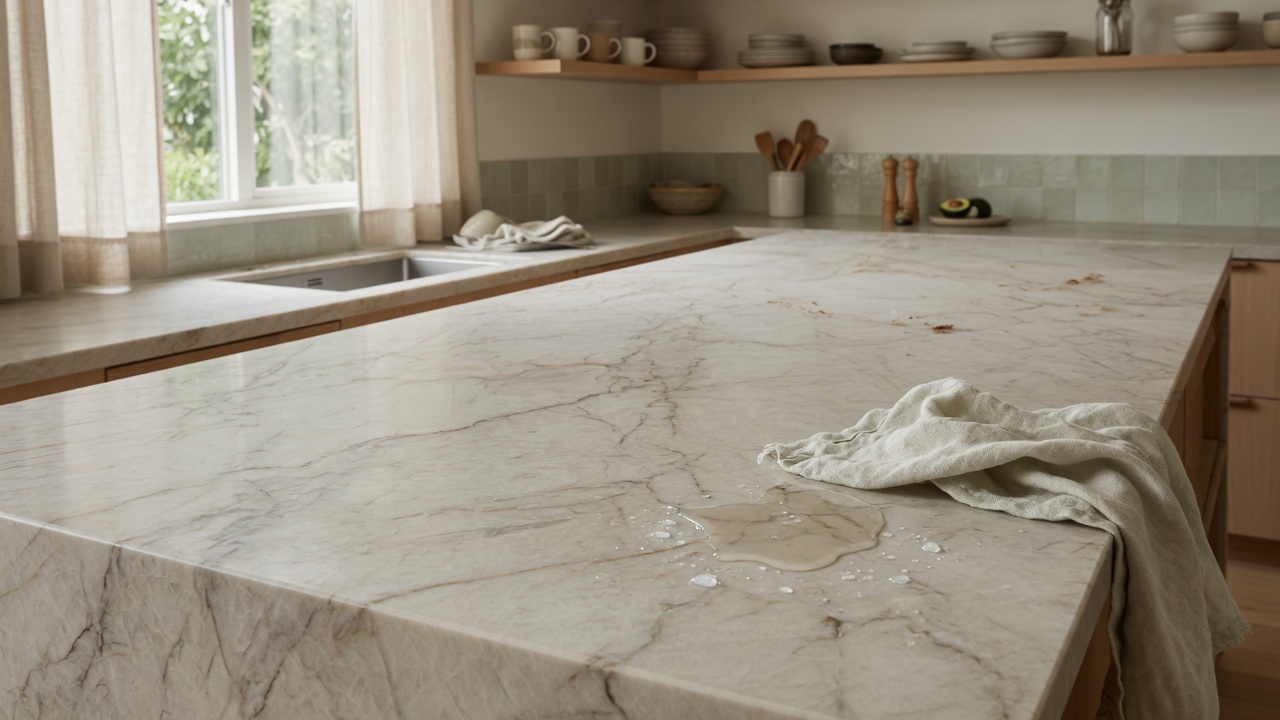
Taj Mahal is one of our most popular quartzites, and one of the first questions we get about it is whether it needs sealing at all. It does. It's a true quartzite, hard and durable, but it's still a natural stone with some porosity. Here's how that plays out from install day forward.
Day one: we seal it before you ever touch it
When we install your Taj Mahal countertops, our team applies a quality penetrating sealer as part of the job. This isn't an upsell or an extra step you have to remember to ask for. It's built into how we finish every natural stone installation. The sealer soaks into the surface pores and helps the stone resist stains from wine, oil, coffee, and everyday spills. It doesn't make the stone stain-proof (nothing does), and it doesn't change how the stone feels or looks. Taj Mahal keeps its soft white and gold movement either way.
Week one: let it cure and get used to the surface
Sealer needs a little time to fully cure into the stone, usually a day or two depending on the product. During that window, wipe up spills promptly like you would anyway. After that, you can treat the countertop normally: cutting boards for chopping, trivets for hot pans (Taj Mahal handles brief heat better than most surfaces, but we still tell every customer to use a trivet, no exceptions), and a damp cloth with mild soap for daily cleaning.
The water test: how to check your seal yourself
This is the easiest way to know where your seal stands, and you can do it anytime.
- Pick a spot near the sink or stove, somewhere that gets regular use.
- Pour a small puddle of water, about the size of a quarter, directly on the stone.
- Watch it for 10 to 15 minutes.
- If the water beads up or sits on the surface without soaking in, your seal is still doing its job.
- If the water darkens the stone or gets absorbed within a few minutes, it's time to reseal.
Run this test in two or three spots, not just one. Areas around the sink and cooktop see more moisture and wear faster than a stretch of counter that rarely gets used.
A realistic reseal schedule
For most kitchens, Taj Mahal needs resealing about once a year. That's a general guideline, not a rule carved in stone (pun intended). Busy kitchens with kids, heavy cooking, or a lot of acidic ingredients on the counter might need it every eight or nine months. A lightly used bathroom vanity in the same stone might go two years between reseals. The water test tells you where things stand better than any calendar does.
What sealing does and doesn't do
Sealing helps the stone resist absorbing liquids, which buys you time to wipe up a spill before it stains. It doesn't make the stone immune to staining if something sits overnight, and it doesn't stop scratching. Taj Mahal is a hard stone and resists scratches well, but a cutting board still protects both the stone and your knives. Sealing also has nothing to do with etching. Taj Mahal is quartzite, not marble, so it holds up to lemon juice and vinegar far better than a calcite stone would. That's actually one of the reasons people choose it over marble in busy kitchens.
Applying the sealer yourself
When your test says it's time, the process is simple. Clean the counter well, let it dry completely, apply a thin, even coat of penetrating sealer with a soft cloth, let it sit for the time listed on the product (usually 5 to 15 minutes), then wipe off any excess before it dries on the surface. Most homeowners can do this in under half an hour for a standard kitchen.
If you're not sure whether your stone is due, bring a photo or just stop by. We're at 2015 Charleston Hwy in Cayce, and we're happy to look at a slab, talk through what you're seeing, or point you toward a sealer that works well with Taj Mahal specifically.