
Care and maintenance
Does Taj Mahal quartzite stain? Here's what actually happens
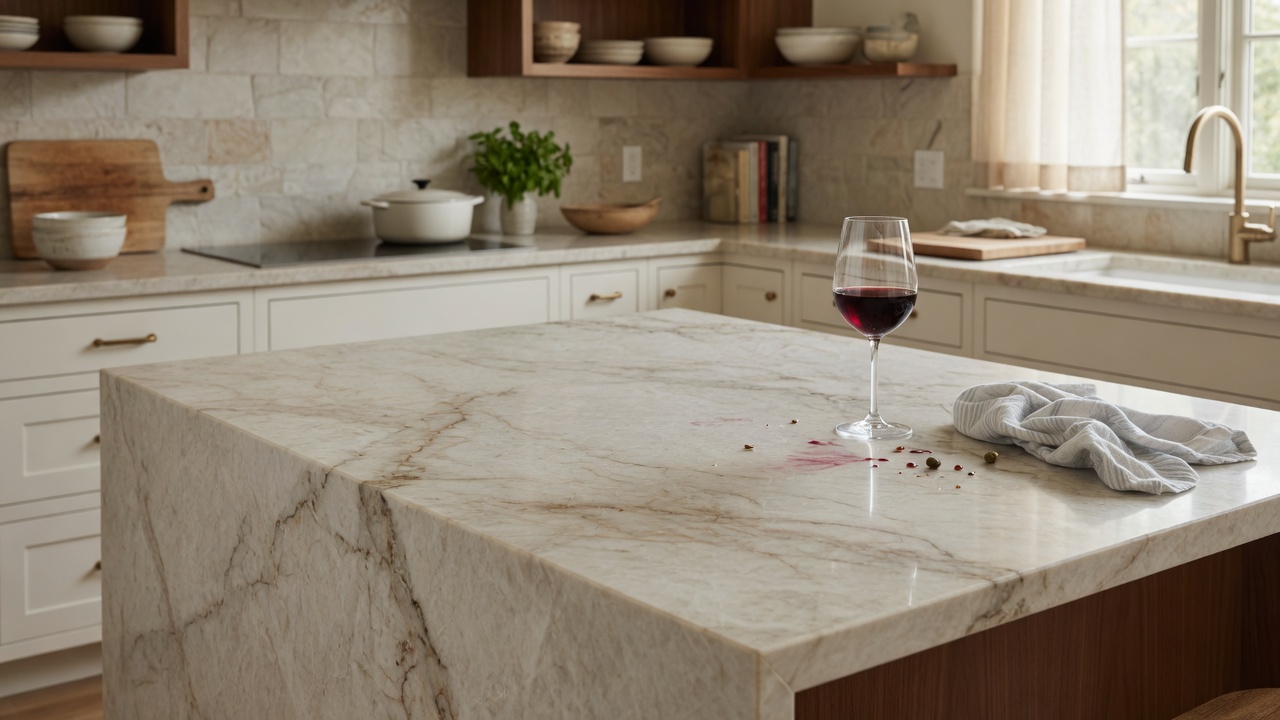
The myth we hear at the counter
People come in asking about Taj Mahal quartzite because they've heard it basically shrugs off anything you throw at it. The line usually goes something like, "quartzite doesn't stain, it's harder than granite, you don't even have to think about it." We get why that story spreads. Taj Mahal is a genuinely tough, dense stone with that soft, warm, leathery look people love, and it does hold up better than a lot of stones out there.
But that story leaves out a few things, and we're not going to skip them just to make a sale.
What's actually true
Taj Mahal quartzite is a natural stone, and like all natural stone, it's porous to some degree. That means it has tiny openings in its surface that can let liquid soak in if given the chance. Quartzite in general is one of the harder, more durable stones we fabricate with, and Taj Mahal specifically is a true quartzite (not one of those marble-in-disguise slabs sold under a quartzite name), so it does resist staining better than marble or limestone. But better than average isn't the same as carefree.
If you leave a puddle of red wine, olive oil, or coffee sitting on unsealed or under-sealed Taj Mahal overnight, it can leave a stain. Oil-based stains in particular tend to darken the stone. Sealing slows that process down and buys you real time to wipe things up, but it doesn't turn the stone into a surface you can ignore.
Why sealing matters here
Sealer fills in that natural porosity so liquids bead up on the surface instead of soaking in. It's not a permanent shield, it's more like a head start. That's why we seal every job at install with a top-shelf sealer, applied by installers we train to do it right. A lot of shops hand you the countertop and leave the sealing to you. We don't skip that step. But even a properly sealed slab benefits from resealing over time, usually about once a year for a kitchen that sees regular cooking, more or less depending on how much use it gets.
What actually causes trouble
Most staining complaints we hear boil down to the same few habits:
- Leaving standing liquid (wine, sauce, oil) on the surface overnight instead of wiping it up
- Setting greasy pans or takeout containers straight down without a coaster or mat
- Skipping resealing for several years and assuming the original seal lasts forever
- Using harsh cleaners that strip the sealer faster than expected
None of these are dramatic mistakes. They're just the small daily habits that determine whether a countertop looks new in ten years or shows its age in two.
How to keep Taj Mahal looking right
Wipe up spills when they happen, especially wine, coffee, and cooking oil. Use a mild dish soap and water or a stone-safe cleaner for daily wiping, not bleach or ammonia-based products. Keep an eye on how water beads on the surface. If it starts soaking in instead of beading, that's your sign it's time to reseal. And use cutting boards and trivets as a matter of habit, not because the stone can't take some abuse, but because good habits protect any countertop longer.
Taj Mahal quartzite is one of our favorite slabs to sell precisely because it looks soft and warm but performs like a workhorse. Come by our shop on Charleston Highway in Cayce and look at a few slabs in person. Seeing the veining and feeling the surface tells you more than any spec sheet.