
Care and maintenance
Caring for Taj Mahal quartzite, step by step
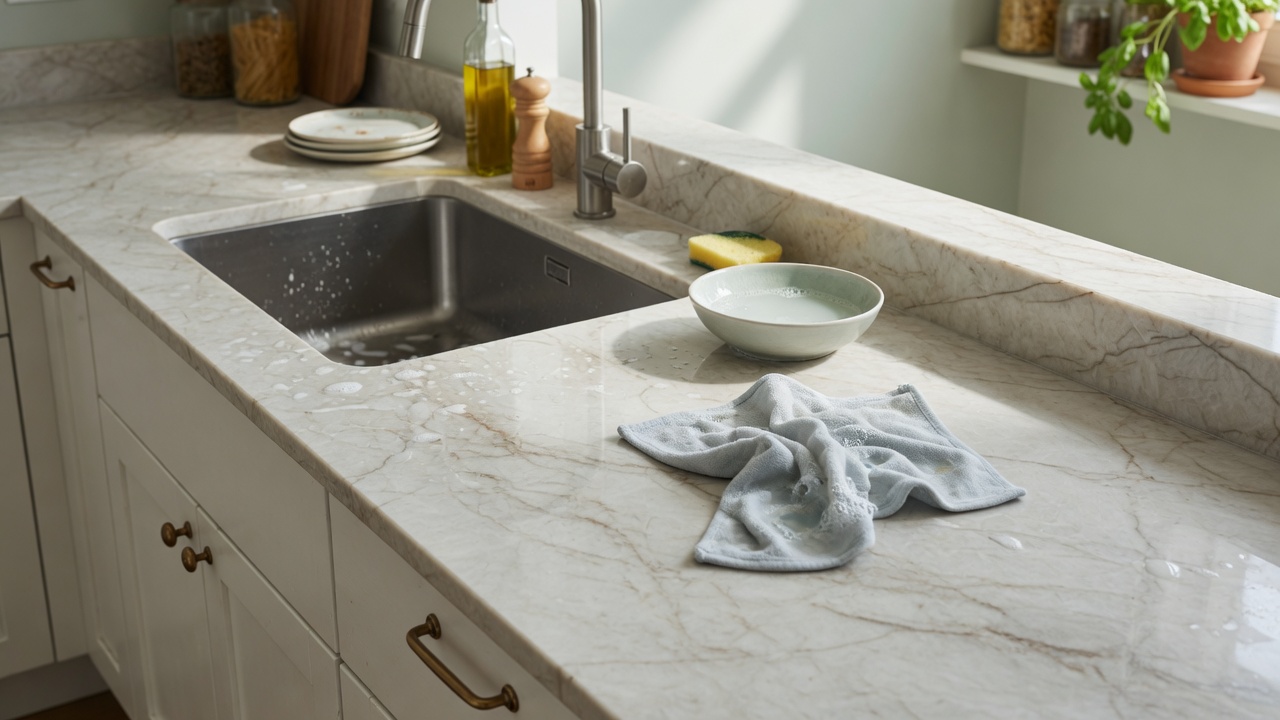
Taj Mahal is one of the most popular quartzites we sell, and for good reason. It's got that warm, creamy background with soft gold and gray movement running through it, and it reads more like a fine marble than a typical granite. But it's quartzite, which changes how you should treat it. Here's what that actually looks like once it's on your counters.
Right after install
We seal every job at install with a top-shelf sealer, put on by installers we train to apply it right. So the first seal, the one that matters most, is already done when you move back into your kitchen. You don't need to do anything special that first week other than clean up like normal and let the sealer do its job.
Daily cleaning
Wipe it down with warm water and a soft cloth or sponge. For anything sticky, a few drops of mild dish soap works fine. Dry it with a towel afterward so you don't get water spots building up over time. Skip the bleach-based sprays, ammonia cleaners, and anything labeled as a heavy-duty degreaser. They're not going to eat through the stone in one use, but they can dull the sealer faster than plain soap and water will.
Cutting and knives
Taj Mahal is quartzite, so it's one of the harder stones we work with and it resists scratching better than marble. Even so, quartzite can still scratch, especially from ceramic knives or dragging cast iron across it. Use a cutting board. It's an easy habit, and it protects your knife edges as much as it protects the counter.
Heat
Quartzite handles brief contact with a hot pan better than most surfaces. We still tell every customer to use a trivet or hot pad, every time. Thermal shock, setting something straight off the stove onto a cold slab, is a real risk with any stone, and it's not worth testing.
Spills and staining
Here's where people get surprised. Taj Mahal looks like marble, and the difference matters. True marble is a calcite stone, and calcite etches (leaves a dull mark) when it meets an acid like lemon juice, wine, or vinegar, no matter how well it's sealed. Quartzite is a different mineral, so it generally stands up to those acids better than marble does. Even so, Taj Mahal is still natural stone, which means it's porous to some degree, and a spill left sitting overnight, especially oil, wine, or coffee, can still leave a stain. Wipe things up when they happen instead of letting them sit. Sealing helps resist staining, but it's not a substitute for cleaning up spills promptly.
Sealing over the years
Since Taj Mahal is natural stone, it should be resealed periodically, usually about once a year for a kitchen that sees regular cooking. You can test it yourself: put a few drops of water on the surface, and if it beads up, you're fine. If it soaks in and darkens the stone within a few minutes, it's time to reseal. It's a simple job, and a lot of homeowners do it themselves with a stone sealer from the hardware store.
How it wears in a real kitchen
After a few years of daily use, most Taj Mahal counters we see still look close to new, especially around sinks and stovetops where people tend to be more careful. Where we do see wear is usually from someone skipping the cutting board for years or letting a wine glass sweat on the same spot overnight, repeatedly, without ever resealing. None of that is dramatic, but it's the kind of slow wear that sealing and basic habits prevent.
If you're weighing Taj Mahal against a marble look-alike or a quartz, it's worth seeing a slab in person. Photos don't capture the depth in the movement, and it helps to see how the surface actually feels under your hand. Stop by our shop at 2015 Charleston Hwy in Cayce and we'll walk you through a few slabs side by side.