
Care and maintenance
Sealing soapstone: what actually needs doing, and how to tell
The myth: soapstone needs sealing like granite
We hear this a lot from folks who've read general countertop care guides. The myth goes: soapstone is natural stone, natural stone needs sealing, so seal it once a year like you would granite or marble and you're covered.
That's not how soapstone works, and treating it like granite can leave you disappointed with the result.
The real story: soapstone is a different animal
Soapstone is dense and has very low porosity compared to granite or marble. It's made mostly of talc, which is soft, and that same soft, tight structure means a traditional penetrating sealer doesn't soak in and do much of anything. Some sealers will sit on top and wear off unevenly, which can actually look worse than doing nothing.
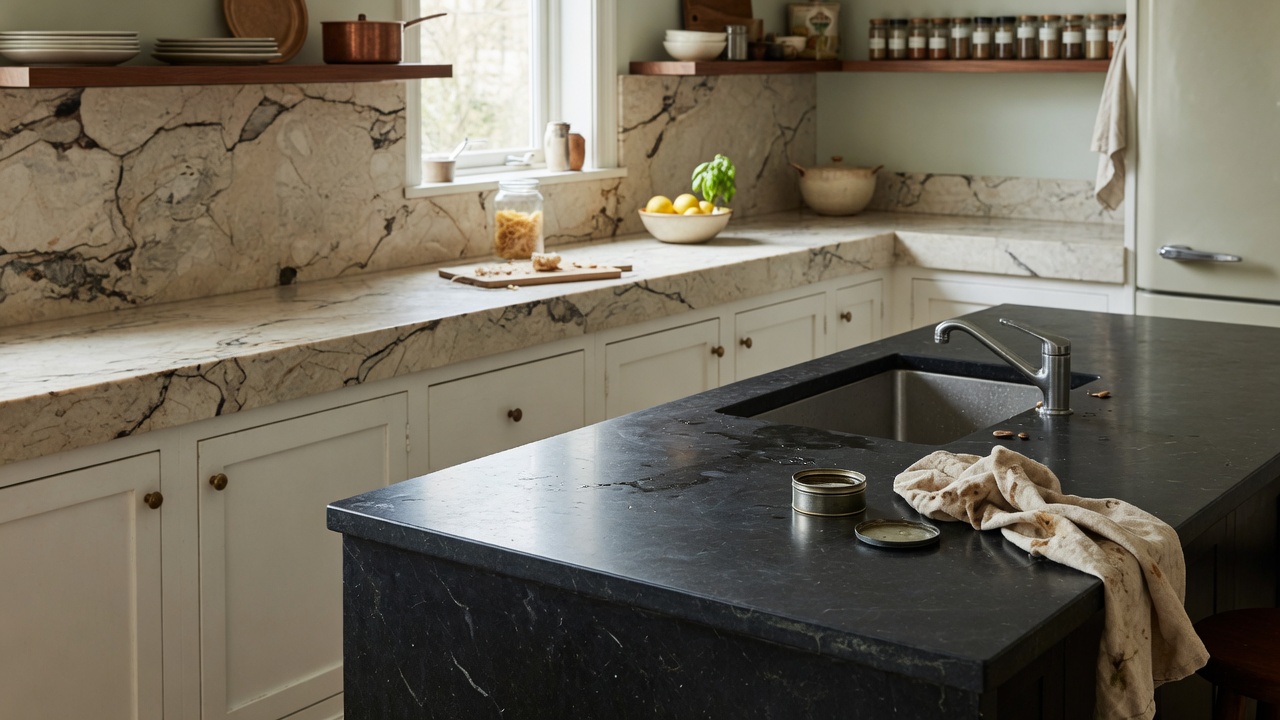
What soapstone owners usually do instead is oil it, typically with plain mineral oil. That's a cosmetic step, not a protective seal in the granite sense. Fresh soapstone comes out of the shop gray and a little chalky looking. Mineral oil darkens it to that deep charcoal color people want, and it evens out blotchiness. Over time, soapstone also darkens on its own just from use, a natural patina that a lot of owners like.
We still won't tell you soapstone can't stain or scratch. It's soft enough that it can pick up scratches from knives and hard use, and it can darken unevenly around a sink or a stove if you don't keep up with oiling. Use a cutting board on it just like you would on any other stone.
The water bead test, and what it actually tells you
The classic water test works differently here than it does on granite. On a sealed granite or marble top, you drop water on the surface and watch: if it beads up, the seal is holding; if it soaks in fast and darkens the stone, it's time to reseal.
On soapstone, water will almost always soak in a little and darken the spot temporarily, sealed or not, because that's part of how the stone behaves. What the test tells you on soapstone is really about your oiling, not a sealer. If a few drops of water leave a dark spot that lingers a long time or won't blend back in, that's a sign the surface is dry and due for oil. If it darkens briefly and comes back to normal color within a few minutes, you're in decent shape.
A realistic schedule
- New installs: oil weekly for the first month or so while the color settles in.
- After that: oil every few weeks, or whenever you notice pale, dry-looking patches or uneven color near the sink and stove.
- Some owners skip oil altogether and let the stone darken naturally over months of use. That's a fine choice too. It's about the look you want, not a safety issue.
- Wipe up oil and food spills with soap and water. No special cleaners needed.
Soapstone rewards patience more than it rewards products. If you're weighing it against granite or quartzite and want to see how the color and feel actually differ in person, come by 2015 Charleston Hwy in Cayce. We've got slabs at every stage of darkening so you can see what a few years of ordinary use really looks like.