
Buying guides
Picking the right soapstone slab: reading color and veining
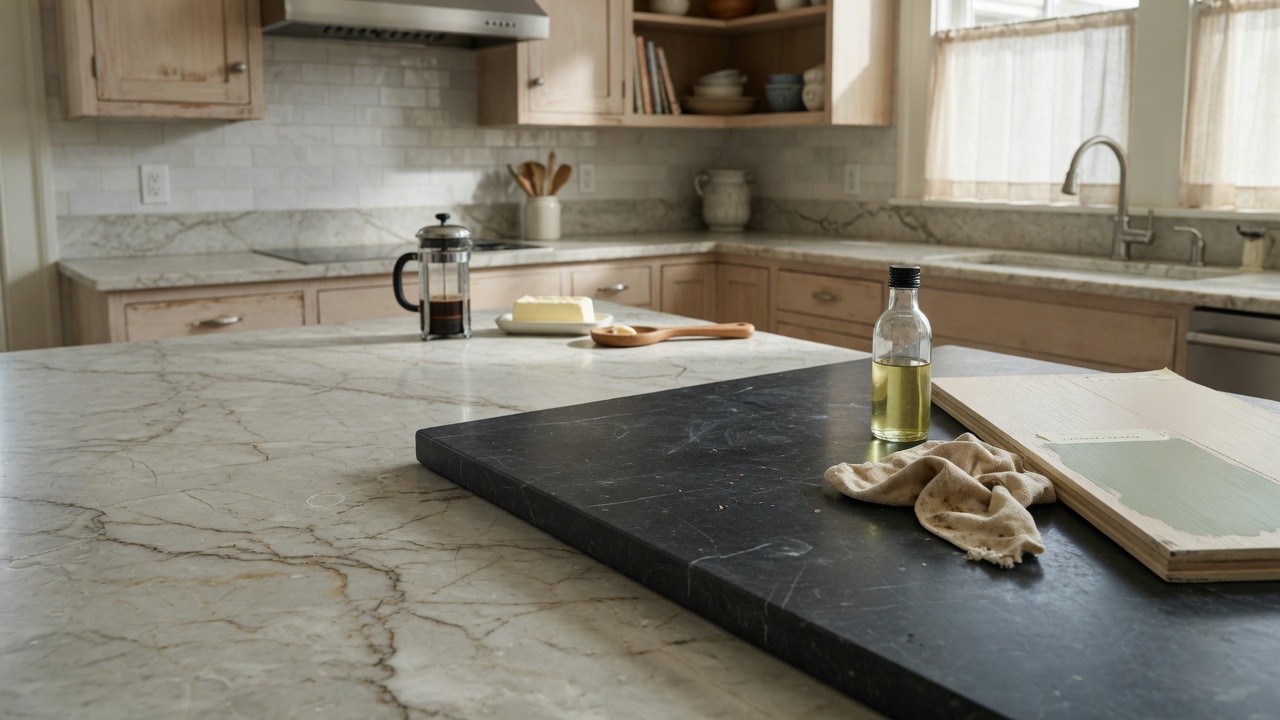
Soapstone is one of the trickier stones to pick from a photo. What you see in a showroom on day one isn't exactly what you'll have in five years, and that's normal, not a flaw. Here's how we walk customers through it, step by step.
Start with what soapstone actually is
Soapstone is mostly talc and other soft minerals, which is why it feels almost soapy under your hand and why it's a different animal from granite or quartzite. It's soft enough to scratch and dent more easily than harder stones, but it doesn't need sealing the way porous stones do, and it resists staining well because it's so dense. It also darkens with age and with oil treatments, so the light gray slab you pick on day one will deepen toward charcoal or black over months and years. That's the single biggest thing to understand before you fall in love with a particular slab's color.
Look at the base color first, not the veining
Soapstone runs from pale gray to blue-gray to dark green-gray, and some quarries produce stone with a warmer, almost olive cast. Before you get distracted by veining, decide which base tone you're drawn to, because that's what will be under everything else once the stone darkens. A slab that looks light and subtle in the yard can read as a deep charcoal a year from now, especially if you apply mineral oil to speed the aging along.
Then look at the veining, and expect it to vary
Veining in soapstone tends to be softer and cloudier than the sharp lines you see in granite or marble. Some slabs have almost no visible veining, just a quiet, even field of color. Others have wide, feathered streaks of white or lighter gray running through them. Because soapstone forms in layers underground, slabs cut from different parts of the same block, let alone different blocks, can look noticeably different. This is why we never sell soapstone off a sample chip. A four-inch square tells you almost nothing about how the veining will move across a ten-foot slab.
See the actual slab in our yard
This is the step people are tempted to skip, and it's the one that matters most. Bring your cabinet door or a paint chip and stand at the slab in natural light if you can. Soapstone shifts under different lighting the way most stone does, but the color and veining also change as you move around the slab and see it from different angles. Walk the length of it. Look at where the veining is heaviest, because that's usually where we'll want to place it relative to your sink or island, the spots your eye lands on first.
Match it to your cabinets and your light
Dark, warm cabinets tend to pair well with the deeper gray and green-black soapstones, especially once they've aged. Lighter or painted cabinets often look better with a soapstone that starts lighter, since it gives you a longer stretch of time before the color gets heavy against a pale kitchen. Kitchens with a lot of north-facing or artificial light tend to show soapstone's blue-gray undertones more; south-facing rooms with warm afternoon sun bring out the warmer, greener tones in some slabs. None of this is a hard rule, it's just worth standing in your own kitchen's light before you commit, or bringing a sample home for a night if we can spare one.
Decide on your finish and aging plan up front
Some customers want soapstone to darken naturally over years with just wear and the occasional wipe of mineral oil. Others oil it heavily from day one to get the deep look right away. Either is fine, but it's worth deciding before install, because it changes how the slab will look next to your cabinets in year one versus year five.
If you're weighing soapstone, come look at what we've got in the yard at 2015 Charleston Hwy in Cayce. Bring a cabinet sample and give yourself a few minutes to walk the slab in different light before you decide.