
Buying guides
Is quartzite worth it for a kitchen?
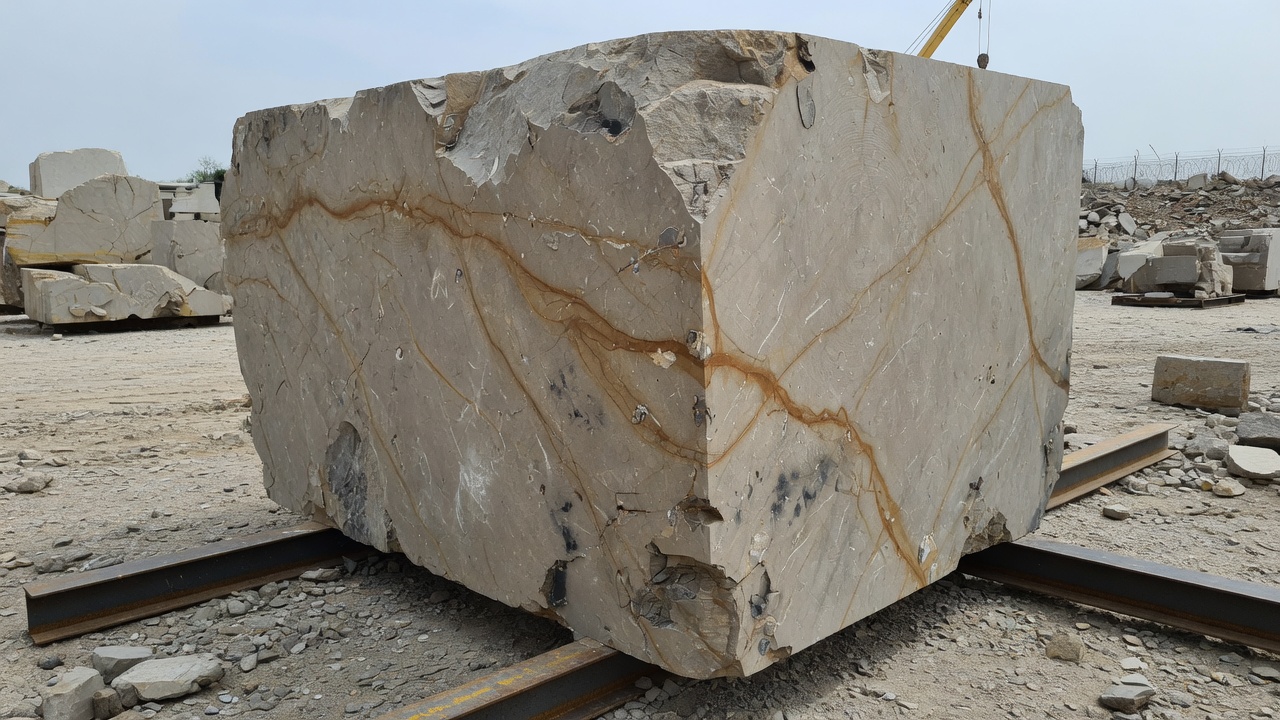
Quartzite gets asked about more than almost any other stone we carry, mostly because people want marble's veining without marble's fussiness. It's a fair question whether it earns the extra cost. Let's go through it piece by piece.
What quartzite actually is
Quartzite starts as sandstone and gets compressed and heated underground until it turns into a much harder stone, mostly quartz. That's different from marble, which is a calcite stone that stays soft and reacts to acid no matter what you do to it. True quartzite is one of the harder stones we sell.
One catch worth knowing up front: the name on a slab isn't always accurate. Some stone sold as "quartzite" at a supplier is actually a softer calcite-based stone that etches like marble. We go by how a slab behaves on the fabrication floor, not just the label, and we'll tell you straight what you're looking at.
Look and feel
- Quartzite comes in soft whites and grays with movement that can look a lot like marble, sometimes with warmer beige or gold tones too.
- Slabs vary a good bit piece to piece, so what you see in the showroom is close to what you'll get, but not identical.
- It has a natural, slightly less uniform look than quartz, which some people love and some people find less predictable.
Durability, side by side
Quartzite
- Resists scratching better than marble and holds up well to daily kitchen use.
- Handles brief contact with a hot pan better than most surfaces, though we still recommend a trivet every time.
- Can chip at edges and corners if hit hard, same as any natural stone.
Granite
- Similar hardness and heat tolerance to quartzite, generally a bit more consistent from slab to slab.
- Wider range of budget-friendly colors.
Marble
- Softer, etches from lemon juice, vinegar, and other acids. That patina is normal for marble, not a flaw, but it's a real tradeoff.
- Scratches more easily than quartzite or granite.
Quartz (engineered)
- Non-porous, no sealing needed, very consistent look.
- Resin content means a hot pan can scorch or discolor it, so a trivet matters even more here.
Upkeep
Quartzite is natural stone, which means it's porous to some degree and needs sealing. We seal every job at install with a good sealer, applied by installers we train to do it right, so you're covered from day one. After that, plan on resealing about once a year for a kitchen that sees regular use.
Sealing helps quartzite resist stains, but it doesn't stop a spill of wine or oil from soaking in if it sits overnight, so wipe things up when they happen. And while quartzite holds up better than marble against acids, some slabs sold as quartzite are softer than they should be, which is another reason we test before we sell.
Compare that to quartz, which skips sealing altogether, or marble, which needs the same sealing routine as quartzite but also needs you to accept etching as part of owning it.
Cost
Quartzite typically runs higher than granite and often close to or above mid-range quartz, roughly 60 to 120 dollars per square foot installed depending on the slab and your kitchen layout. Rare or heavily veined slabs push toward the top of that range or past it. These are rough numbers, and the only way to get a real one is to look at actual slabs and measure your space.
Who quartzite suits
- Someone who wants the marble look without marble's etching problem.
- A busy kitchen where cutting boards and trivets are already the habit, and durability matters more than a perfectly uniform surface.
- Someone comfortable with a yearly reseal and fine with some natural variation from slab to slab.
- A buyer who cares about resale appeal and wants a natural stone that reads as a step up from granite.
Who should look elsewhere
- Someone who wants a non-porous surface that skips sealing altogether. Quartz fits that better, since natural stones like quartzite should still be sealed and resealed periodically.
- A tight budget where granite gets you a similar durability story for less money.
- Someone who genuinely wants marble's exact look and is fine with etching as part of the deal. Buying quartzite as a marble substitute only makes sense if you actually prefer quartzite's slightly different character.
Our take
Quartzite earns its price for the right kitchen. It's tough, it looks good, and it ages well if you treat it like natural stone (cutting board, trivet, wipe spills, reseal yearly). It's not worth it if you're buying it purely to save a sealing step, because it still needs one, or if a cheaper granite would make you just as happy day to day.
Come by 2015 Charleston Hwy in Cayce and look at a few slabs in person. Quartzite photographs well, but the movement and color only really make sense once you're standing next to the actual stone.