
Care and maintenance
Sealing quartzite: when, how often, and the water test
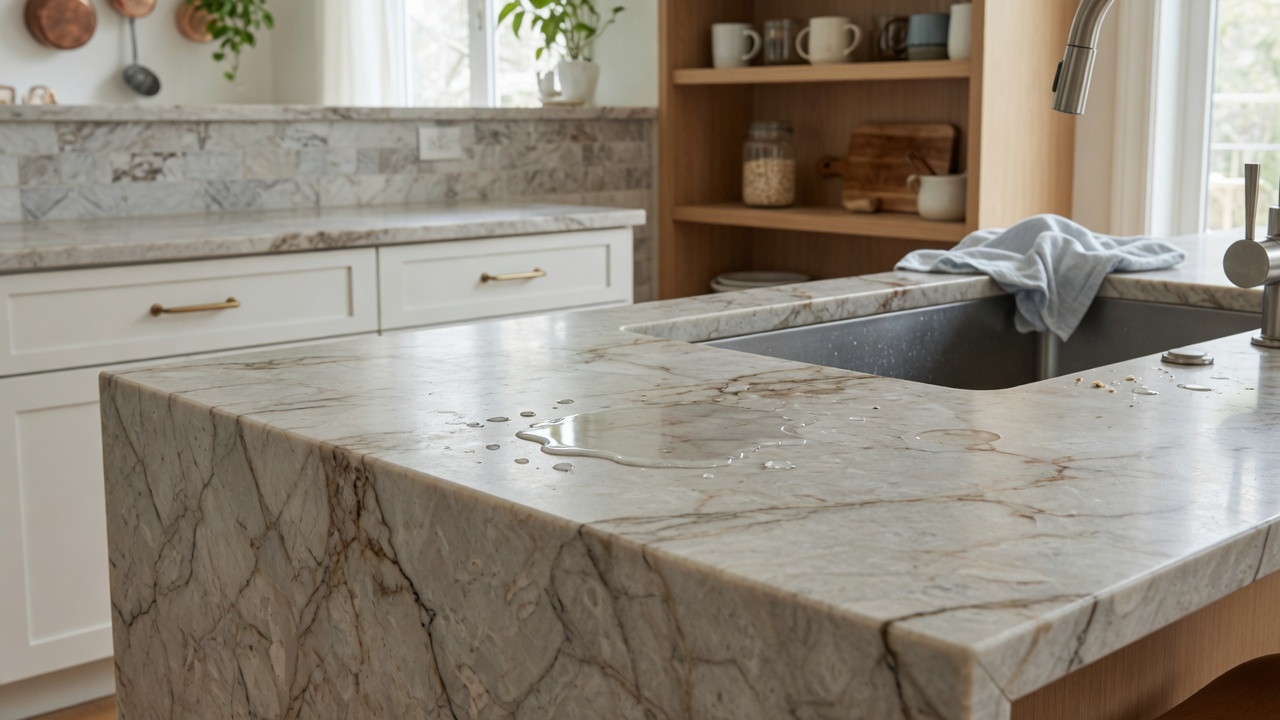
Quartzite gets sold as the tough, low-maintenance alternative to marble, and in a lot of ways it's. But "tough" doesn't mean it skips sealing. Here are the questions we get most from customers standing at the slab or a few years into owning one.
Does quartzite actually need to be sealed?
Yes. Quartzite is natural stone, and natural stone is porous to some degree, even the hard, dense stuff. Sealing fills those pores near the surface so liquids bead up and give you time to wipe them away instead of soaking in. We seal every quartzite countertop we install with a good sealer, applied by installers we train to do it right. That first seal, the one that matters most, is already done when we hand you the keys. But sealing wears down over years of use, so it's not a one-and-done thing.
What's the water test and how do I run it?
Pour a small puddle of water, about the size of a quarter, on your countertop and watch it for 15 to 20 minutes. If it beads up and sits on the surface, your seal is still doing its job. If it starts to darken the stone or soak in within a few minutes, that's your sign it's time to reseal. Try it in a few spots, especially near the sink and stove where the surface sees the most action. Don't just test one corner and call it good for the whole kitchen.
How often should I actually reseal?
For most kitchens, once a year is a reasonable rhythm. If your quartzite is a lighter, more porous variety, or if you've got a busy kitchen with a lot of cooking and cleaning, you might need it every 6 to 9 months. Bathroom vanities and rarely used surfaces can often go longer between resealing since they don't take the same daily wear. The water test is more reliable than a calendar reminder, so use it to check rather than guessing.
Does polishing or a shiny finish mean it's already sealed and I can skip this?
No, and this trips people up. A polished finish makes the stone shiny, but it doesn't change how porous the stone is underneath. A polished quartzite absorbs about the same amount as a honed one. Sealing is a separate step, and it's the one that actually protects against stains, not the polish.
Can sealing stop stains or scratches too?
Sealing mainly helps with staining, by slowing down how fast liquids soak into the stone. It gives you a window to wipe up spills before they set in, not a permanent shield. Even a well-sealed countertop can stain if wine, oil, or coffee sits overnight, so wipe things up when they happen. Quartzite is one of the harder stones we work with and resists scratching better than marble, but it can still scratch, so keep using a cutting board. Sealing doesn't touch that side of things at all, that's just about the hardness of the stone.
What if my slab is labeled quartzite but doesn't act like it?
This happens more than people expect. A slab's trade name isn't a guarantee of what the stone actually is. Some slabs sold as quartzite are really a softer calcite stone underneath, closer to marble, and they'll etch if lemon juice or vinegar hits them. If your "quartzite" is showing dull spots from acidic spills, that's a real clue worth asking us about. We go by how a stone behaves, not just the label on it.
If you're not sure where your countertop stands, bring a photo or come by 2015 Charleston Hwy in Cayce. We can take a look, run the water test with you, and tell you honestly whether it's time to reseal or if you've got some time left.