
Care and maintenance
Does quartzite stain? what to know before you seal or skip it
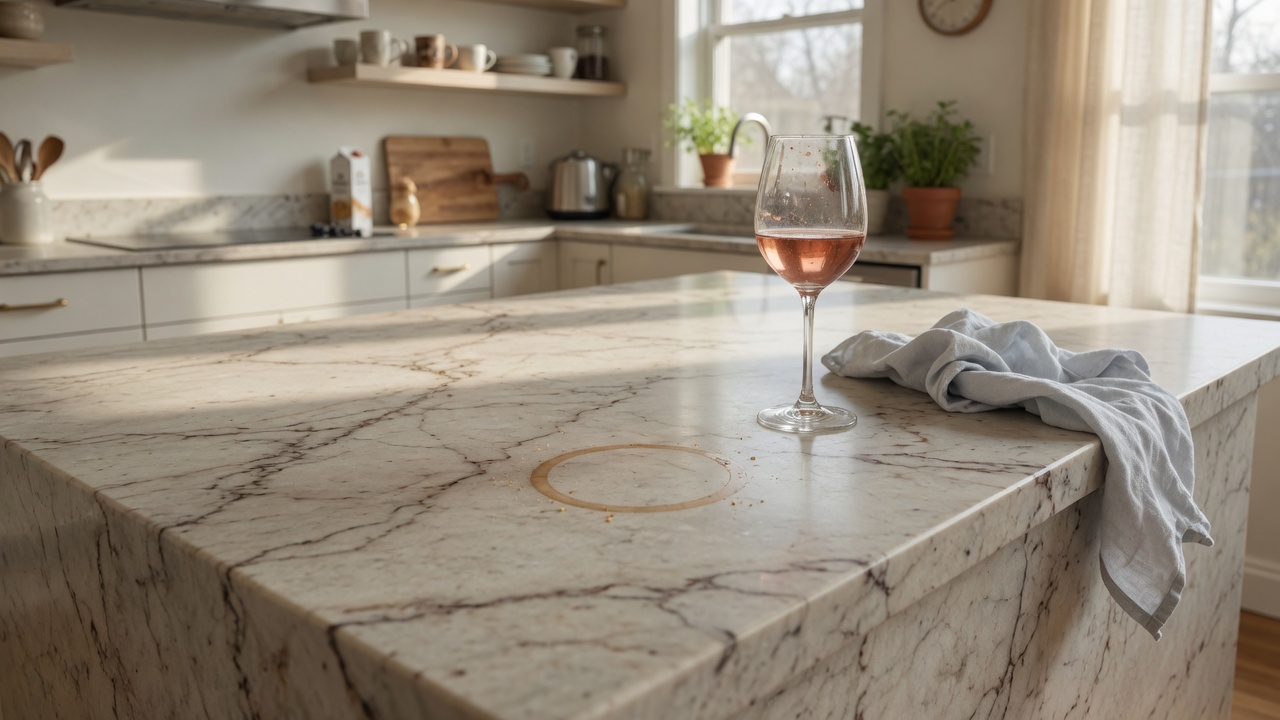
Quartzite gets sold as the tough, worry-free alternative to marble, and a lot of that reputation is earned. It's hard, it resists scratching better than most stones, and it holds up well to heat compared to a lot of surfaces. But stain resistance is a different question, and it deserves a straight answer instead of a sales pitch.
Yes, quartzite can stain
Quartzite is a natural stone, and natural stone is porous to some degree. That includes quartzite. It's got tiny channels in its structure that can pull in liquid if given enough time and the wrong conditions. Oil, wine, coffee, and tomato sauce are the usual culprits. If one of those sits on an unsealed or poorly sealed quartzite counter overnight, you can end up with a dark spot that wasn't there before.
Why it happens: porosity, not weakness
A stain isn't a sign your countertop is bad or that you picked wrong. It's just physics. Every natural stone has some porosity, quartzite included, and the degree varies slab to slab depending on where it formed and how tightly its crystals are packed. Some quartzite is denser and less porous than others, which is part of why two slabs labeled the same way can behave a little differently in real life.
Sealing is the main defense, and it matters
- Sealing fills those pores at the surface so liquid beads up instead of soaking in, giving you time to wipe it away before it stains.
- We seal every job at install with a good sealer, applied by installers we train to do it right. A lot of shops leave that step to the homeowner. We don't.
- Sealing isn't a one-time thing. Plan to reseal natural stone, quartzite included, about once a year for a typical kitchen. Busier kitchens might want it a little more often.
- A simple water test tells you where you stand: drip some water on the counter and watch it. If it beads up, your seal is doing its job. If it soaks in and darkens the stone within a few minutes, it's time to reseal.
Sealing buys you time, not immunity
Here's the part that's easy to gloss over: even a well-sealed quartzite counter can stain if something sits on it long enough. Sealer slows absorption, it doesn't stop it forever. Wine left on the counter overnight, a puddle of olive oil from a bottle that leaked, a bowl of marinara that got shoved to the back of the counter and forgotten, any of those can work past a seal given enough time. Wipe spills up when they happen, especially oils, wine, and acidic sauces, and you'll rarely have a problem.
Know what you actually bought
A slab's trade name doesn't always tell you what's really on your countertop. Some stone sold under the