
Local
Quartzite countertops for Lugoff homes: what to know before you buy
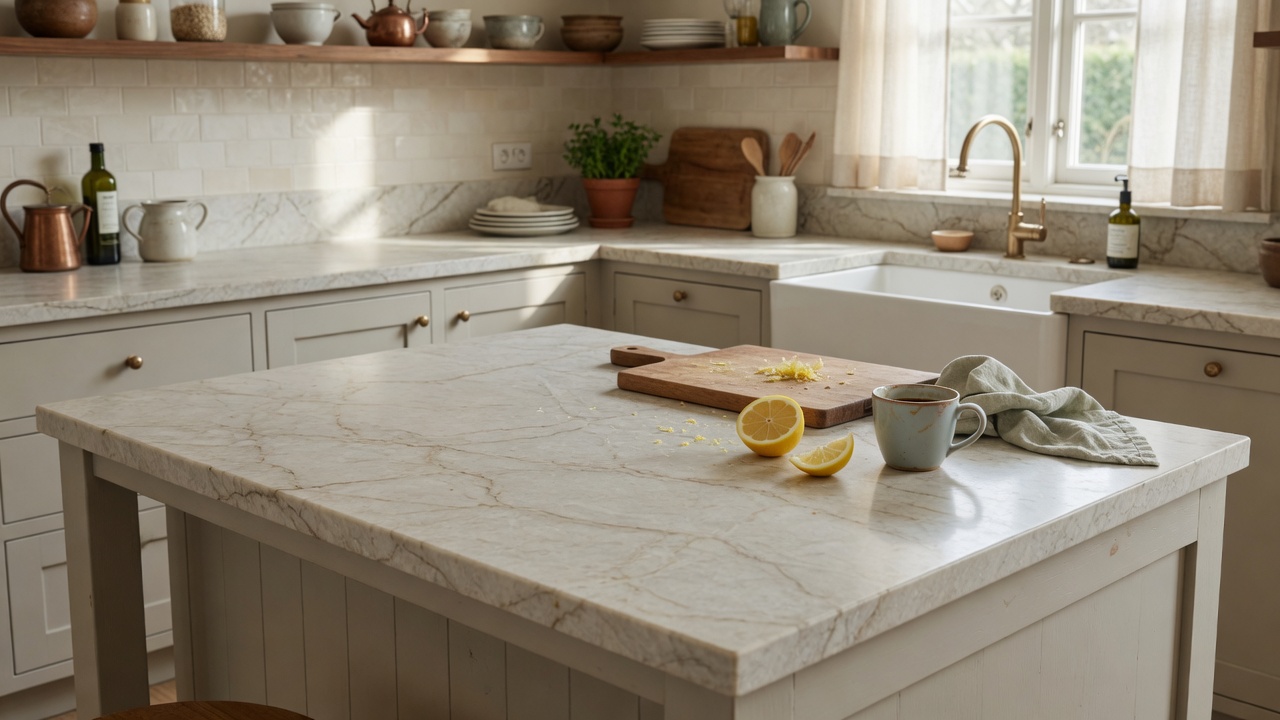
We see a lot of Lugoff folks come through our Cayce shop after they've already looked at granite online and started hearing the word quartzite thrown around by a builder or a Camden Chronicle ad. Lugoff's grown fast the last several years, a mix of newer builds off Highway 1 and older ranch homes getting their kitchens redone. Both groups end up asking us the same question: is quartzite worth it over granite, and how does it stack up against marble if they like that look?
Here's a straight comparison, no sales pitch, just what each stone actually does.
What quartzite actually is
Quartzite starts as sandstone and gets compressed and heated underground until it turns into a much harder, denser rock. That process is why it resists scratching better than most stones we sell. It's not glass, so a knife dragged across it or a cast iron pot dropped wrong can still leave a mark, but day to day it holds up well.
One thing we tell every Lugoff customer: the name on the slab isn't a promise. Some stone sold at the yard as "quartzite" is actually a softer calcite stone that etches like marble. We go by how a slab behaves when we test it, not just what the label says. If you're shopping around, ask your fabricator to show you, don't just take the tag's word for it.
Quartzite vs. granite
Granite's been the standard in Midlands kitchens for decades, and for good reason.
Where they're similar:
- Both are natural stone, both are porous and need sealing.
- Both handle brief contact with a hot pan better than most surfaces, but we still say use a trivet every time.
- Both resist scratching well enough for normal kitchen use, cutting board still recommended.
Where they differ:
- Quartzite tends to have a softer, more movement-driven look, closer to marble, with veining and color blending. Granite usually shows more speckled, granular patterns.
- Quartzite is generally harder than granite, which matters if you're rough on counters.
- Quartzite often runs a bit higher in price per square foot because good quartzite blocks are harder to quarry and cut.
- Granite has more color and pattern variety at lower price points, which matters for a budget kitchen remodel.
For a lot of the ranch-style homes we see in older Lugoff neighborhoods, granite still makes a lot of sense. It's proven, it's available in a wide range of colors, and it costs less.
Quartzite vs. marble
This is the comparison that trips people up most, because quartzite and marble can look almost identical on a showroom slab.
The key difference is chemistry. Marble is a calcite stone. Lemon juice, vinegar, tomato sauce, all the acids in a normal kitchen will etch it, leaving a dull mark where the acid touched. That's normal for marble, not a defect, but it does mean the surface changes over time. True quartzite, the hard kind, resists that kind of acid etching far better because it's mostly silica, not calcite.
What that means practically:
- If you want the soft veined look of marble but cook a lot with citrus, wine, or tomato-based sauces, real quartzite gives you a similar look with better acid resistance.
- If you love the idea of marble's patina developing over years, some Lugoff customers do want that aged look in a butler's pantry or bar area, and marble delivers it.
- Sealing helps both stones resist staining, but sealing doesn't stop etching. That's a chemical reaction on the stone's surface, and no sealer blocks it.
We test slabs by putting a drop of something mildly acidic on an inconspicuous spot before we sell it as true quartzite. It's a quick way to confirm what you're actually buying.
What Lugoff homes tend to need
Newer construction around Lugoff, especially the larger open-concept kitchens with an island as a gathering spot, tends to favor quartzite's lighter, more marble-like patterns. It reads well against white or navy cabinets, which we're seeing a lot of in that area right now.
Older homes doing a kitchen refresh often do better with granite, both for cost and because it's an easier match if you're not replacing cabinets and want a stone that plays well with a range of existing finishes.
Either way, natural stone needs to be sealed and resealed, usually about once a year for a busy kitchen. We seal every job at install with a good sealer, applied by installers we train to do it right, so that first and most important seal is already done when you move in. You'll still want to keep up with resealing over the years.
Questions we get most from Lugoff customers
- "Will it scratch if my kids use it as a cutting surface?" Quartzite resists scratching well, but we still recommend a cutting board. Protects your knives too.
- "Can I put a hot pot straight from the stove on it?" Quartzite handles brief heat better than most stone, but always use a trivet. No stone is worth risking a thermal crack.
- "Does it really need sealing if it's that hard?" Yes. Hardness and porosity aren't the same thing. Quartzite is porous, like all natural stone except quartz, and needs sealing.
If you're weighing quartzite against granite or marble for a Lugoff kitchen, come by our shop at 2015 Charleston Hwy in Cayce. Seeing the slabs in person, under real light, tells you more in five minutes than any photo online.