
Local
Quartzite countertops in Gilbert, SC: a walk-through of the process
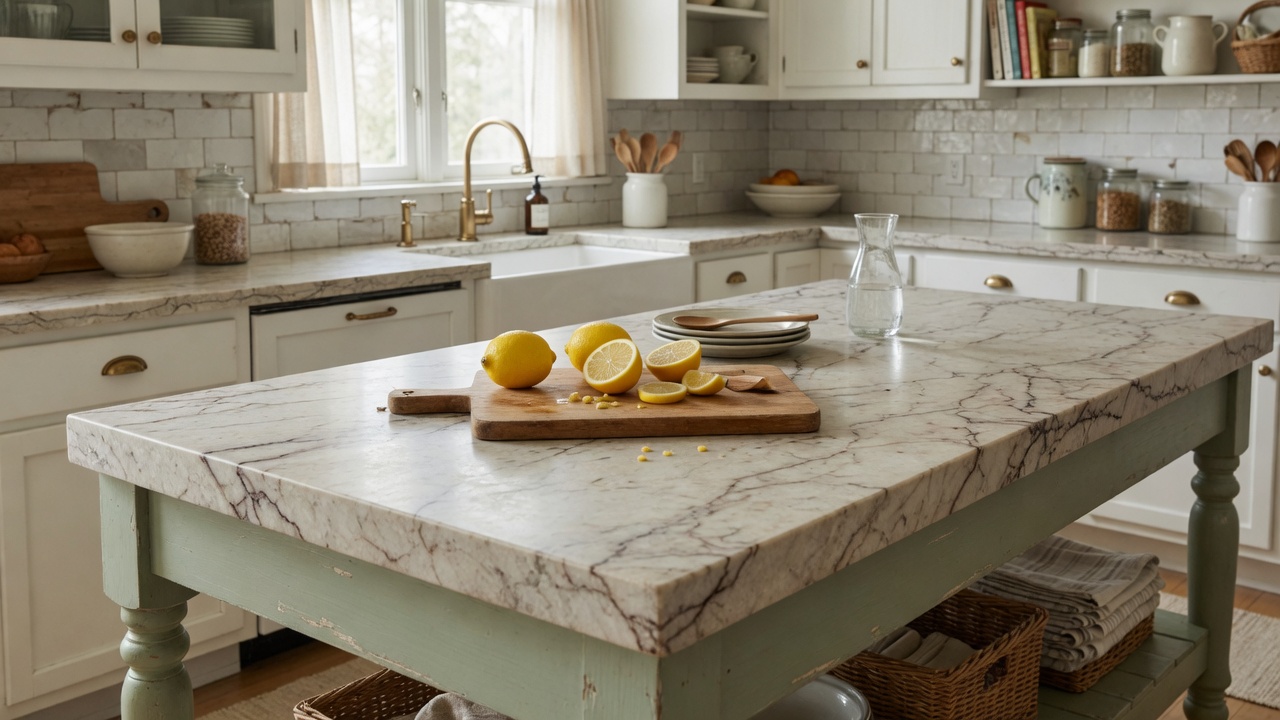
Gilbert sits close enough to our Cayce shop that a lot of folks out that way come to us after seeing a neighbor's kitchen or a farmhouse renovation with a stone they liked and couldn't name. Often it turns out to be quartzite. Here's how the process usually goes, start to finish.
Step one: figuring out what you're actually looking at
A lot of Gilbert homes we work with are newer builds on larger lots, plus a good number of older farmhouses getting updated kitchens. Both styles pair well with quartzite because it reads as natural stone without looking too formal or too rustic. But before we talk slabs, we talk names. Quartzite is one of the most mislabeled stones in the business. Some slabs sold as "quartzite" at big box stores or even other yards are actually a softer calcite stone that etches like marble. A trade name isn't a guarantee of what you're getting. We go by how the stone behaves, scratch resistance, hardness, reaction to a little vinegar test, not just the sticker on the slab.
Step two: picking the slab in person
We always recommend coming to the shop at 2015 Charleston Hwy in Cayce to see actual slabs rather than picking from a sample chip. Quartzite has a lot of movement, veining, and color variation slab to slab, even within the same quarry block. Photos and small samples don't tell you how a big island or a full countertops will actually look in your kitchen. This is also when we walk through finish options, polished or honed, since that's mostly a look decision. Polishing makes a slab shiny but doesn't change how porous it is, so sealing matters the same either way.
Step three: templating and fabrication
Once you've picked a slab, we template your kitchen or bath to get exact measurements, then cut and fabricate the stone to fit. This is where edge profiles, sink cutouts, and any seams get planned out. Quartzite is genuinely hard stone, one of the harder ones we cut, which is great for durability but means fabrication takes real skill and the right equipment. It's part of why quartzite work isn't the cheapest option on the lot, but it holds up.
Step four: install and sealing
On install day, our crew sets the countertops and seals them with a top-shelf sealer before we leave. A lot of companies install and leave sealing up to the homeowner. We don't do that. The first seal, the most important one, is done for you. Even so, sealing is something you'll want to keep up on over the years, usually about once a year for most kitchens, since quartzite is porous to some degree like any natural stone.
Step five: living with it
This is where most of the questions come in after the fact. Quartzite resists scratching better than marble and handles brief contact with a hot pan better than most surfaces, but we still tell every customer to use a cutting board and a trivet. It's a tough, durable stone, but it's still stone, so it deserves the same everyday care as any countertop. Wipe up wine, oil, and citrus when they happen rather than letting them sit overnight, since even a well-sealed surface can stain given enough time. And because true quartzite is a silicate stone rather than a calcite one, it holds up to acids like lemon juice much better than marble does, which is one of the real reasons people choose it for busy kitchens.
What Gilbert homeowners usually ask us
The most common question is whether what they're looking at is "real" quartzite or a look-alike, followed closely by cost. Rough ranges vary a lot depending on slab origin and finish, so we'd rather give you a number after you've picked a slab than a guess over the phone. Come see what we've got on the floor in Cayce. It's a short drive from Gilbert, and seeing the slabs in person tells you more than any chip ever will.