
Local
Quartzite countertops in Gaston: myths we hear and the real story
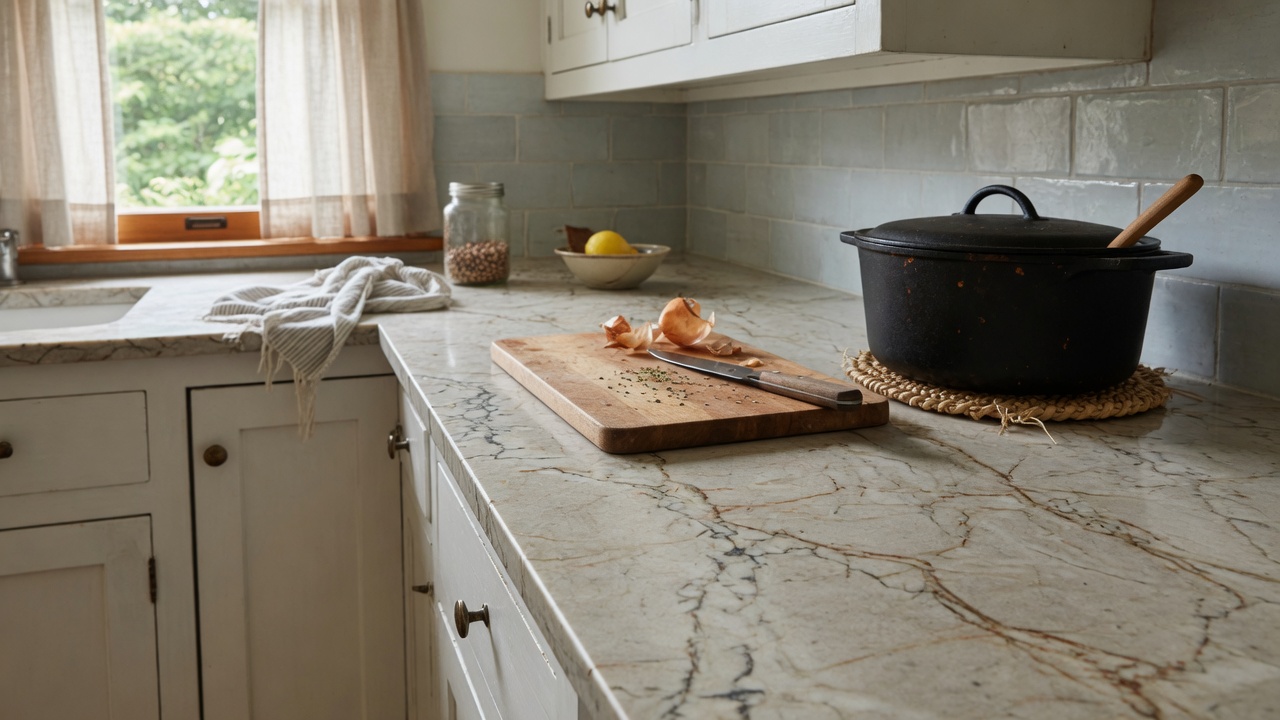
We see a lot of folks from Gaston come through our Cayce shop, just a short drive down Charleston Highway. Whether it's a brick ranch off Highway 321 or a newer build out toward Pine Ridge, quartzite keeps coming up as the stone people want but aren't quite sure about. So let's go through the myths we hear most and set the record straight.
Myth: "Quartzite is basically indestructible"
This is the big one. People hear "quartzite" and "harder than granite" in the same sentence and assume it can take anything.
Here's the real story: quartzite is one of the harder natural stones we fabricate, and it resists scratching better than marble. But even quartzite can scratch. Dragging a cast iron pot across it can still leave marks over time, and while it holds up well to daily use, we still tell every Gaston customer the same thing we tell everyone else: use a cutting board. It protects your knives as much as it protects the counter.
Myth: "Quartzite can handle a hot pot straight off the stove"
Quartzite does handle brief heat better than a lot of surfaces, and that's part of why it's popular in busy kitchens. But "better than most" isn't the same as safe every time. Thermal shock, a sudden temperature swing, can still stress any natural stone. We always recommend a trivet or hot pad, even on quartzite. It's a small habit that saves you from a bad surprise.
Myth: "Quartzite never needs sealing"
This mix-up happens because people confuse quartzite with quartz (the engineered stuff). They're not the same material. Quartzite is a natural stone, which means it's porous to some degree, and it should be sealed. We seal every quartzite countertop we install with a top-shelf sealer, applied by installers we train to do it right. After that, most kitchens need a light resealing about once a year, depending on how much the counters get used.
Myth: "If it's called quartzite, it acts like quartzite"
This one catches people off guard. Not every slab sold under the name "quartzite" behaves like true quartzite. Some slabs on the market labeled that way are actually a softer, calcite-based stone that etches like marble when it meets lemon juice, vinegar, or wine. A trade name on a sample board doesn't guarantee what you're getting. This is exactly why we look at how a slab actually performs, scratch resistance, acid reaction, absorption, rather than trusting the label alone. If you're picking a slab for your Gaston kitchen, ask us to walk you through what makes it a true quartzite versus a marble in disguise.
Myth: "Sealing means it will never stain"
Sealing buys you time and resistance, but it doesn't make a stone immune. Even a well-sealed quartzite counter can pick up a stain if red wine or olive oil sits overnight. Wipe up spills when they happen and you'll be fine.
What quartzite is genuinely good at
Quartzite earns its popularity honestly. It holds up well in kitchens that see a lot of cooking, it comes in some striking natural veining, and with reasonable care it looks good for decades. For a lot of Gaston homes, especially ones with an open kitchen that gets daily use, it's a solid choice.
If you're weighing quartzite against granite or marble for a Gaston kitchen, come by our shop at 2015 Charleston Hwy in Cayce. Seeing the slabs in person, and running your hand across a few finishes, tells you more than any brochure will.