
Local
Quartzite countertops in Cayce: a walk-through of the process
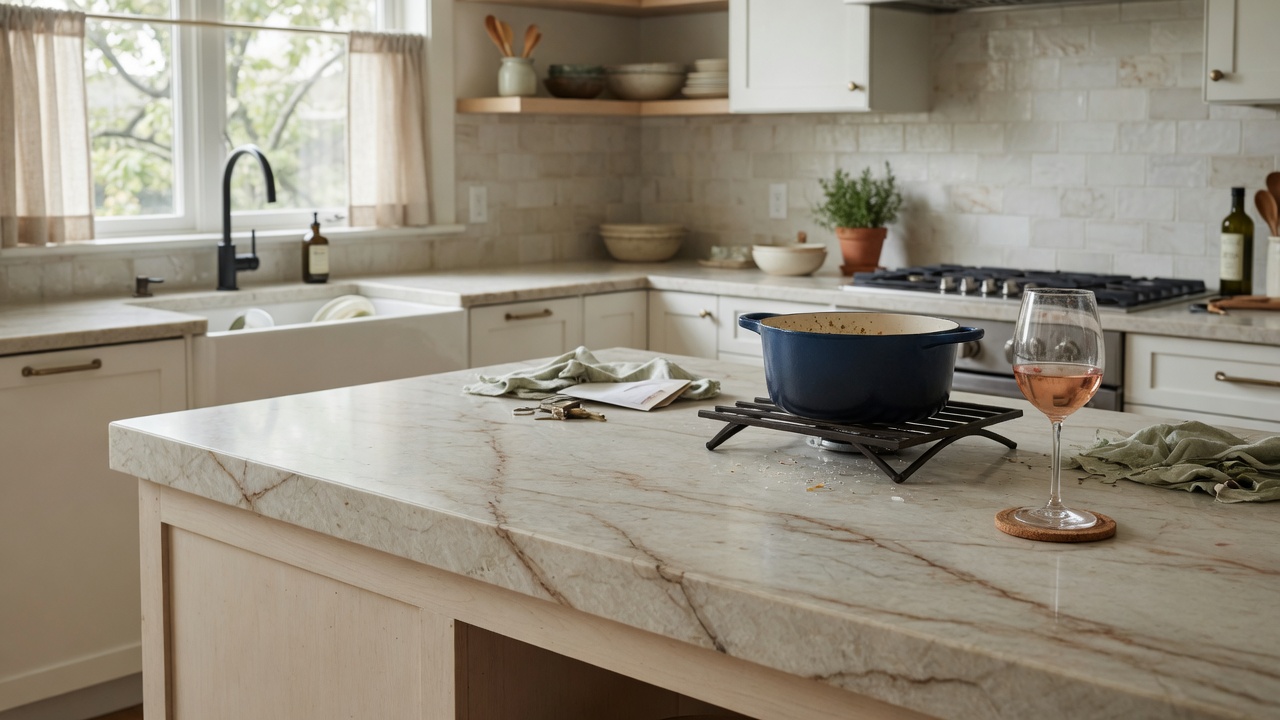
Cayce has a good mix of homes, older ranches near the river, newer builds out toward Lexington, some renovated mill houses closer to town. Quartzite fits a lot of them because it reads like natural stone should, movement and depth, but holds up to daily kitchen use better than a lot of alternatives people also ask about. Here's how the process usually goes when someone comes to us wanting it.
Step one: the first question at the shop
Most people walk in already having heard the word "quartzite" and mixing it up with quartz. They're not the same material. Quartz is engineered, made from ground stone and resin. Quartzite is a natural stone, formed from sandstone that got compressed and heated underground over a long time. That's why quartzite has that recrystallized, almost glassy look in places, and why it behaves differently at the counter.
We also tell people early on that a slab's trade name isn't a guarantee of what it actually is. Some slabs sold as "quartzite" at the yard are really a softer, calcite-based stone that etches like marble. We go by how the stone performs, scratch test, acid test, not just the label on the tag.
Step two: picking the slab
This is where Cayce and Lexington customers spend the most time, usually at a slab yard walking rows with Scott or Lee. Quartzite ranges from quiet and white-grey to bold, with veining that can look almost like movement in water. Because it's natural, no two slabs are identical, so we always recommend picking your actual slab in person rather than off a sample chip. A 3 inch square doesn't tell you what a 9 foot island will look like.
Step three: what people ask us most
The questions are pretty consistent:
- Will it scratch? Quartzite is one of the harder stones we fabricate, and it resists scratching better than marble. But "resists" isn't "won't." Use a cutting board, always.
- Can I put a hot pot on it? Quartzite handles brief contact with heat better than most surfaces, but we still tell every customer to use a trivet. No stone countertop should take a pan straight off the stove as a habit.
- Does it stain? It's porous, like all natural stone, so yes, it can stain if something sits on it. A glass of wine left overnight on unsealed quartzite can leave a mark. Sealing buys you time and makes cleanup forgiving, it doesn't make the stone stain-proof.
- Does it need sealing? Yes, and we handle that at install. Every job that leaves our shop gets a top-shelf sealer applied by installers we've trained to do it right. A lot of shops leave that step to the homeowner. We don't skip it. You'll want to reseal every year or so going forward, but the first and most important seal is already done when we hand you the keys.
Step four: templating and fabrication
Once a slab's picked, we template the space, usually in your kitchen, sometimes for a bathroom vanity or outdoor kitchen surround, which is popular here given how much time Midlands families spend outside in spring and fall. Quartzite is dense and can be tough on tooling, so cutting and polishing takes patience. We cut to the template, polish or hone the edges depending on what you chose, and prep for install.
Step five: install and seal
Install day is when the slab actually goes into your kitchen and gets set, leveled, and seamed if it's a multi-piece top. Sealing happens right after. This is the step we mentioned above, it's built into our process, not an upsell.
Step six: living with it
After install, care is simple: wipe spills when they happen, use a cutting board, use a trivet, reseal periodically. Quartzite handles the daily bumps of a real kitchen better than most stone, which is a big reason it fits Cayce homes so well, from a busy family kitchen to a quieter build out near the river.
If you're weighing quartzite against granite or quartz for a Cayce or Lexington project, come by 2015 Charleston Hwy and look at actual slabs. Pictures and samples only tell you so much.