
Care and maintenance
Caring for quartzite countertops: real questions we hear at the shop
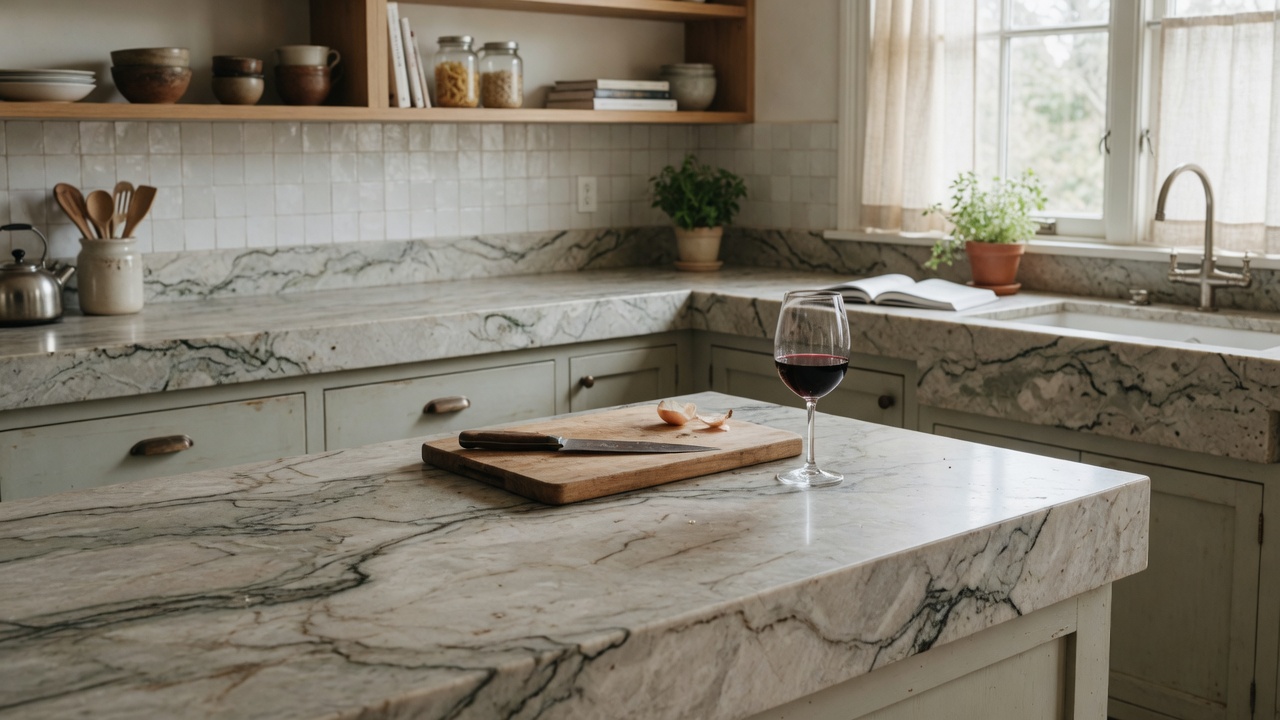
Quartzite gets sold as the tough guy of the stone world, and a lot of that reputation is earned. But we'd rather tell you how it actually behaves in a kitchen than let you assume it needs nothing from you.
Is quartzite really as tough as everyone says?
It's one of the harder stones we fabricate, harder than marble and holding up well to scratching in daily use. Still, "hard" doesn't mean "can't be scratched." A ceramic knife or a dropped cast iron pan can still leave a mark. We tell every customer the same thing: use a cutting board. It's cheap insurance for a slab you're going to own for decades.
Do I need to seal it, and how often?
Yes. Quartzite is natural stone and it's porous to some degree, even though it feels dense. We seal every job at install with a good sealer, applied by installers we train to do it right, so you're covered from day one. After that, plan on resealing about once a year for most kitchens. A quick way to check: splash a little water on the surface. If it beads up, you're fine. If it soaks in and darkens the stone, it's time to reseal.
Can I set a hot pan on it?
Quartzite handles brief contact with heat better than a lot of surfaces, but we still tell people to use a trivet or hot pad every time. Repeated direct heat, or a pan left sitting too long, isn't worth the risk to your finish or your seal. It's a five-second habit that saves you a headache.
What about lemons, wine, and vinegar? Will it etch like marble?
This is where quartzite earns its keep. True quartzite is a metamorphosed sandstone, not a calcite stone, so it doesn't etch from acids the way marble does. That's a real difference and a good reason people choose it. One catch worth knowing: some slabs sold in showrooms as "quartzite" are actually softer calcite stones that do etch. The trade name on a slab isn't a guarantee of what's underneath, so we go by how a stone actually behaves, not just its label. Ask us to test a sample with a little lemon juice before you buy if you want peace of mind.
What's the daily cleaning routine?
Warm water, a mild dish soap, and a soft cloth or sponge. That's it for 90 percent of your cleaning. Skip the vinegar-based sprays and anything with bleach or ammonia, since they can wear down the sealer over time even if they don't etch the stone itself. Wipe up spills, especially wine, oil, and coffee, when they happen rather than letting them sit overnight. Even a well-sealed stone can pick up a stain if a spill sits long enough.
How does it wear over the years in a real kitchen?
Quartzite ages well, plain and simple. We've seen it hold its polish and color in busy kitchens for years with basic care. What we tell people to expect: a little more matte wear right where the cook stands and chops most, some possibility of small scratches if a board isn't used, and a slab that still looks like itself a decade in if it's resealed on schedule. It's not a zero-maintenance material. It's a low-maintenance one, and there's a real difference.
If you're weighing quartzite against granite or marble, come by 2015 Charleston Hwy in Cayce and look at actual slabs under real light. Pictures online never show you how a stone moves, and that matters more than most people expect before they've picked one out.