
Care and maintenance
Do you need to seal quartz countertops? here's the real answer
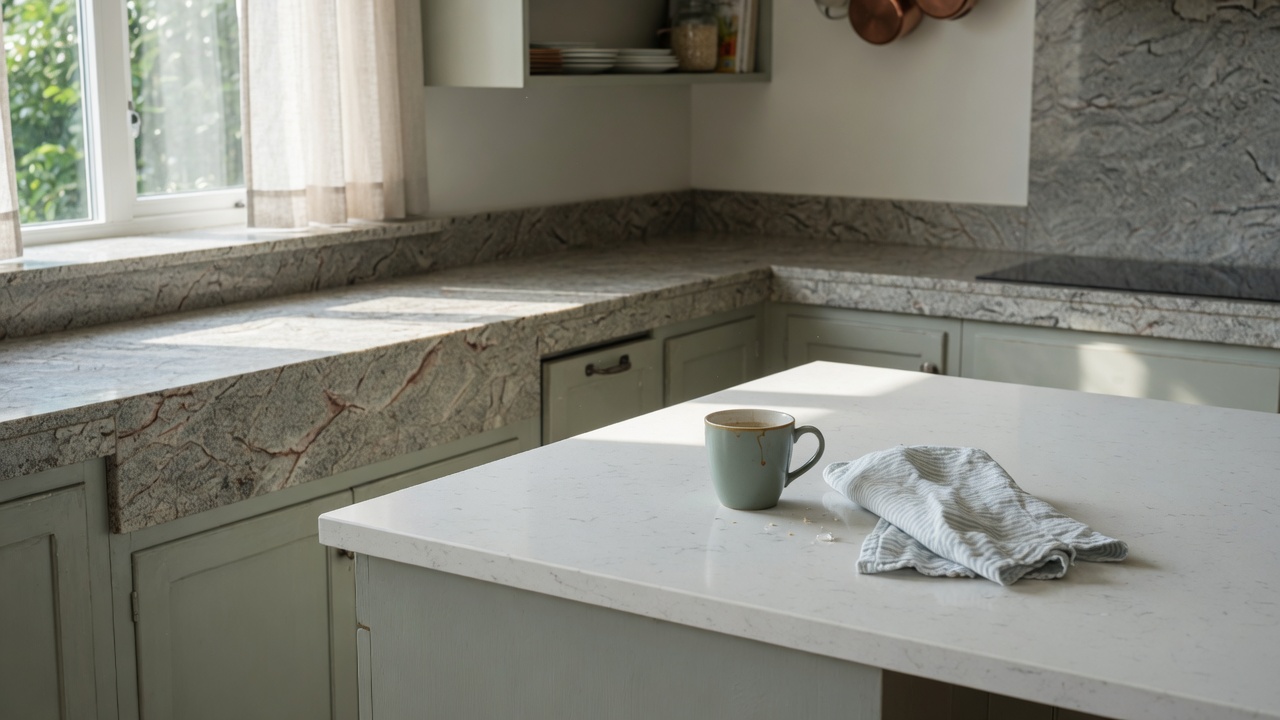
We get asked about resealing quartz almost as often as we get asked about granite. It's a fair question. Most of what people know about stone care comes from natural stone, and quartz plays by different rules.
Quartz isn't stone the way granite is
Engineered quartz is made from crushed quartz mixed with resin, usually around 90 to 95 percent stone and the rest binder. That resin fills in the gaps that would otherwise make it porous. Granite, marble, and quartzite are natural rock with tiny pores running through them, which is why they need a sealer to slow down staining. Quartz doesn't have those open pores in the same way. It's non-porous, full stop.
So no, you don't need to seal it
This is the one place we can say something close to an absolute and mean it: quartz doesn't need sealing, not at install and not five years later. If someone tries to sell you a quartz resealing service, save your money. It's not doing anything a sealer would do on granite, because there's no porous surface for it to soak into.
Why the water bead test doesn't apply here
On natural stone, we use the water test to check if a sealer is still working. Drop water on the counter, and if it beads up, the seal is holding. If it soaks in fast and darkens the stone, it's time to reseal.
On quartz, water will usually just sit there or bead loosely because the surface is smooth resin and stone, not because of any sealer. Don't use this test to judge quartz. It won't tell you anything useful, and you might see water sit for a minute and wrongly assume the counter is sealed when there was never anything to seal in the first place.
What quartz care actually looks like
Since sealing is off the table, here's where your attention should go instead:
- Wipe spills when they happen. Quartz resists staining well, but it's still smart to clean up wine, coffee, or oil rather than let them sit for a day.
- Skip the harsh chemicals. Bleach, oven cleaner, and other high pH products can dull the resin over time or discolor the surface at the seams. A mild dish soap and water handles almost everything.
- Use a trivet. This is the big one people get wrong. Quartz is engineered with resin, and resin can scorch or discolor under a hot pan. Granite and quartzite shrug off brief heat better than most surfaces, but quartz is the one material in our shop where we tell people to be extra careful. Always use a trivet or hot pad.
- Still use a cutting board. Quartz holds up well to scratching, better than a lot of surfaces, but a knife blade against it isn't doing your knife or the counter any favors.
- Watch direct sun on outdoor installs. Quartz isn't a great choice for outdoor kitchens because UV exposure can fade the resin and cause color shifts over time. If you want stone on a patio, granite or quartzite is the better call.
If you see a stain or dull spot anyway
Even non-porous surfaces can pick up residue from something like hard water, hairspray, or a sticky spill that dried on the surface. That's usually a surface deposit sitting on top of the quartz, not something soaked into it. A non-abrasive cleaner and a little elbow grease clears most of it. If a spot won't budge, give us a call before reaching for anything scouring or acidic. Quartz resin can be dulled by aggressive scrubbing pads even though the stone underneath is tough.
The bottom line on maintenance schedules
Granite and quartzite owners should think about resealing roughly once a year. Marble owners need to watch for etching on top of that. Quartz owners get to skip that whole conversation. Your maintenance schedule is really just: wipe it down, use a trivet, use a cutting board, and don't panic about sealing because there's nothing there to fail.
If you're weighing quartz against granite or quartzite for a new kitchen and want to see how they actually feel and wear side by side, stop by our shop at 2015 Charleston Hwy in Cayce. We've got slabs of all three out on the floor, and it's a lot easier to talk care routines with a piece of stone in front of you.