
The work
How we template and fabricate engineered quartz, myth by myth
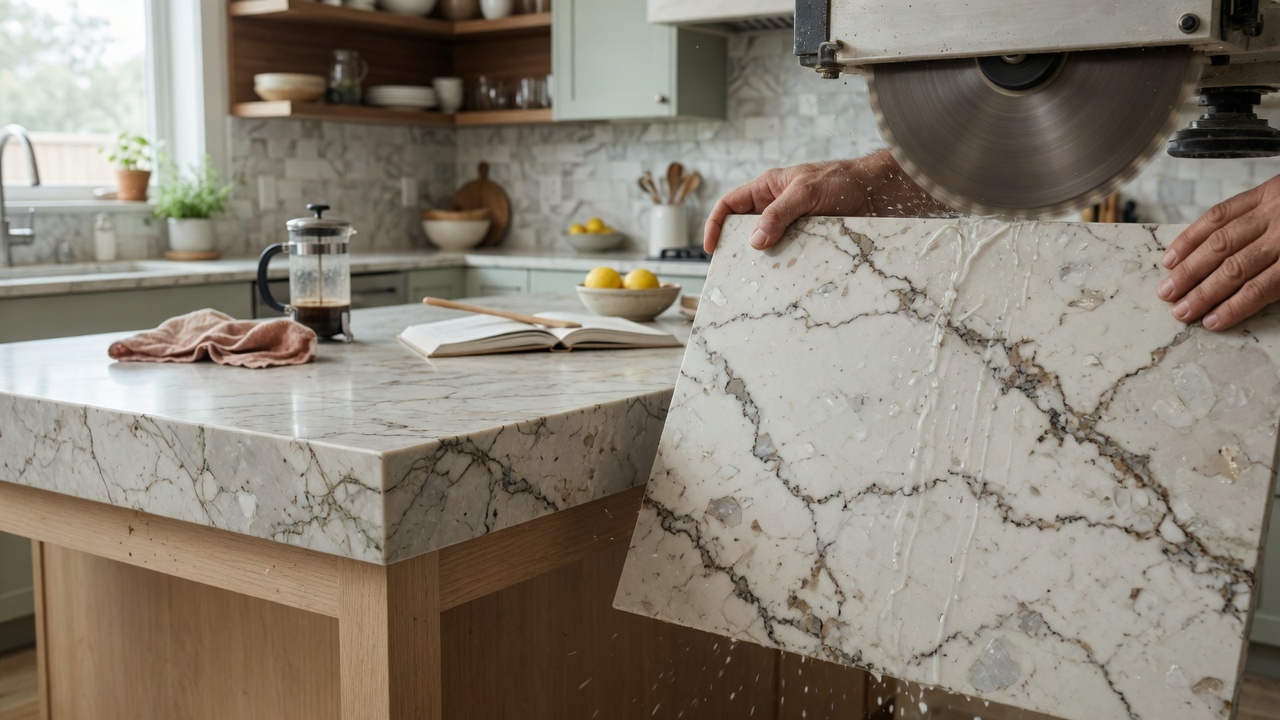
Myth: quartz is just cut from a big flat sheet, so any shop can do it fast
People assume engineered quartz is more forgiving than natural stone because it's manufactured, so the fabrication side must be quick and simple. It's not. Quartz slabs are dense and consistent, which is a real advantage, but cutting and finishing them still takes the same careful templating and skilled hands as granite or quartzite. The material being uniform doesn't mean the job is.
How templating actually works
We don't measure your cabinets with a tape measure and call it done. We come out after your base cabinets are set and build a physical or digital template of the exact space, corners, appliance cutouts, sink location, all of it. Cabinets are rarely perfectly square, walls bow a little, and a template catches that. This step is what keeps your finished countertop from having gaps at the backsplash or an overhang that's off by an eighth of an inch. Skipping or rushing this step is where a lot of countertop problems start.
Myth: seams are a sign of a bad fabricator
Customers sometimes see a seam line and think it means the shop cut corners or ran out of slab. Seams usually come down to physics. Quartz slabs come in standard sizes, generally around 120 by 55 inches or so depending on the brand, and a long countertop, an L-shaped kitchen, or an island bigger than one slab will need a seam somewhere. A good fabricator plans seam placement to land in the least visible spot, often away from the sink or in a run where the eye naturally breaks anyway. We lay out the slab digitally before cutting so we can see exactly where seams will fall and adjust for pattern matching, especially on quartz with veining or movement.
Cutting and finishing
Once the template is finalized, we cut the slab on a CNC saw for precision, then hand-finish the edges. Edge profiles, whether it's a simple eased edge or a full bullnose, get polished by hand to match the sheen of the slab face. Sink cutouts, cooktop openings, and outlet holes all get cut and smoothed at this stage too. This is where craft shows up. Machines cut accurately, but a person still has to dress the edges so the finished piece feels right under your hand, not just look right.
Myth: quartz doesn't need any care once it's installed
Quartz is genuinely low-maintenance compared to natural stone. It's non-porous, so it doesn't need sealing, and it resists stains better than most surfaces. But it's not indestructible. The resin binder in quartz means a hot pan straight off the stove can scorch or discolor it, so a trivet is still the right habit. It also isn't scratch-proof, so we still recommend a cutting board. Low-maintenance isn't the same as no-maintenance.
Install day
We move the fabricated pieces into your home, set them on the cabinets, level everything, and join any seams with a color-matched epoxy that's polished flush once it cures. A good seam should be smooth to the touch and hard to spot from a few feet back, not invisible, but close. Sinks get set, caulking gets run, and we walk the whole countertop with you before we call it finished.
If you're curious how your kitchen layout would seam out, bring your cabinet dimensions by our shop at 2015 Charleston Hwy in Cayce. We can usually give you a good idea of seam placement before you even pick a slab.