
Care and maintenance
Heat, scratches, and engineered quartz: what's actually true
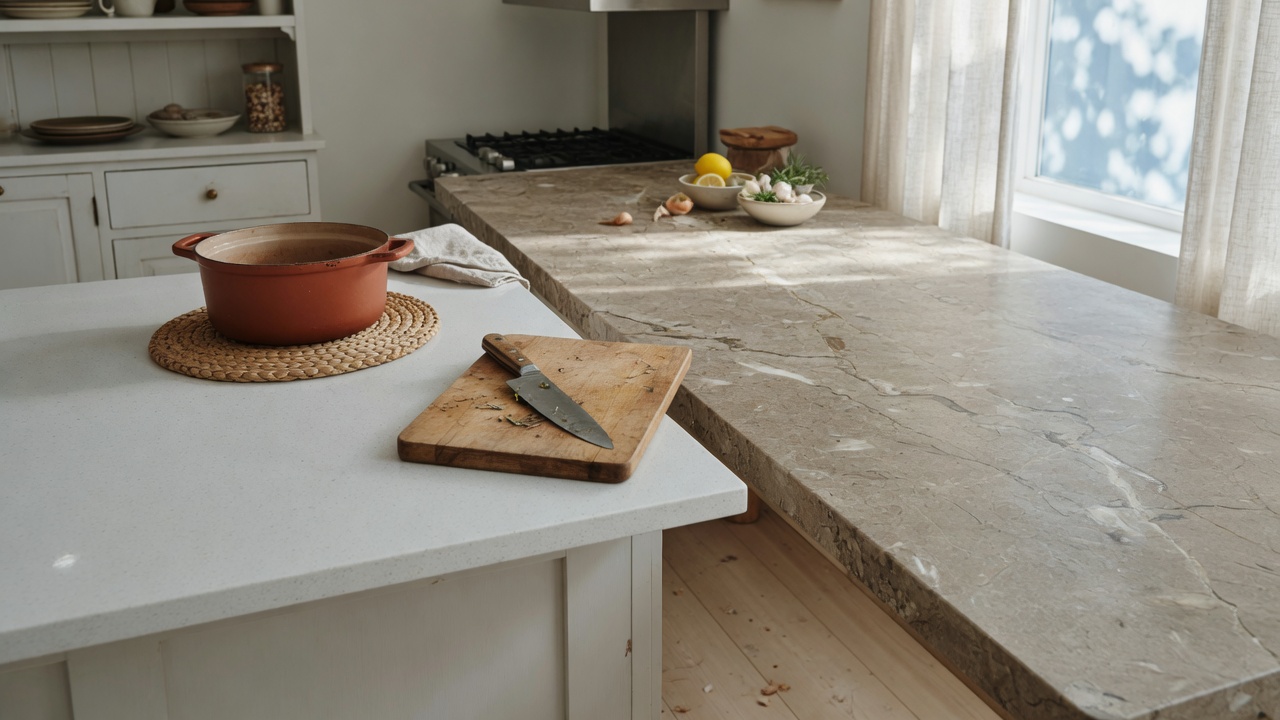
Does quartz scratch or burn?
That's the question we get more than any other on quartz. People hear it's engineered and tough and figure it resists just about anything a kitchen can throw at it, but even quartz has limits, especially with heat, so a trivet is still the safe call. It handles a lot. It's not invincible, and the two spots where people get burned (sometimes literally) are heat and scratches.
The heat part
Quartz isn't pure stone. It's ground quartz mixed with resin, usually somewhere around 90 percent stone to 10 percent resin, and that resin is what binds the slab together and gives it that consistent look. Resin doesn't like heat. A hot pan straight off the stove, a slow cooker left running, even a curling iron set down for a minute, can scorch or discolor the surface around where the resin sits.
Granite and quartzite are actual stone all the way through, so they handle brief contact with a hot pan better than most surfaces. Quartz doesn't have that same margin. Always use a trivet or hot pad on quartz. Every time, not just for the really hot stuff.
The scratch part
Quartz resists scratching pretty well for daily kitchen use. Chopping vegetables, sliding a mixing bowl around, setting down silverware, none of that's going to mark it up. But a knife blade dragged straight across the surface can leave a mark over time, especially with cheaper or thinner slabs. Use a cutting board. It protects your knives just as much as it protects the counter, and it's an easy habit once you get used to it.
What quartz has going for it
Quartz doesn't need sealing. It's non-porous, so there's no yearly resealing to keep up with like you'd do with granite or marble. That's a real advantage if you want a lower-maintenance surface day to day. It also holds a consistent color and pattern since it's manufactured, which some folks prefer over the natural variation in stone slabs.
None of that means it's carefree. Keep the trivets handy, keep a cutting board on the counter, and wipe up spills when they happen just like you would with any surface. Treat it that way and it'll look good for a long time.
If you're weighing quartz against granite or quartzite for your own kitchen, come by 2015 Charleston Hwy in Cayce and look at the actual slabs. Seeing how each one handles up close makes the decision a lot easier than reading about it.