
Care and maintenance
Does engineered quartz stain, and what actually prevents it
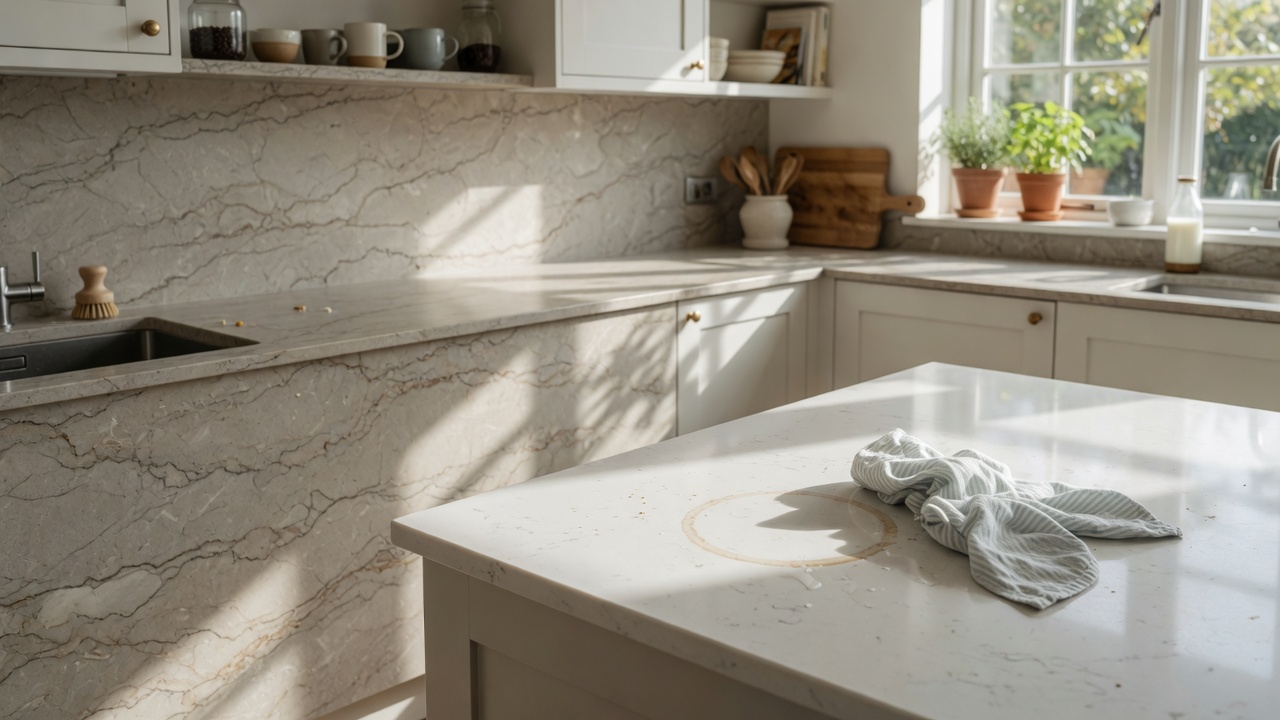
People ask us this at the slab yard almost every week, usually while running a hand over a sample. Quartz stains less easily than most natural stone, but it's not immune. Here's the real picture.
What quartz actually is
Engineered quartz isn't a rock you cut from the ground. It's about 90 to 95 percent ground quartz mixed with resin and pigment, then pressed and cured into a slab. That resin is what makes quartz non-porous. There's no sealing to keep up with, ever, because there's no open pore structure for liquid to soak into the way there is with granite or marble.
So can it stain?
Yes, it can, just not the way natural stone does. Quartz doesn't absorb liquid into its body. What happens instead is surface staining: something sits on top long enough, dries, and leaves a film or discoloration that's tough to lift. Common culprits we hear about:
- Wine or coffee left to dry overnight instead of wiped up
- Grease or oil that builds up in a film near a stove
- Strong dyes, like from turmeric or certain hair products, left sitting
- Permanent marker or ink, which can tint the resin if left too long
The difference from granite or marble is speed and depth. Quartz staining is almost always a surface problem you can usually scrub off with the right cleaner. A stain that soaks into porous stone can go deeper and be harder to fully lift.
Quartz vs. natural stone, side by side
Porosity
- Quartz: non-porous, resin fills all the gaps
- Granite/marble/quartzite: porous to some degree, needs sealing
Sealing needed
- Quartz: none, ever
- Natural stone: yes, usually resealed about once a year for a busy kitchen
Stain risk
- Quartz: low, mostly surface films from things left sitting too long
- Natural stone: higher if a spill sits overnight, even when sealed, since sealing slows absorption but doesn't stop it forever
Heat handling
- Quartz: the resin can scorch or discolor from a hot pan, always use a trivet
- Granite/quartzite: handle brief heat better than most, but we still say use a trivet
Etching (dulling from acid)
- Quartz: resists etching well since it's not calcite-based
- Marble: etches from lemon juice, vinegar, and other acids, that's just how marble behaves
Scratch resistance
- Quartz: resists scratching well, but a knife blade can still mark it, use a cutting board
- Quartzite: one of the hardest stones we sell, resists scratching even better, still use a cutting board
Why the myth of "quartz never stains" gets started
You'll hear people say quartz never stains, full stop. It's an easy thing to believe because quartz really does outperform most natural stone here. But "resists" isn't "immune." We've seen quartz counters with a dull ring from a wine glass that sat there for a weekend, or a dark patch near a stove where grease built up and never got a real scrub. It's not common, but it happens, and pretending it can't gives people the wrong idea about how to treat the surface.
How to prevent staining on quartz
- Wipe spills when they happen, especially wine, coffee, and oil. You don't need to panic, but don't let it sit overnight either.
- Use a mild dish soap and warm water for regular cleaning. Save harsh degreasers for actual grease buildup.
- Avoid leaving cast iron or oiled pans directly on the surface long-term. The oil film can work into surface texture over time.
- Keep bleach and other strong chemicals off it when you can. They won't eat through the resin quickly, but repeated harsh chemical contact isn't good for any surface.
- If something does leave a film, a plastic scraper and a quartz-safe cleaner usually lift it. Skip anything abrasive that could dull the finish.
Who quartz suits
Quartz is a strong pick if you want consistent color, no sealing schedule, and a surface that's forgiving of a busy household. Families with kids, rental properties, and kitchens that see heavy daily use tend to do well with it. You still treat it like a nice countertop, cutting board, trivet, wipe as you go, but you're not tracking a resealing calendar.
Who might want natural stone instead
If you love the depth and movement you get in a real quarried slab, granite or quartzite might matter more to you than the slightly lower stain risk of quartz. Granite handles daily kitchen life well and just needs that yearly reseal. Quartzite gets you a natural look with strong scratch and heat resistance, still with sealing on the schedule. Marble is its own conversation entirely, gorgeous but soft and reactive to acid, better suited to someone who accepts the patina as part of the material's character.
If you're weighing quartz against natural stone for your own kitchen, bring your worries in and put your hand on the actual slabs. Come by 2015 Charleston Hwy in Cayce and we'll walk you through what each one really does day to day, not just what the brochure says.