
Local
Engineered quartz countertops for Lexington homes: what to know before you pick a slab
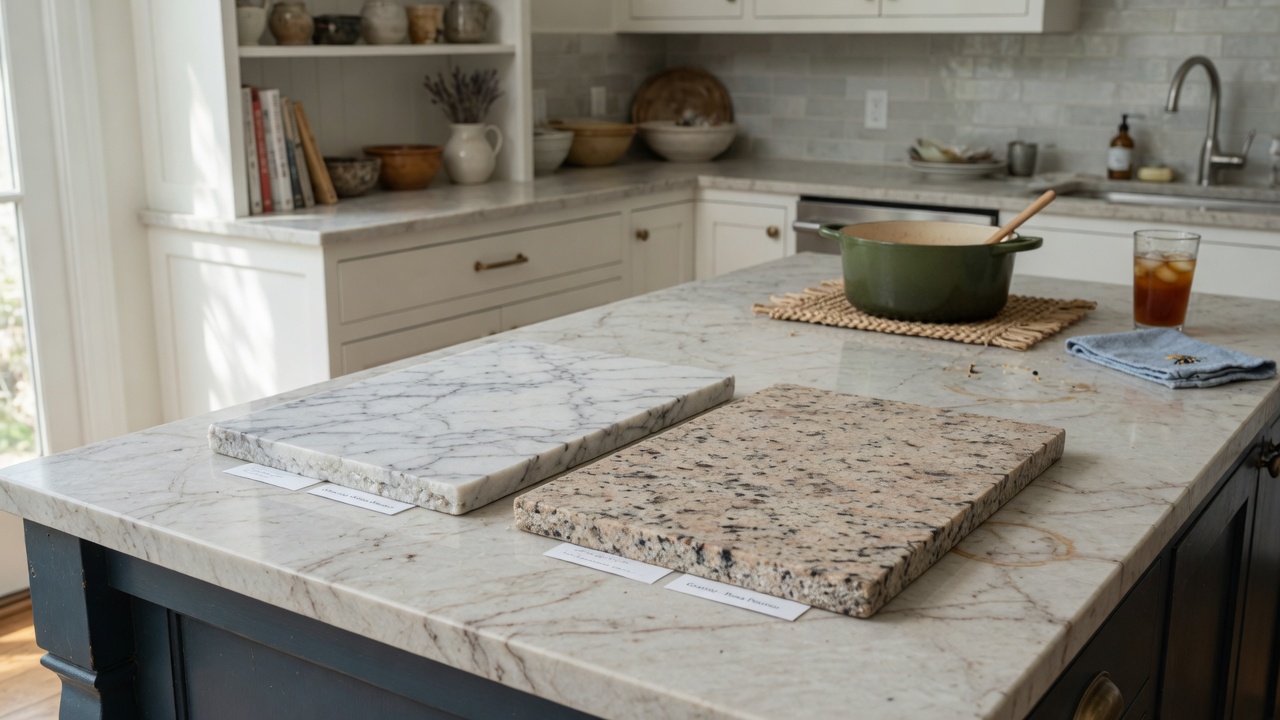
Lexington's growing fast, and a lot of that growth is new construction and full kitchen remodels out toward Lake Murray and the newer neighborhoods off 378. We see a steady run of homeowners from that area come through our Cayce shop asking about engineered quartz, usually because a builder mentioned it or a neighbor has it. Here's what we tell people when they're trying to decide if it's right for their kitchen.
What engineered quartz actually is
Quartz countertops aren't a single mined stone. They're manufactured slabs made from ground quartz mineral mixed with resin and pigment, then pressed and cured. That's why you get such consistent color and pattern from slab to slab, and why brands like this material for kitchens where a uniform look matters, like long runs of countertop or matching an island to perimeter counters.
Because it's engineered, quartz is non-porous. That's a real advantage: no sealing, ever. It's one less thing to remember every year.
What people in Lexington ask us most
A few questions come up over and over at the shop:
- "Can I set a hot pot on it?" Quartz is engineered with resin, so a hot pan can scorch or discolor it. We tell everyone to use a trivet, no exceptions, even though it feels sturdy.
- "Will it stain from wine or sauce?" Being non-porous, quartz resists staining well since there's no surface pore for liquid to soak into. Still wipe up spills at a normal pace, same as you would with anything.
- "Does it need sealing like granite?" No. This is the one area quartz is simpler than natural stone. No sealing, no resealing schedule.
- "Will the pattern match the sample I saw?" Mostly yes, more consistently than natural stone, but slab lots can shift slightly between production runs. We always recommend seeing your actual slab before it's cut.
Quartz vs. natural stone, side by side
Maintenance
- Quartz: no sealing needed, ever. Wipe clean with soap and water.
- Granite and quartzite: porous to some degree, need sealing at install and resealing periodically, usually about once a year for most kitchens. We seal every job we install with a top-shelf sealer, so you start ahead on that.
- Marble: same sealing needs as granite, plus it etches from acids like lemon and vinegar. That patina is part of marble's character, not a flaw, but it's worth knowing going in.
Heat
- Quartz: the resin means a hot pan can scorch or discolor the surface. Trivet, always.
- Granite and quartzite: handle brief contact with a hot pan better than most surfaces, but we still recommend a trivet or hot pad every time. Even the toughest stone in our shop gets a trivet, not a hot pan straight from the stove.
Scratch resistance
- Quartz: holds up well to everyday kitchen use, but a cutting board still protects your knives and keeps the finish looking new.
- Quartzite: one of the harder stones we work with, resists scratching better than marble, but even quartzite can scratch, so cutting boards matter there too.
- Granite: also holds up well; same rule applies.
Look and pattern
- Quartz: consistent, repeatable pattern. Good for a uniform, clean look across a big kitchen, and good if you want your island to match your perimeter exactly.
- Natural stone: every slab is different. Veining and movement vary piece to piece, which a lot of our Lexington customers actually want, especially in open kitchens where the countertop is a visual centerpiece.
Cost
Pricing depends on the specific slab, edge work, and layout, but as a rough range, quartz and mid-tier granite often land in similar territory, roughly 50 to 100 dollars per square foot installed, with high-end quartzite and exotic slabs running higher. Get a real quote for your kitchen rather than going off a general number.
Who each option suits
If you want low maintenance and a uniform look, especially for a busy household with kids or a rental property, quartz is a solid, sensible pick. You skip the sealing schedule entirely and get very predictable results.
If you love the idea of a one-of-a-kind slab with real movement and depth, and you don't mind an annual reseal, granite or quartzite is worth a look. Quartzite in particular gives you a lot of the toughness people expect from granite with a softer, more marble-like look in some slabs.
If you're drawn to marble's look specifically, know what you're getting. It etches, it's softer, and it takes more care. Some homeowners love that lived-in patina on an island; others want it on a powder room vanity instead of the main kitchen prep zone. Either way, we'll tell you straight what to expect before you commit.
A local note on this decision
A lot of Lexington kitchens we work on are open to the living space, so the countertop does double duty as a design feature. That's part of why the quartz-vs-natural-stone question matters more here than it might in a closed galley kitchen. If you're not sure yet, it's worth coming by 2015 Charleston Hwy in Cayce and standing in front of actual slabs, quartz and stone side by side, before you decide anything. Photos and samples only tell you so much.