
Local
Engineered quartz in Gaston, SC: sorting the myths from the real story
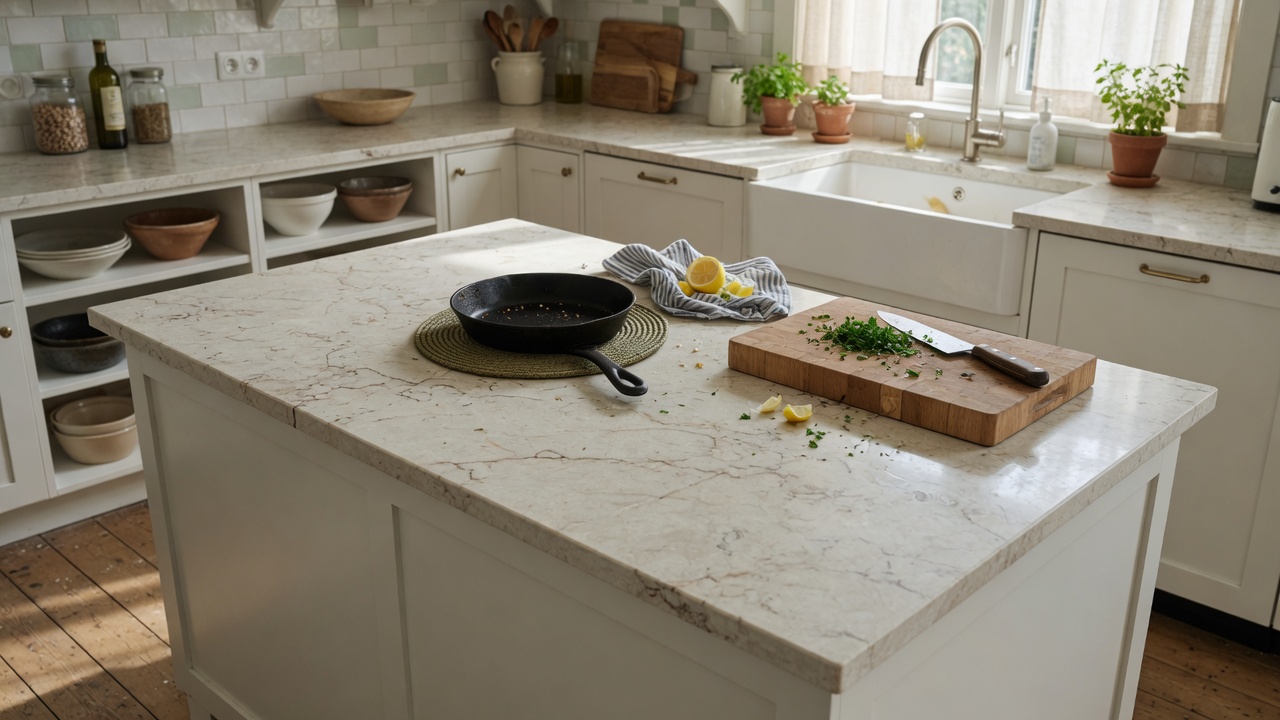
Gaston sits close enough to Cayce that we end up on a lot of jobsites out there, from newer builds off Charleston Highway to older ranch homes getting a kitchen redo. Engineered quartz comes up in almost every one of those conversations, usually because someone read something online that isn't quite right. Let's go through the big ones.
Myth: quartz is heatproof, so you can set a hot pan right on it
This one gets repeated a lot because quartz is marketed as tough. Here's the real story: quartz is engineered stone, made from ground quartz mixed with resin. That resin is what holds it together, and resin doesn't like sudden heat. A hot pan straight off the stove can scorch or discolor the surface. We tell every Gaston customer the same thing we tell folks in Cayce: keep a trivet or hot pad handy and use it every time, no exceptions. Granite and quartzite actually handle brief heat better than quartz does, precisely because they don't have resin in them.
Myth: quartz never needs any care because it's "maintenance-free"
Quartz is non-porous, so it doesn't need sealing the way granite or marble does. That part's true, and it's one of the real advantages of quartz. But non-porous isn't the same as care-free. Spills still need to be wiped up, especially anything with dye or strong pigment like wine or turmeric, because sitting liquid can leave a film even on a sealed surface. And direct sunlight over years can affect the resin in some quartz colors, so if you're doing a sunroom or a kitchen with a big south-facing window in Gaston, that's worth a conversation before you pick a slab.
Myth: quartz can't scratch or chip
Quartz resists scratching well, better than a lot of laminate or older solid-surface counters. But "resists" isn't "immune." A ceramic knife or ceramic dish edge can mark it, and a hard direct hit near an edge or seam can chip. Use a cutting board. It's a two-second habit that keeps the surface looking new for years, and it saves your knife edges too.
Myth: all quartz is basically the same, so pick whatever's cheapest
We hear this from Gaston homeowners comparing big-box quotes to what we do at the shop. Quartz brands do vary in resin quality, color consistency, and how the pattern repeats across a slab. Some lower-cost lines look noticeably more uniform or "printed" up close, which isn't a flaw exactly, it's just a different look than a natural-stone-style quartz with more movement in the pattern. We can walk you through actual slabs in our Cayce showroom so you're comparing what you'll actually get, not just a sample chip.
What we actually see in Gaston kitchens
A lot of Gaston homes we work in are mid-size kitchens, sometimes with an island, and quartz gets picked because people want a consistent white or gray look without worrying about sealing schedules. That's a fair reason. It's a genuinely low-fuss material for daily life. Just don't let "low-fuss" turn into "no rules." Trivets, cutting boards, and wiping up spills go a long way with any countertop material, quartz included.
If you're weighing quartz against granite or quartzite for a Gaston project, come by 2015 Charleston Hwy in Cayce. Seeing full slabs side by side, under real light, tells you more in five minutes than any brochure will.