
Local
Engineered quartz countertops in Cayce: a walk-through from first look to install
Why quartz comes up so often in Cayce homes
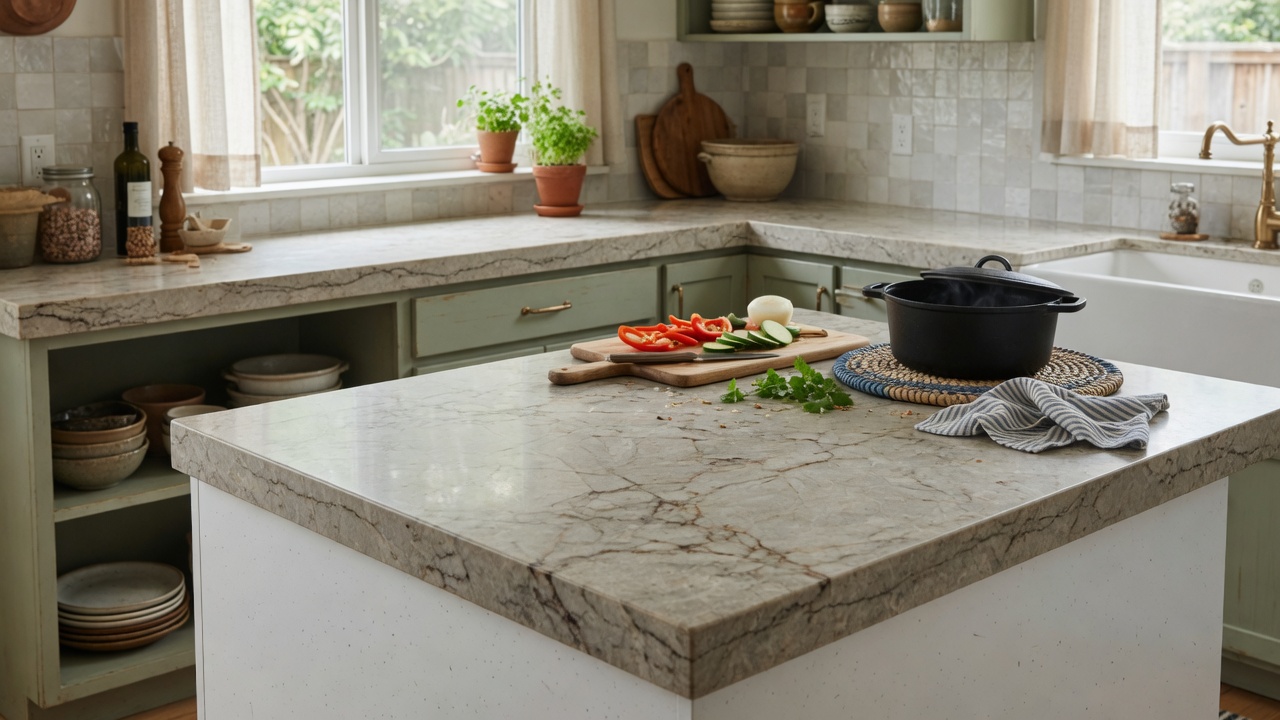
A good number of the homes we work on around Cayce and West Columbia are ranch houses and newer builds with open kitchens, and quartz fits both. It comes in consistent colors and patterns, which matters if you're matching cabinets you already picked out or working with a builder-grade layout that needs a clean, uniform look. We also see it a lot in rental properties and homes getting ready to list, since it photographs well and buyers recognize it.
Step one: looking at slabs in person
Most folks start by walking our lot in Cayce rather than picking from a small sample chip. That's on purpose. Quartz patterns repeat less than people expect once you're staring at a full slab under real light, and colors can shift depending on whether your kitchen gets morning sun or mostly overhead lighting. Bring a cabinet door or paint swatch if you have one. It saves a return trip.
Step two: understanding what you're actually buying
Engineered quartz is crushed natural quartz mixed with resin and pigment, then pressed into slabs. That's different from granite or quartzite, which come straight out of the ground. The resin is what gives quartz its even color and why it doesn't need sealing, but it's also why we tell people to keep hot pans off it. A trivet takes two seconds and saves you from a scorch mark that's not fixable.
Step three: templating your kitchen
Once you've picked a slab, we send someone out to measure your actual cabinets, not the drawing. Cayce has plenty of older homes where walls aren't perfectly square, and a template built off real measurements is what makes the seams land in the right spot and the overhangs come out even. This usually happens after cabinets are set but before anything else is finalized.
Step four: fabrication
This is where the slab gets cut to your template, edges get profiled the way you chose (eased, bullnose, whatever fits your kitchen), and sink or cooktop cutouts get made. Quartz cuts clean and predictable compared to some natural stones, which is part of why it's popular for kitchens with a lot of cutouts, like an island with a cooktop and a prep sink.
Step five: install day
Install is usually a matter of hours, not days. The crew sets the pieces, seams them where needed, and levels everything against your cabinets. Because quartz doesn't need sealing, there's one less step here compared to a granite or marble job. That's honestly one of the reasons people choose it, especially if they don't want to think about maintenance later.
What we get asked most in Cayce
"Can I put a hot pot on it?" Not directly. Quartz is engineered with resin, so heat can scorch or discolor it. Keep a trivet handy.
"Does it scratch?" It holds up well to daily kitchen use, but we still recommend a cutting board. No countertop material likes a knife dragged across it.
"Do I need to seal it?" No. Quartz is non-porous, so sealing isn't part of the deal, which is different advice than we'd give for granite or marble.
"Will it fade near a window?" Direct, prolonged sun exposure can affect resin-based surfaces over years, so if you've got a sunroom or a kitchen with big south-facing windows, that's worth a conversation before you commit to a color.
After install
Care is simple: wipe up spills, use a cutting board, use a trivet for hot cookware, and clean with mild soap and water. No resealing schedule to track, no yearly maintenance call. For a lot of Cayce households juggling kids, pets, and busy kitchens, that simplicity is the whole appeal.
If you're still deciding between quartz and a natural stone, come by our shop on Charleston Hwy and look at both side by side. Seeing them under the same light usually settles it faster than any brochure.