
Local
Engineered quartz countertops for Blythewood homes
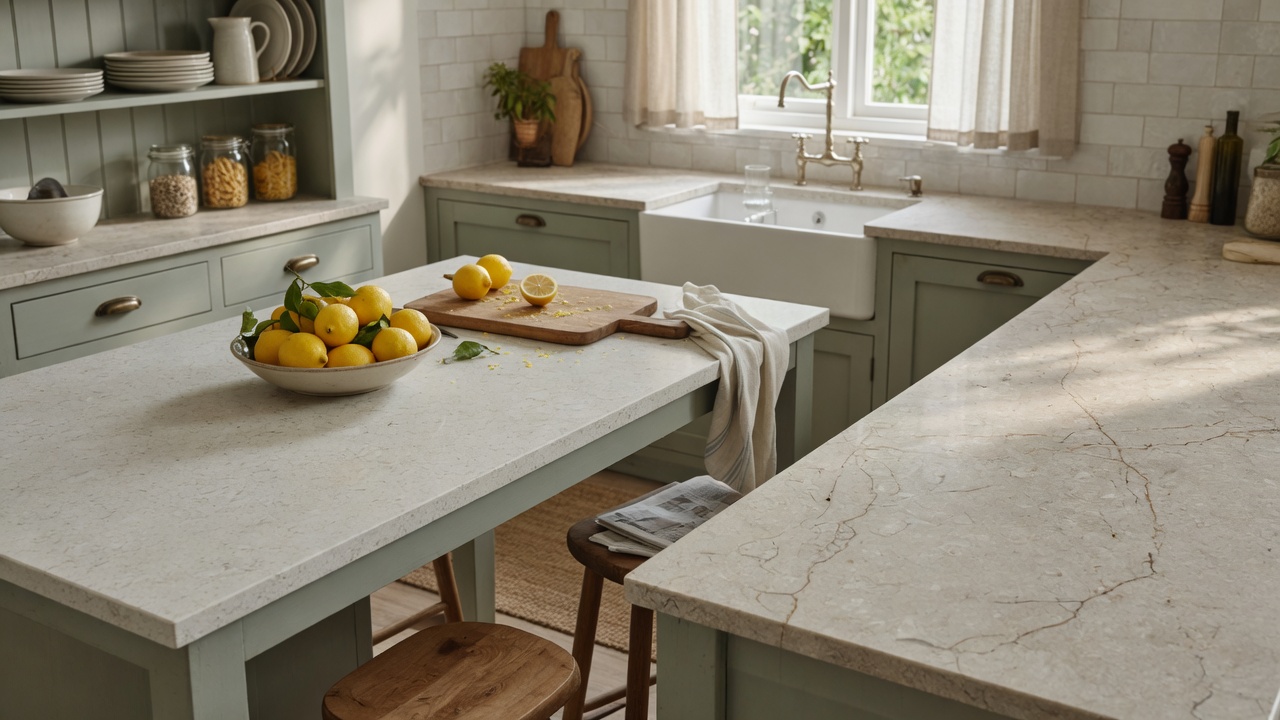
Blythewood has a lot of newer construction, and we get a steady run of quartz questions from folks building or renovating out that way. Here's what actually comes up, and what we tell people straight.
Why quartz fits so many Blythewood kitchens
A lot of the newer neighborhoods around Blythewood, the ones off Muller Road, near Longcreek, out toward the golf course communities, have open kitchens with big islands and a lot of counter square footage. Quartz gives a consistent look across a large island without the veining shifts you'd get in a natural stone slab. If a homeowner wants a bright white counter with a tight, repeatable pattern for a long run of cabinets, quartz usually delivers that better than natural stone will.
The question we hear most: "Does it need sealing?"
No. Quartz is engineered with resin binding the stone particles together, so it's non-porous. You don't seal it, ever. That's a real advantage for a busy family kitchen where nobody wants a yearly maintenance task. Compare that to granite or marble, which are natural stone and should be sealed and resealed periodically, usually about once a year for most kitchens.
The second question: "Can I put a hot pot on it?"
We always say use a trivet. Quartz can scorch or discolor from direct heat because of the resin in it. It's not fragile, but a pan straight off the stove is asking for trouble. This is one spot where granite and quartzite actually outperform quartz. They handle brief heat contact better, though we still tell people to use a trivet with those stones too. Just don't assume quartz is the tougher choice on this one point.
What people in new-construction homes ask about
- Matching a builder-grade sample to a full slab. Builder brochures often show a small chip, and the full slab pattern can look different once it's spread across an island and perimeter. We always recommend coming to see actual slabs before signing off.
- Waterfall edges on islands. This is popular in newer Blythewood builds. Quartz works well for waterfall edges because the pattern carries down the side cleanly, especially with the more uniform, less-veined designs.
- Matching quartz across a kitchen and a wet bar or butler's pantry. We see this a lot in bigger Blythewood floor plans. Ordering enough slab from the same lot at once matters here, since dye lots can shift slightly between production runs.
What people renovating older Blythewood homes ask about
Folks updating a kitchen in an older home (some of the established Blythewood neighborhoods have houses from the 80s and 90s) often come in comparing quartz to the granite that's already common in the area. A few straight points we give them:
- Marble and other calcite stones etch (that's the dull mark you get from lemon juice or vinegar), and no sealer stops that reaction. It's just part of owning marble, and a lot of people come to like the patina over time. Quartz doesn't react to acid the same way calcite stones do, so it holds up differently in that one respect, but that doesn't mean nothing can mark it. Wipe up spills either way.
- Quartz resists scratching well, but it's still smart to use a cutting board. It protects your knives more than it protects the counter.
- If you want a look with natural movement and depth, like real granite or quartzite has, quartz can get close but it's manufactured, so the pattern often repeats in a way that a trained eye can spot. Some people love the consistency. Others end up preferring the one-of-a-kind look of a natural slab. Neither answer is wrong, it's a personal call.
On cost and what drives it
Quartz pricing in the Midlands generally runs in a range similar to mid to upper-tier granite, roughly 50 to 100 dollars per square foot installed, depending on the brand, color, and edge profile you pick. That's a rough range, not a quote, and it moves depending on the specific slab and the complexity of your layout (a waterfall island costs more to fabricate than a simple L-shaped run).
One thing we tell every Blythewood homeowner
A lot of shops install quartz and quartzite and call it done. We seal every natural stone job at install with a top-shelf sealer, and for quartz specifically, we walk people through why they won't need that step at all going forward, so there's no confusion about maintenance later. If you're weighing quartz against granite or quartzite for a Blythewood kitchen, bring your cabinet color and your countertop wish list to our shop at 2015 Charleston Hwy in Cayce. Seeing full slabs next to each other under real light tells you more in five minutes than any sample chip will.