
Care and maintenance
Caring for engineered quartz countertops: a plain guide
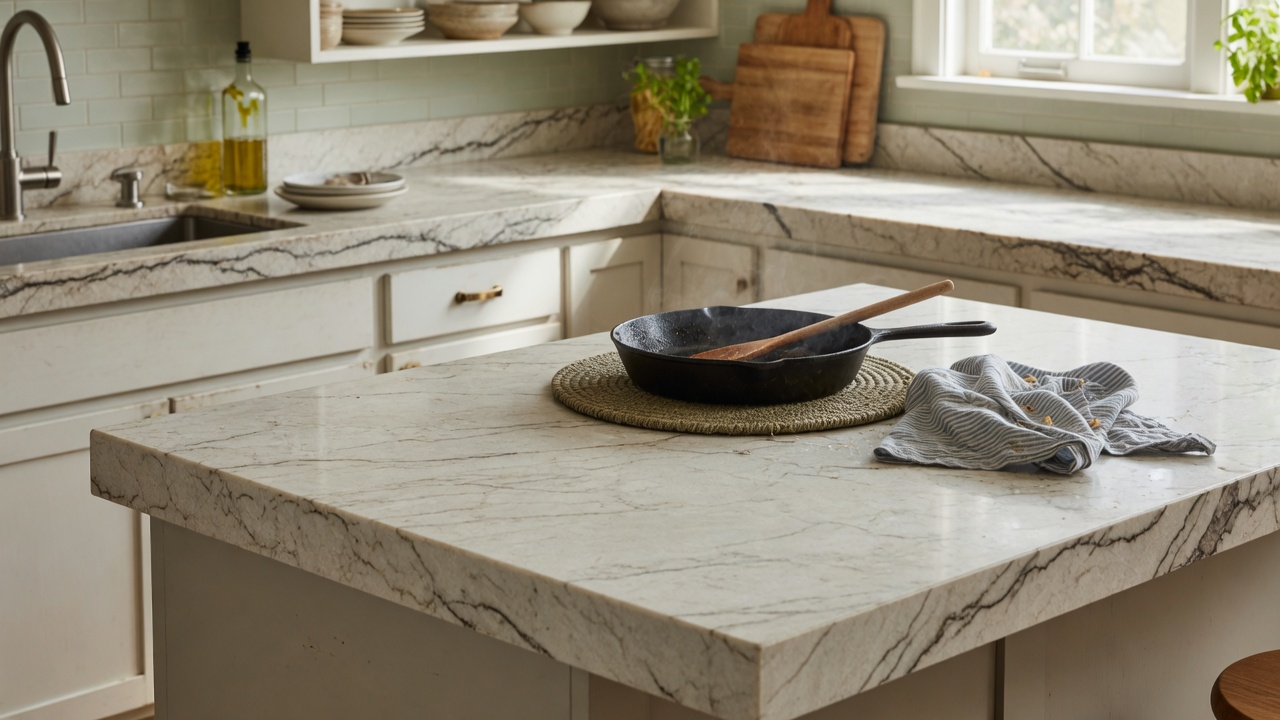
Quartz gets sold as the low-maintenance option, and mostly that's fair. It's man-made from ground quartz and resin, so it doesn't behave like a natural stone. Quartz is non-porous, so unlike granite, marble, or quartzite, it doesn't need sealing or resealing over the years. Still, a few habits will keep it looking new for a lot longer.
Daily cleaning is genuinely simple
Warm water, a soft cloth or sponge, and a little dish soap handle almost everything. You don't need a special quartz cleaner, though the mild ones sold for stone won't hurt anything. Wipe up spills when you notice them rather than letting them sit. Quartz is non-porous, so it doesn't need sealing. That's one less thing to think about compared to granite or marble.
Heat is the one it doesn't forgive
Granite and quartzite handle brief contact with a hot pan better than most surfaces. Quartz can't say the same. It's held together with resin, and resin softens or scorches under direct heat. A pot straight off the stove can leave a permanent mark, sometimes a dull ring, sometimes a discoloration that won't buff out. Use a trivet or hot pad every time, even for a pan you think has cooled down. This is the single most common way we see quartz get damaged in real kitchens.
It resists stains, but resists isn't the same as immune
Because it's non-porous, quartz handles wine, coffee, and oil better than natural stone that hasn't been resealed in a while. Most spills wipe off clean with no trace. Even so, dyes from things like turmeric, hair dye, or some inks can sit on the surface and discolor it if left for a long stretch, especially in a light color. Wipe spills up in a reasonable time and you'll rarely have an issue.
Scratching takes real effort, but it's not scratch-proof
Quartz is hard and holds up well to everyday kitchen use, knives set down, pots slid across it, kids doing homework with pencils. Still, don't cut directly on it. A cutting board protects your knife edges as much as it protects the counter, and it avoids the rare fine scratch that shows up under raking light near a window.
Sunlight is the quiet enemy for some colors
Most quartz is fine indoors for years. But because it's part resin, prolonged direct UV exposure (think a sunroom or an outdoor kitchen) can cause some colors to yellow or fade slightly over time. If you're putting quartz somewhere with heavy, constant sun, ask us about it before you commit. It's not a defect if it happens, it's just a known limit of the material, and it's worth knowing up front.
Chemicals to keep away from it
- Bleach and strong ammonia-based cleaners, used often, can dull the finish over years
- Paint strippers, oven cleaners, and drain cleaners can etch or discolor the resin
- Nail polish remover (acetone) left sitting can soften the surface
If something like that spills, rinse it off right away with water and you're almost always fine. It's ongoing exposure that causes problems, not one quick accident.
How it actually wears in a real kitchen
After a few years of normal use, most quartz counters still look close to day one. Edges near a sink see the most action, that's where water sits, sponges rest, and hands are constantly in contact. A matte or honed finish shows fingerprints and water spots less than a high-polish one. Dark solid colors show dust and hard water spots more readily than a patterned or lighter color. None of this is a flaw in the material, just what to expect depending on the look you pick.
A short version to keep by the sink
- Soap and water for daily cleaning
- Trivet under anything hot, no exceptions
- Cutting board for chopping
- Wipe spills within a reasonable time
- Skip bleach and harsh chemicals for routine cleaning
- No sealing needed
Quartz earns its reputation as an easy countertop. It just isn't magic. Treat it with the same basic respect you'd give any surface in your kitchen and it'll look good for a long time. If you want to see how different quartz colors and finishes actually look and feel before you decide, come by the shop at 2015 Charleston Hwy in Cayce. Slabs tell you more in five minutes than any care guide can.