
Stone, straight
Myth: quartzite is maintenance-free
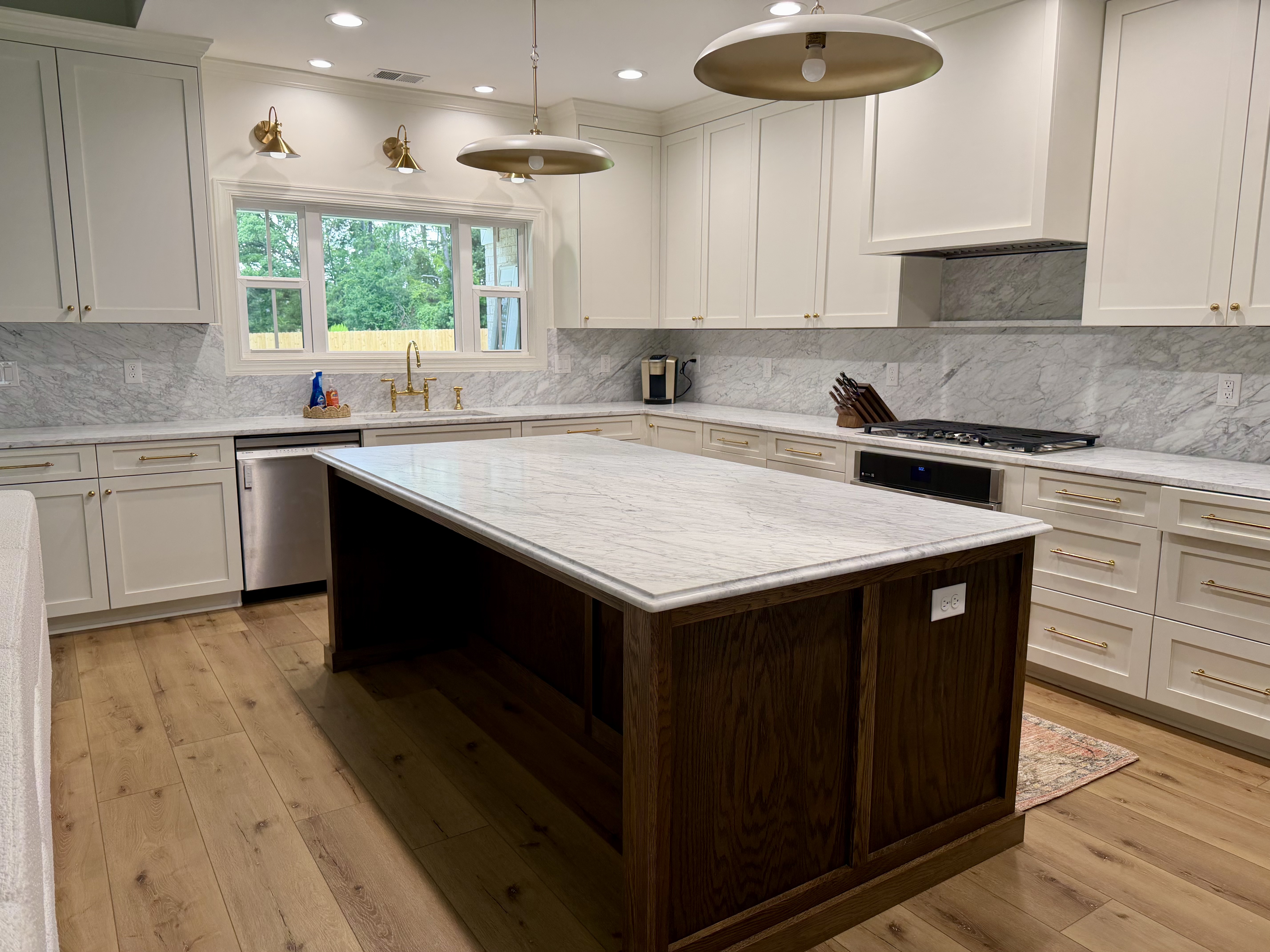
The myth we hear at the slab yard
People come in asking for quartzite because they heard it's basically granite's tougher cousin, the kind of stone you install and never think about again. The line goes something like this: "quartzite doesn't need any care, you can do anything to it." We get why that story spreads. Quartzite really is one of the harder natural stones we work with, and it earns a good reputation for durability. But it still needs to be sealed and resealed periodically like other natural stone, and quartzite is no exception.
What quartzite actually is
Quartzite starts as sandstone that gets compressed and heated deep underground until it recrystallizes into something much harder. That process is what gives quartzite its strength. But it's still a natural stone, formed from mineral grains with tiny gaps between them. Those gaps make it porous, just less porous than something like marble or limestone. Porous means liquids can work their way in over time if you don't take care of the surface.
This matters because "hard" and "non-porous" are two different things. Diamonds are hard. They're also not what you want on your kitchen island. Hardness tells you how well a stone resists scratching. Porosity tells you how well it resists soaking up spills. Quartzite scores well on the first and just okay on the second, which is exactly why it still needs sealing.
The honest correction: quartzite needs sealing
Like granite, & marble, quartzite should be sealed when it's installed and resealed periodically, usually about once a year for most kitchens, though busy kitchens or lighter colored stones may need it a little more often. Sealing fills in those small pores near the surface so liquids sit on top long enough for you to wipe them up instead of soaking in.
At our shop, we seal every quartzite job at install with a very good sealer, applied by installers we train to do it right. A lot of companies hand you the countertop and leave sealing up to you. We don't skip that step. You'll still want to reseal every so often over the years, but the first seal, the one that actually matters most because it's going on brand new stone, is already done when we finish the install.
What real quartzite upkeep looks like
Here's the good news: real maintenance on quartzite is genuinely light. It's not zero, but it's not a chore either.
- Wipe up spills when they happen. Even sealed quartzite can stain if wine, oil, or coffee sits on it overnight. A quick wipe with a damp cloth handles it.
- Use a cutting board. Quartzite resists scratching better than marble and holds up well against everyday knife nicks, but it can still scratch. A cutting board protects your knives as much as your countertop.
- Use a trivet for hot pans. Quartzite handles brief contact with heat better than most surfaces, but we still recommend a trivet or hot pad every time. Thermal shock, going from a hot pan straight to a cold, wet counter, can stress any natural stone over years of use.
- Clean with mild soap and water. Skip the harsh acidic cleaners and abrasive scrub pads. A basic dish soap and a soft cloth do the job for daily cleaning.
- Reseal on a schedule, not a guess. A simple water test tells you a lot: drip some water on the counter and see how long it takes to bead up versus soak in. If it soaks in fast, it's time to reseal.
Where the myth causes real problems
We've talked to homeowners who treated quartzite like it needed nothing at all because someone told them it never needed sealing. They let red wine sit on the counter overnight expecting no consequence, and a faint stain showed up around the sink where the sealer was thinnest. Nobody at those houses had done anything wrong on purpose. They just believed what they'd heard.
The frustrating part is that quartzite really is a great choice. It's one of the more durable stones for a busy kitchen, it comes in some striking natural patterns, and with basic care it'll look good for decades. The myth doesn't make people careless out of laziness, it makes them careless out of misplaced confidence. That's the part we want to fix.
One more wrinkle: not everything sold as quartzite actually is
This is worth knowing before you shop. Some slabs sold under the name "quartzite" are actually a softer calcite based stone that behaves more like marble, including etching from acids. A trade name on a slab isn't a guarantee of what you're getting. We go by how a stone actually performs, not just the label on the tag, and we're happy to walk you through the difference on any slab in our yard.
The bottom line
Quartzite is a strong, good looking natural stone that rewards basic care instead of demanding constant attention. Seal it at install (we handle that part), reseal it every year or so, wipe up spills, use a cutting board, and reach for a trivet with hot pans. That's it. It still needs sealing and a little regular attention, but it's about as low upkeep as natural stone gets.
If you want to see the difference between quartzite and stones that just get called quartzite, come by 2015 Charleston Hwy in Cayce. We'll show you a few slabs side by side and talk through what each one actually needs.