
Stone, straight
Myth: all white stone is marble
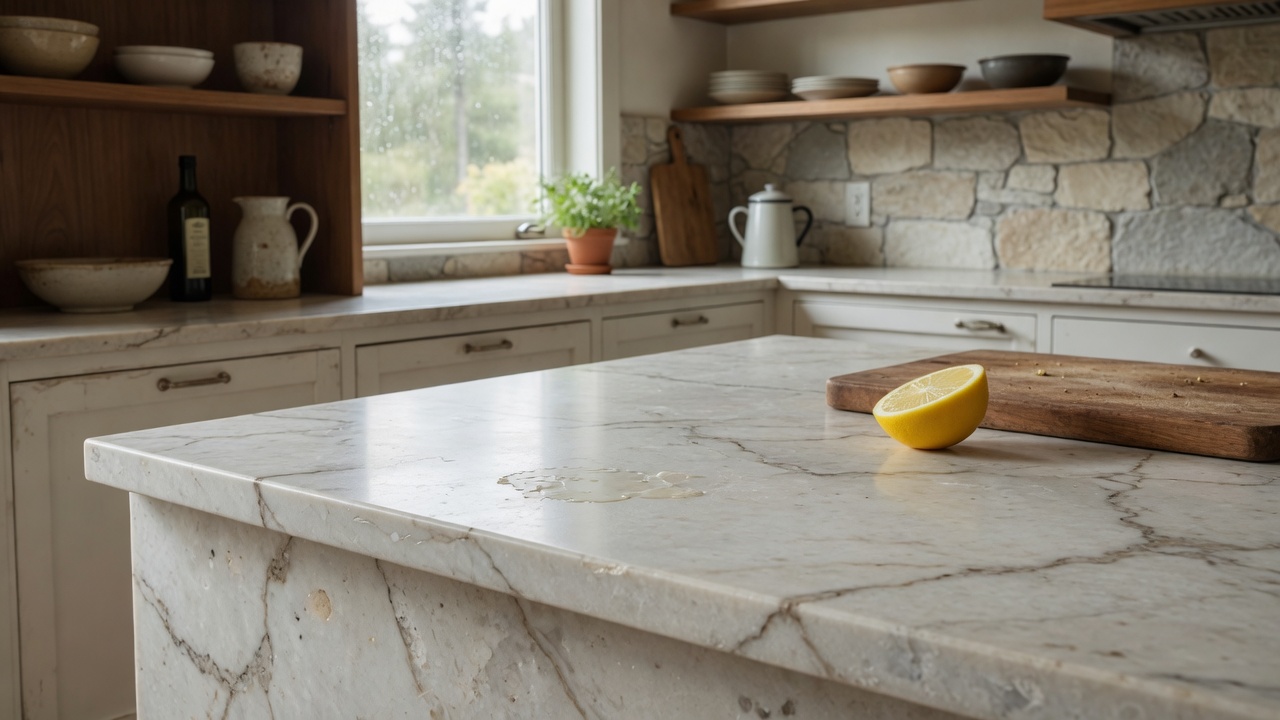
The myth
We hear it almost every week. A customer walks in, points at a white slab with gray veins, and says "that's marble, right?" The myth is that any white stone with movement in it is marble. It's an easy assumption, because marble is the stone that made that look famous. But plenty of white slabs on our floor aren't marble at all. Some are quartzite. Some are engineered quartz. They can look close enough in a photo to fool anyone, and they don't behave the same way in a kitchen.
What's actually true
Three different materials can wear the "white with veins" look, and each one has its own personality:
White marble is a natural calcite stone. It's the classic, with soft gray or gold veining that often looks a little smoky or feathered. It's genuinely beautiful and it's also the softest and most reactive of the three. Marble etches (leaves a dull mark) from acids like lemon juice or vinegar. That's a normal reaction for marble, not a defect, but it means a marble island will show its age with use. Some people love that patina. Others don't want to worry about it.
White quartzite is a natural stone too, but it's much harder than marble and resists scratching better than marble does, though even quartzite can still scratch, so a cutting board is still the right call. Real quartzite generally holds up better to acids than marble because of its different mineral makeup, but it's still natural stone. It's porous, it should be sealed, and we recommend resealing periodically, usually about once a year for most kitchens.
White quartz isn't a natural slab at all. It's engineered from ground quartz and resin, so it's non-porous and doesn't need sealing. Marble etches from lemon or vinegar because it's a calcite stone; quartz doesn't have that same calcite reaction, so acidic spills are less of a worry there. But because quartz is held together with resin, a hot pan can scorch or discolor it, so a trivet is non-negotiable on quartz in a way it isn't quite as critical (though still smart) on granite or real quartzite.
The trap: trade names lie
Here's the part that trips people up even when they think they know what they're buying. A slab's name on the sample card isn't a guarantee of what it actually is. We see slabs sold under fancy "quartzite" names that are really a softer calcite stone that etches just like marble. That's not always someone trying to trick you, sometimes it's just loose industry naming, but it means we go by how a stone actually behaves, not just what the label says.
How we help you tell them apart
We don't guess off a photo or a trade name. A few things we actually check:
- Scratch and etch test on an offcut. A drop of lemon juice or a light scratch test on a scrap piece from the same slab tells us more than any name on the sample.
- Hardness by feel. Quartzite is noticeably harder to scratch with a knife tip than marble is. It's not scientific, but it's telling.
- Look at the slab in person, not a screenshot. Marble tends to have a more translucent, softer look to its veining. Quartzite veining often looks more like it's embedded deep in the stone. Quartz has a more uniform, manufactured consistency because it's engineered that way.
- Ask us directly. If we're not sure from looking, we can tell you honestly that we're not sure, and we'll test it before it goes on your counter.
The bottom line for your kitchen
If you love the marble look but don't want to think about acid spills, a white quartzite or a white quartz with similar veining might get you 90 percent of the look with less daily worry. If you specifically want real marble, that's a fine choice too, plenty of our customers choose it on purpose and know what they're signing up for. The point isn't that one is right and one is wrong. It's that you should know which one you're actually buying.
Come by 2015 Charleston Hwy in Cayce and we'll put a knife and a lemon wedge to the actual slab you're considering. Seeing it react in front of you settles the question faster than any name on a sample card.