
Care and maintenance
Does marble stain? A step-by-step look at what happens
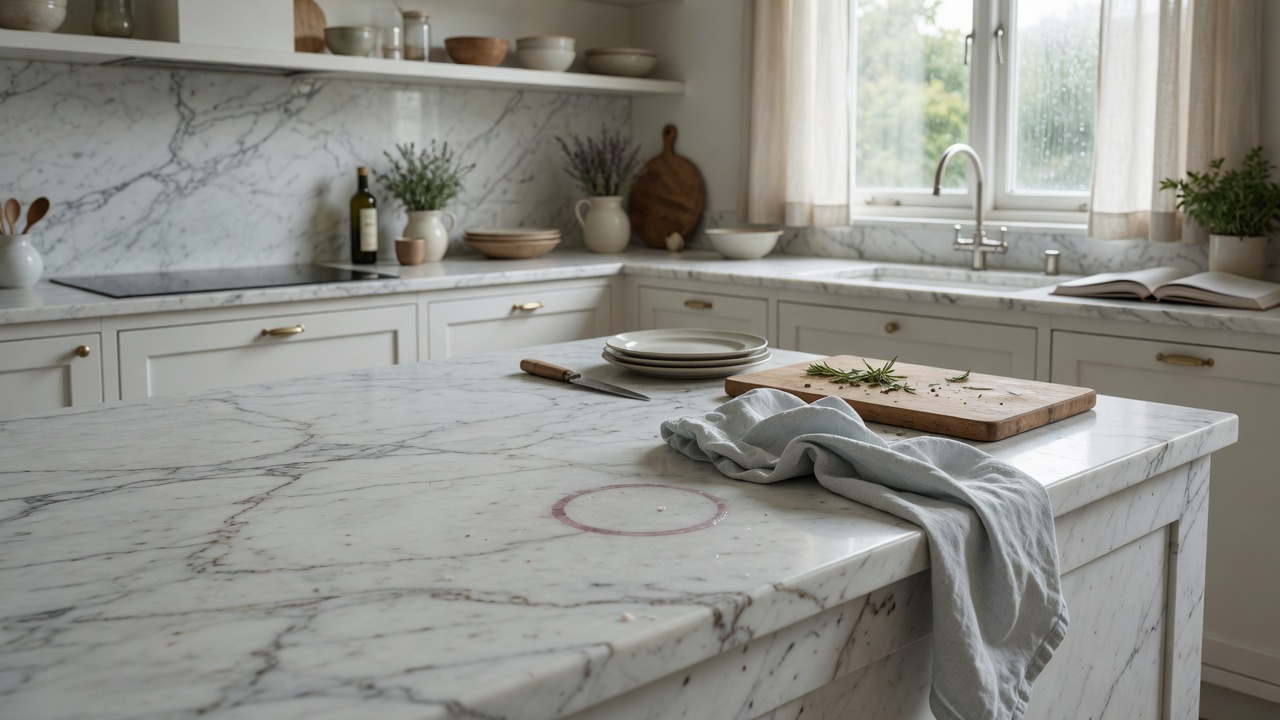
Yes, marble can stain. Here's the walk-through of why
Marble is a natural stone, and natural stone has tiny pores in its surface, even when it's polished to a shine. Those pores are what let liquids soak in instead of sitting on top forever. So if you're asking straight up, marble can stain. What matters is what happens between the spill and the stain, and that part is mostly up to you.
Step one: the spill hits the surface
When wine, coffee, oil, or juice lands on marble, it starts working its way into those pores right away. How fast depends on the liquid. Oil moves slow and leaves a dark, greasy-looking spot. Wine and coffee move faster and leave color behind. This is the moment sealing does its job, by slowing that absorption down so you've got time to wipe it up before it settles in.
Step two: sealing buys you time, it doesn't buy you forever
A sealer sits in the pores of the stone and makes it harder for liquid to soak through. It's a real layer of protection, and we put a top-shelf sealer on every marble job we install. But sealing isn't a shield that stops staining outright. It slows absorption and gives you a window, usually long enough to notice a spill and clean it before it becomes a problem. Leave that same spill overnight on even a freshly sealed counter, and it can still leave a mark. That's why we tell customers to reseal periodically, usually about once a year for a kitchen that sees regular use, since the sealer wears down with cleaning and time.
Step three: what actually causes a lasting stain
Most marble stains we see come down to one thing: something sat too long. Oil left under a bottle of olive oil overnight. Wine left in a glass ring after a party. Coffee grounds forgotten on the counter next to the maker. The stone had time to pull that liquid in past where a paper towel could reach. Sealed marble resists staining well when spills get wiped up quickly. Left to sit, even overnight, a spill can still soak in and leave a mark.
Step four: staining is different from etching, and marble does both
This is where a lot of confusion comes in. A stain is discoloration from a liquid soaking into the stone. An etch is a dull, matte mark left by acid, like lemon juice or vinegar, reacting with the calcite in marble. They look similar at a glance, but they're not the same thing, and sealing doesn't do anything for etching. That's an acid reaction on the stone itself, and no sealer stops it. Etching on marble is common enough that we consider it part of the material's normal character, not a defect. Knowing the difference matters because you'll clean and treat them differently.
Step five: what to actually do if something spills
- Blot it, don't wipe it. Wiping can spread a liquid stain wider before it's absorbed.
- Use a soft cloth and mild soap and water for daily cleanup. Skip anything acidic or abrasive.
- For grease or oil spots, a poultice (a paste made for pulling stains out of stone) can draw old oil back out, though it takes patience and doesn't always fully undo a set-in stain.
- Keep a cutting board on the counter for anything you're chopping, and set a trivet under hot pans. Marble handles daily kitchen life fine, but small habits like these keep it looking new longer.
- Get it resealed on a regular schedule instead of waiting until you notice water isn't beading anymore.
Where that leaves you
Marble stains under the wrong conditions, same as it can etch. What keeps a marble counter looking good for years isn't luck, it's sealing at install, resealing over time, and wiping up spills instead of letting them sit. A lot of our customers who love marble know this going in and just build the habit into their routine, the same way you'd rinse a cast iron pan.
If you're weighing marble against granite or quartzite for how it'll hold up in your kitchen, come by 2015 Charleston Hwy in Cayce. We'll show you real slabs, talk through how each one behaves, and let you see the polish and veining up close before you decide.