
Local
Marble countertops in West Columbia: myths we hear at the shop
West Columbia has a lot of older brick ranches and cottages near State Street and Meeting Street, plus newer builds out toward Springdale and 12th Street. We see both come through our doors at the Cayce shop, and marble comes up a lot with folks doing a period-correct renovation on an older home, or wanting that classic white kitchen look in a new build. It's a beautiful stone. It's also one of the most misunderstood ones we sell, so let's go through what we actually hear and set it straight.
Myth: sealed marble won't stain or etch
This is the big one. Homeowners hear "we sealed it" and figure that means the marble is protected from everything. It's not that simple.
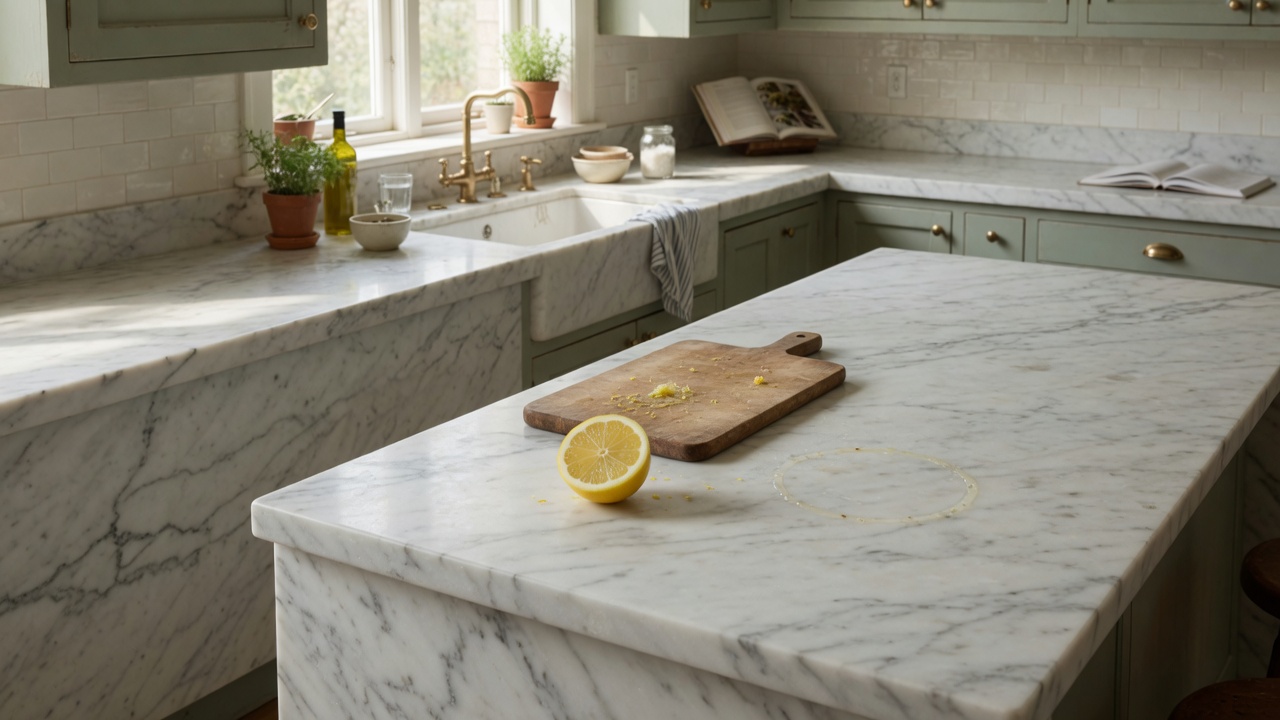
Sealing helps marble resist stains by slowing down how fast liquid soaks into the stone, which buys you time to wipe up a spill before it sets in. But even a well-sealed marble can stain if wine, oil, or coffee sits on it overnight. And sealing does nothing for etching. Etching is a chemical reaction, acid from lemon juice, vinegar, or tomato sauce reacting with the calcite in the marble, and it leaves a dull spot rather than a stain. No sealer stops that reaction from happening. We tell people in West Columbia this up front because a lot of kitchens here get real use, family dinners, canning tomatoes in the summer, and marble in an active kitchen is going to show that patina over time.
Myth: that dull spot means the marble is ruined or defective
We get calls about this more than almost anything else. Someone finds a faint ring on their marble island where a glass of orange juice sat, and they think something went wrong with the install or the sealer failed. Usually it didn't. That's just marble being marble. The soft, worn look that makes an old Italian kitchen counter look so good over decades is the same reaction happening slowly, meal after meal. Some homeowners come to like that softened look. Others want it perfectly glossy forever, and for them we usually steer the conversation toward quartzite or granite instead, which handle acids without etching the way marble does.
Myth: marble is too fragile to actually use
The flip side of the etching conversation is people assuming marble is basically too delicate for a real kitchen. That's an overcorrection. Marble is a genuinely useful, durable stone. It handles brief contact with a warm pan better than a lot of materials, though we still tell every customer to use a trivet, on any stone, every time. It resists scratching reasonably well too, but don't cut directly on it. A cutting board protects both your knives and the surface.
Where marble actually struggles is acid and abrasion over the long haul, not everyday bumps and warmth. Plenty of West Columbia kitchens run marble hard for years and just plan around it: cutting boards, trivets, wiping up spills, and an annual reseal.
What we tell people looking at marble for a West Columbia home
If you love the look and you're at peace with the character marks it'll pick up, marble is a great choice, especially for a bathroom vanity or a lower-traffic kitchen island where etching risk is lower. If you want white with a similar look but tougher against acid, we'll usually show you a white quartzite or a quartz alternative and explain the tradeoffs honestly.
Either way, come by 2015 Charleston Hwy in Cayce and look at actual slabs under real light. Photos never tell the whole story with marble, and seeing the veining in person makes the decision a lot easier.