
Local
Marble countertops for Pine Ridge homes: what to know before you choose it
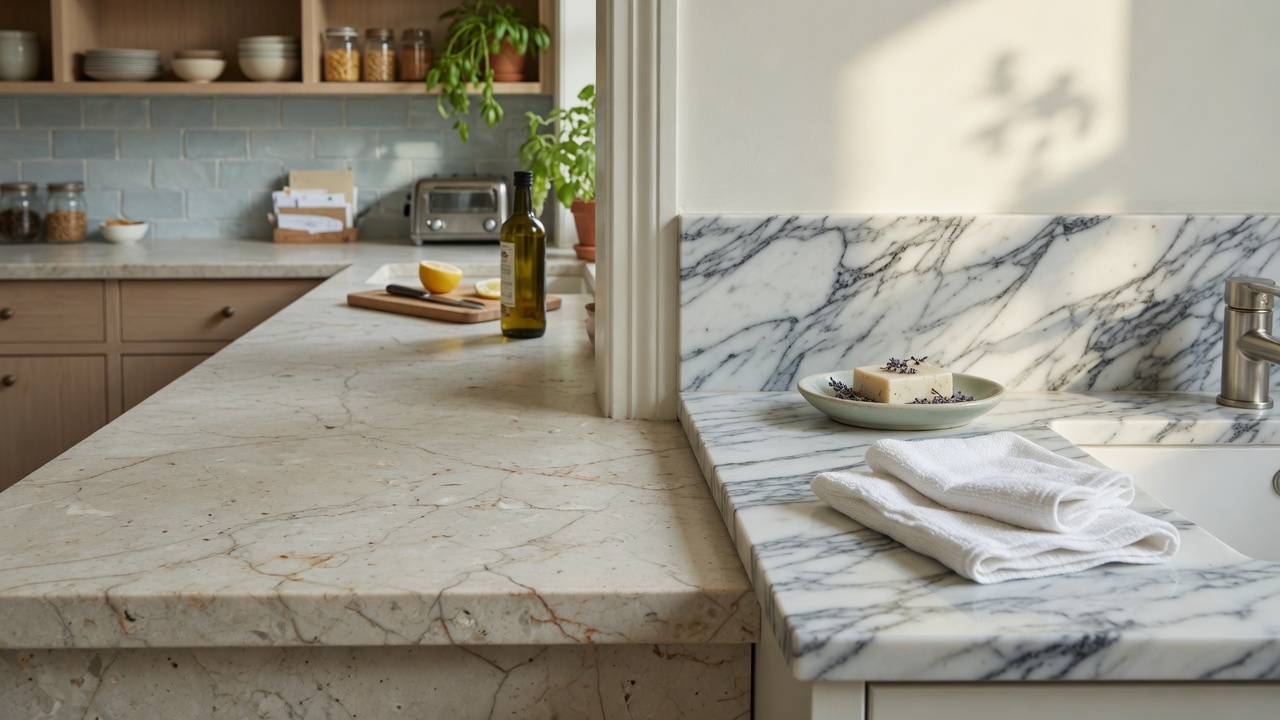
Pine Ridge has a good mix of older brick ranches and newer construction, and we get calls from both. Folks updating a 1980s kitchen and folks building new both end up asking about marble at some point. It usually starts with a picture they saw of a white kitchen with gray veining, and then the questions come fast. Here's how we walk people through it.
Why marble comes up so often
Marble has a look nothing else quite matches. The veining moves in soft, irregular patterns instead of the repeating patterns you see in printed materials, and it has a slight glow to it that photographs well. In a Pine Ridge kitchen with white cabinets and brass hardware, it's a striking look. Bathrooms are the other big draw, since a marble vanity top or shower surround gets less daily abuse than a kitchen island.
Marble vs. granite vs. quartz, the real differences
Look
- Marble: soft, flowing veining, generally lighter background colors (white, cream, gray), a classic look that's been used in homes for centuries.
- Granite: speckled or grained patterns, wide range of colors including dark and bold options, more visual movement in small areas.
- Quartz: engineered, so the pattern repeats less randomly and colors are more consistent slab to slab.
Heat
- Granite and quartzite handle brief contact with a hot pan better than most surfaces, but we still recommend a trivet every time.
- Marble is in a similar boat to granite here, but we still say use a trivet or hot pad. No countertop should take a pan straight off the burner.
- Quartz is engineered with resin, so a hot pan can scorch or discolor it. Always use a trivet on quartz.
Scratching
- Granite and quartzite resist scratching well, though nothing is scratch-free, so a cutting board is still the right habit.
- Marble is softer than granite or quartzite and scratches more easily, especially with knives dragged directly across it.
- Quartz resists scratching well too, but again, use a cutting board on any of these. It protects your knives more than the counter.
Staining and etching, the part people miss
- All natural stone, including marble, granite, and quartzite, is porous to some degree and should be sealed. We seal every job at install with a top-shelf sealer, and you'll want to reseal periodically, usually about once a year for a busy kitchen.
- Quartz is non-porous and doesn't need sealing at all.
- Here's the one that catches people off guard: marble etches. Lemon juice, vinegar, tomato sauce, even some cleaners will leave a dull mark on marble where the acid reacts with the stone. Sealing helps marble resist staining, but it doesn't stop etching. That's a different thing entirely, and no sealer prevents it.
- Granite and quartzite don't etch the way marble does, which is the main reason people who cook a lot with citrus or wine end up steering toward one of those instead.
What people in Pine Ridge actually ask us
"Will lemon juice ruin my marble?" It won't ruin it, but it will leave a light etch mark, a dull spot where the shine is gone. Some people never notice it and love their marble for twenty years. Others see every mark and regret the choice. It's worth being honest with yourself about which kind of person you're before you commit.
"Can I put it in my kitchen if I cook a lot?" You can, and plenty of home cooks do, especially with a honed (matte) finish that hides etching better than a polished one. But if you're rolling out dough with flour and lemon zest flying around daily, you'll see wear faster than someone who mostly reheats and orders takeout.
"What about my bathroom vanity?" This is where marble makes the most sense for a lot of Pine Ridge homes. Bathrooms see less acid exposure, less heat, and less daily wear than a kitchen. A marble vanity top or shower wall holds up well and gives you that classic look without the kitchen-level risk.
"Is the trade name enough to know what I'm getting?" Not always. A slab's trade name isn't a guarantee of what the stone actually is. Some slabs sold as "marble" or even mislabeled "quartzite" behave differently than expected once they're in a working kitchen. We go by how a slab actually performs, not just what it's called on the price tag, and we're happy to walk you through that in person.
Who marble suits, plainly
Marble is a good fit if:
- You want the classic veined look and you're willing to treat it a little more carefully than granite or quartz.
- It's going in a bathroom, a bar top, or a lower-traffic surface rather than a daily-cook kitchen island.
- You're okay with some patina developing over time. Etching on marble is normal wear, not a defect, and a lot of people grow to like the softened look.
Granite or quartzite might suit you better if:
- You cook often with acidic ingredients and don't want to think about coasters for lemons and wine glasses.
- You want a natural stone look with less worry about etching day to day.
Quartz might suit you better if:
- You want a low-maintenance surface with no sealing and consistent color, and you're not chasing the natural veined look of real marble.
If you're in Pine Ridge and weighing this out, come by our shop at 2015 Charleston Hwy in Cayce. Seeing marble, granite, and quartz slabs side by side under real light tells you more in five minutes than any photo will, and we're glad to talk through what fits your kitchen or bath honestly.