
Local
Marble countertops for Lugoff homes: what to know before you choose it
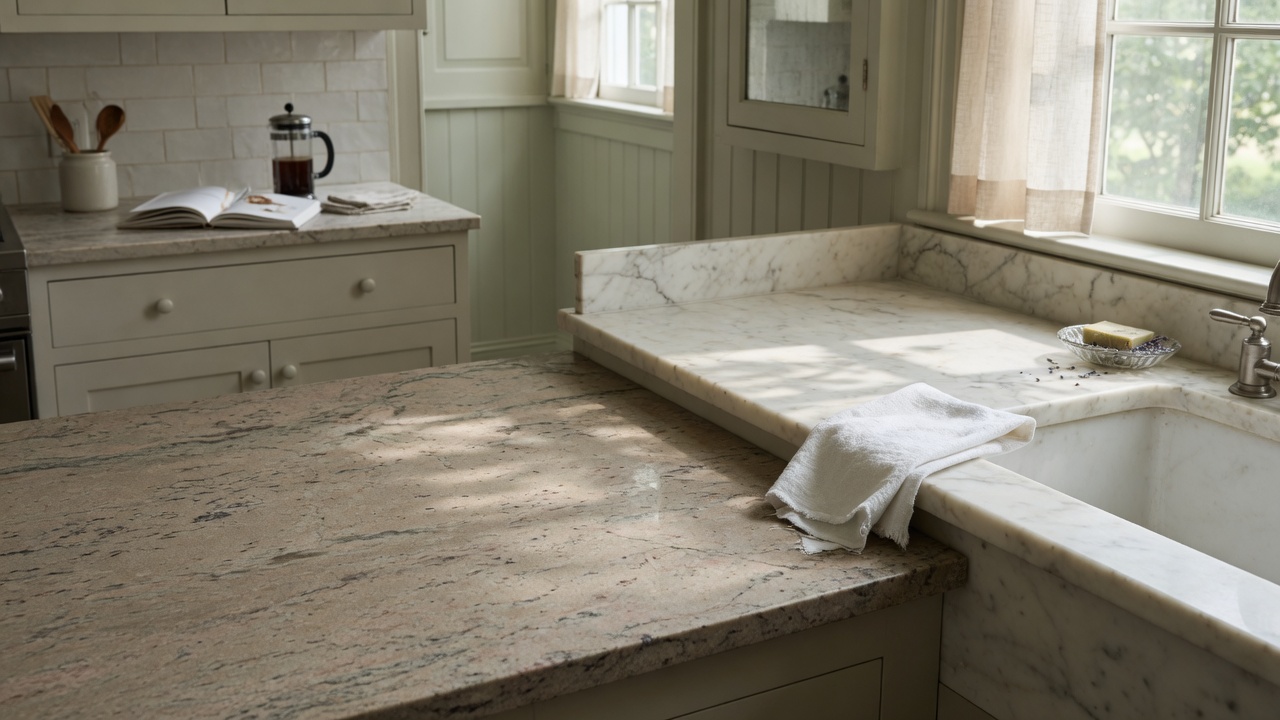
We see a lot of Lugoff homeowners come through our Cayce shop with a picture of a white marble kitchen saved on their phone. Lugoff has a good mix of newer construction off 601 and older brick ranch homes near the lake, and marble comes up in both kinds of projects, usually for an island, a baking counter, or a primary bath vanity rather than the whole kitchen.
Before you commit, it helps to know what marble actually does day to day, and how it stacks up against granite and quartz for the same job.
What people in Lugoff ask us about marble
- "Will lemon juice or wine ruin it?" Marble is a calcite stone, and acids like citrus and vinegar etch it, leaving a dull spot in the polish. That's a normal reaction with this stone, not a defect, and no sealer stops it.
- "Can I put a hot pan on it?" Marble handles brief heat reasonably well, but we still tell every customer to use a trivet. It's just good practice on any stone.
- "Does it need to be sealed?" Yes. Marble is porous like granite and quartzite, so we seal it at install and recommend resealing roughly once a year depending on how the kitchen gets used.
- "Will it stain?" Sealing buys you time, but a spill left overnight (olive oil, red wine, coffee) can still leave a mark. Wipe spills up when they happen and you'll be fine most days.
Marble vs granite for a Lugoff kitchen
Marble
- Soft, even veining and a chalky white or gray background that photographs beautifully
- Etches from acidic foods, developing a matte patina over years of use in busy kitchens
- Softer than granite, so it can scratch more easily; a cutting board is a must
- Classic look that suits older Lugoff homes with traditional trim and cabinetry, and newer farmhouse-style builds
Granite
- Wide range of colors and patterns, from speckled golds to bold blacks and blues
- Holds up well to acids, so no etching worries with lemon or tomato sauce
- One of the harder stones we fabricate, so it resists scratching better than marble
- Still porous and needs sealing, but it's more forgiving of everyday kitchen chaos
If you cook daily and want one surface that shrugs off a busy family kitchen without much thought, granite is usually the calmer choice. If you love the marble look and are willing to treat it a little more carefully, or if you're only using it on a low-traffic surface, it's a great fit.
Marble vs quartz for a Lugoff kitchen
Marble
- Real stone, so every slab is genuinely one of a kind
- Needs periodic sealing and gentle care around acids and knives
- Ages with visible character over time, which some homeowners love and others find frustrating
Quartz
- Engineered from stone and resin, so the pattern repeats and color is very consistent
- Non-porous, no sealing required, ever
- Resists staining and etching far better than marble since it's not a calcite stone
- Can scorch or discolor from a hot pan because of the resin binder, so a trivet is still required
Quartz is the practical pick if you want low-maintenance consistency, especially for a full kitchen used hard every day. Marble wins if what you actually want is the natural veining and don't mind babying it a bit, particularly on an island that gets admired more than it gets chopped on.
Where marble fits best in a Lugoff home
We rarely talk a customer out of marble entirely. We just try to put it where it makes sense.
- Primary bathroom vanities. Low acid exposure, low heat exposure, mostly just water and toiletries. Marble does very well here and this is probably our most common marble install in the Midlands.
- A baking or bar counter island. If you've got a second prep surface, put granite or quartz on the main run and marble on a dedicated baking counter where flour and dough don't threaten it the way lemon juice would.
- Fireplace surrounds and accent walls. No food contact, no cutting, just the look. Marble shines here with zero downside.
- A full kitchen counter for someone who wants that lived-in patina. Some homeowners genuinely like watching marble age, the way a good cast iron skillet or a leather chair ages. If that's you, go for it. Just go in with eyes open about etching.
A quick note on "marble" labels
Some slabs sold under fancy trade names described as marble are actually different calcite stones with their own quirks, and the reverse happens too, with softer stones sold as "quartzite" that behave more like marble. We go by how a slab actually performs, hardness, acid reaction, porosity, rather than trusting the name on the tag alone. When you're picking a slab, ask us to run a quick water and vinegar test right on the piece so you know exactly what you're getting.
If you're weighing marble for a Lugoff project, bring your cabinet samples and paint chips out to our shop at 2015 Charleston Hwy in Cayce. Seeing the veining under real light next to your finishes tells you more in five minutes than any photo online will.