
Local
Marble countertops for Lexington homes: what to know before you choose it
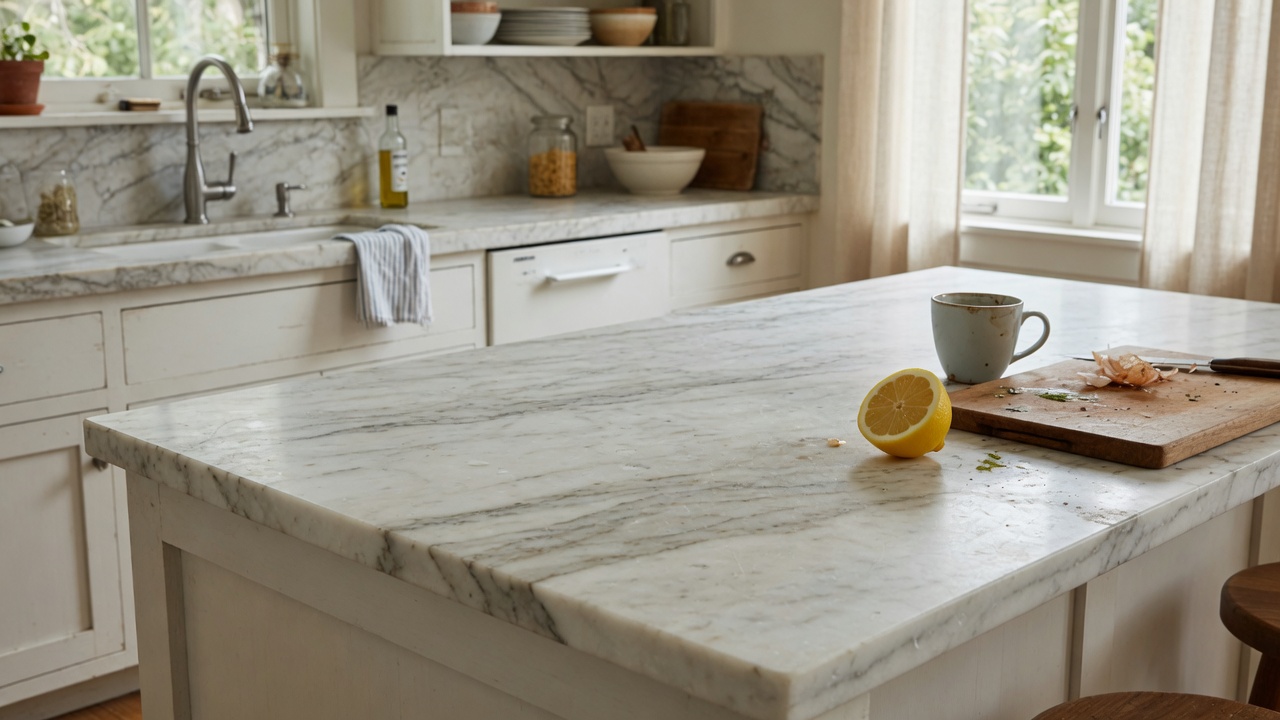
Lexington has a lot of homes built with some traditional bones, whether that's a lake house off Lake Murray or a newer build in one of the neighborhoods off Sunset Boulevard with a formal dining room and a kitchen meant to be seen. Marble comes up a lot in those conversations. It's the stone people picture when they think of a high-end kitchen, and it earns that reputation. It also comes with tradeoffs that we think every Lexington buyer should hear before the slab gets ordered.
We cut and install marble out of our Cayce shop for customers all over the Midlands, and marble questions are some of the most common ones we field. Here's the fair comparison we walk people through in person.
Marble vs. granite vs. quartzite: the short version
All three are natural stone, but they behave differently in a working kitchen. Here's how we break it down.
Marble
- Calcite based, which means it etches (dulls) when lemon juice, vinegar, or wine sits on it. That's a chemical reaction, not a defect, and it happens even on sealed marble.
- Softer than granite or quartzite, so it can scratch more easily. A cutting board is a must.
- Sealing helps it resist staining but does nothing to stop etching.
- The look is the reason people choose it: soft veining, a classic bakery-counter feel, and a patina that develops over years of real use.
Granite
- Not calcite based, so it doesn't etch from acidic foods the way marble does.
- Handles brief contact with a hot pan better than most surfaces, though we still tell every customer to use a trivet.
- Porous like all natural stone, so it needs sealing, usually resealed about once a year for a busy kitchen.
- Wide range of colors and patterns, generally more forgiving for daily cooking and cleanup than marble.
Quartzite
- One of the harder stones we fabricate, and it resists scratching better than marble, though it can still scratch, so a cutting board still matters.
- Often sold as a marble alternative because some quartzite has soft, marble-like veining.
- Here's the catch: some slabs labeled "quartzite" at the yard are actually a softer calcite stone that etches like marble. The trade name isn't a guarantee. We go by how a slab actually performs, not just what it's called on the tag.
- Also porous and needs sealing like granite.
What Lexington customers usually ask us
"Will it stain if I leave a glass of wine on it overnight?" Maybe. Even a well-sealed stone can stain if a spill sits for hours. Sealing buys you time to wipe it up; it's not a forcefield. This is true of marble, granite, and quartzite alike, though marble tends to show it faster since it's more absorbent to begin with.
"Can I cut straight on it?" We'd rather you didn't, on any stone. A cutting board protects your knives and keeps the finish from picking up fine scratches over time. That goes double for marble.
"Will lemons and tomatoes ruin my marble?" They'll etch it. You'll get a dull spot where the acid touched the stone. Some homeowners genuinely like that look over the years, the honed, softened patina that comes with a lived-in marble kitchen. Others find it frustrating. That's the real decision point, not whether the stone is "good" or "bad."
"Do I need to reseal it?" Yes, periodically, usually about once a year for a kitchen that sees regular cooking. We seal every countertop at install with a good sealer, applied by installers we train to do it right, so you're covered from day one. After that it's on a normal maintenance schedule, same as granite or quartzite.
Who marble actually suits
Marble makes the most sense for a Lexington kitchen where:
- Cooking happens, but heavy acid exposure (lots of citrus, tomato sauce, red wine) is occasional, not constant.
- The homeowner likes the idea of a stone that shows its age gracefully, rather than one that has to look showroom-new for the next twenty years.
- It's going on an island, a bathroom vanity, or a bar area that gets light use, rather than the main prep zone next to the stove.
- The look, that classic white-with-gray-veining, is worth more to the household than worry-free daily maintenance.
We also see a lot of Lexington homeowners split the difference: marble on a powder room vanity or a fireplace surround, and granite or quartzite on the kitchen island and perimeter where the real cooking happens. That's a smart way to get the marble look without putting it in the line of fire every night.
Who should look elsewhere
If you cook with a lot of citrus and wine, have young kids prone to leaving juice cups out, or just want a countertop you don't have to think about, granite or a true hard quartzite is the more forgiving choice. Quartz (the engineered material) is another option worth a look if low maintenance matters more than natural stone character, since it's non-porous and needs no sealing at all, though it doesn't take heat as well as granite or quartzite and needs a trivet just the same.
None of this means marble is a bad choice for a Lexington home. It's a beautiful stone with a long track record, and plenty of our customers choose it with eyes open and love how it ages. It does need regular care, sealing every so often and a little attention to spills, the same as any natural stone. We'd rather tell you the tradeoffs up front than have you find out the hard way after the lemon juice hits the counter.
If you're weighing marble against granite or quartzite for a Lexington project, come by our shop at 2015 Charleston Hwy in Cayce. Seeing the actual slabs side by side, and running a lemon wedge across a marble sample yourself, tells you more in five minutes than any brochure will.