
Local
Marble countertops in Cayce: a walk-through before you decide
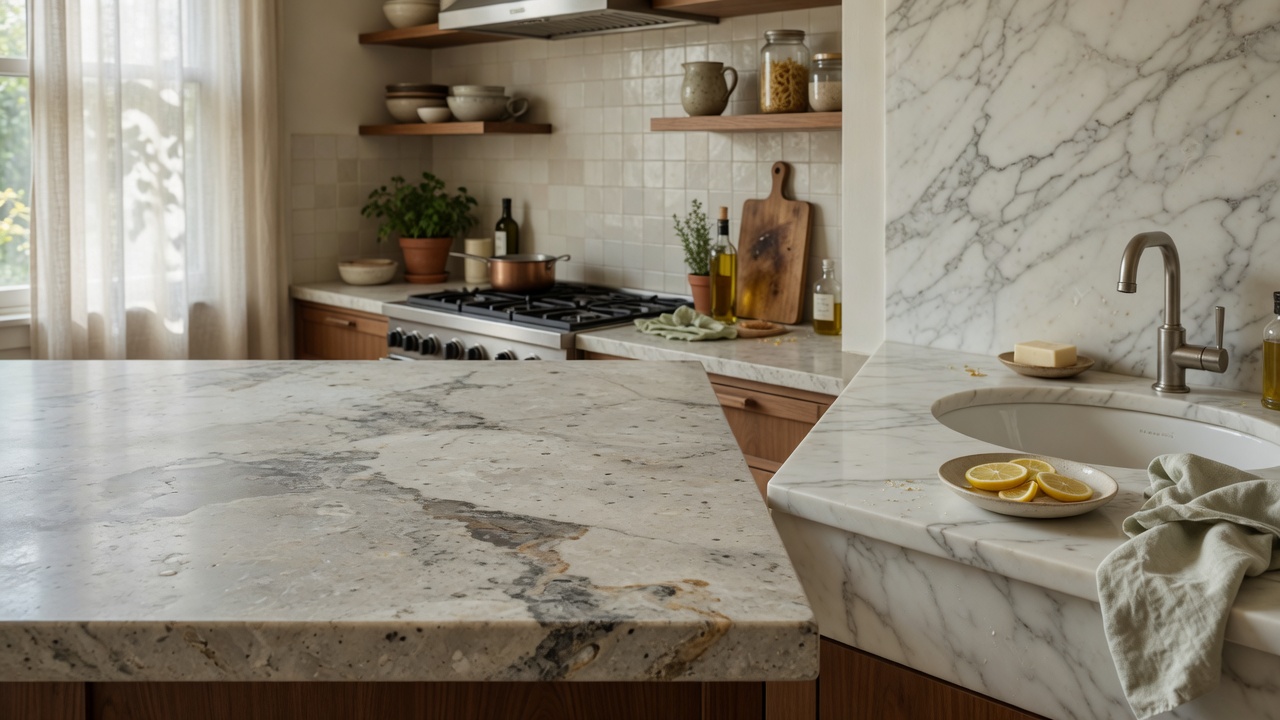
Why marble keeps coming up in Cayce
We see a lot of older brick ranches and updated bungalows around Cayce and West Columbia, plus newer builds near the river, and marble fits a good number of them. It's the classic look people picture when they think of a real stone kitchen or a bathroom vanity that feels a little special. Homeowners renovating a historic-feeling house often want that white-and-gray veined look, and marble is the original for a reason. But it's also the stone we get the most questions about, so let's walk through it in order.
Step one: what people ask us first
The first question is almost always about durability. Folks have heard marble stains or scratches easily, and some of that's true, so we don't dodge it. Marble is a calcite stone, softer than granite or quartzite, and it etches (leaves a dull mark) when something acidic like lemon juice, wine, or vinegar sits on it. That's a chemical reaction, not a flaw in the slab, and it's part of what marble is. If that sounds like a dealbreaker, we'll say so plainly before you spend a dime.
Step two: deciding where it makes sense
Most of our Cayce customers who go with marble put it in a bathroom vanity or a low-traffic bar area rather than the main kitchen prep zone. That's not a rule, plenty of people do full marble kitchens and love the look for decades, but it's worth pointing out that a kitchen island sees a lot more citrus, wine, and hot pans than a bathroom counter does. We'll ask how you actually cook and live before we push you one way or the other.
Step three: picking the slab
Once you've decided marble's the move, we walk the yard together. Marble varies a lot, some slabs are calm with soft gray veining, others are bold and dramatic like a piece of art. We look at the whole slab laid out, not just a small sample, because that vein pattern is going to be the centerpiece of your kitchen or bath for a long time. We also talk finish here: polished marble shows that classic shine, honed marble hides etching a little better because it's already matte. Neither finish changes how porous the stone is underneath.
Step four: sealing, done right at install
Marble is porous, so it needs to be sealed. We seal every job at install with a good sealer, applied by installers we've trained to do it properly. That's the most important seal your countertop will ever get. Sealing helps the stone resist stains from things like oil or coffee that sit too long, but it doesn't stop etching. That's an acid reaction, not a stain, and no sealer on the market prevents it. You'll want to reseal every so often, usually around once a year for a busy kitchen, less if it's a low-use bathroom vanity.
Step five: living with it
This is the part we spend the most time on with Cayce customers, because it's the part that actually matters five years down the road. Wipe up spills, especially citrus and wine, instead of letting them sit overnight. Use a cutting board, marble scratches more easily than granite or quartzite, and a board protects both the stone and your knives. Skip the hot pan straight from the stove, use a trivet, every time. And expect some patina over the years. Light etching and a softening of the polish is normal on marble, it's part of what gives an old marble counter that lived-in character people pay extra to get in reclaimed pieces. If you want zero patina, marble might not be your stone.
Coming to see it in person
A photo online never tells the real story with marble. The veining, the way light hits a honed versus polished finish, the subtle color shifts across a slab, you need to stand in front of it. Come by our shop at 2015 Charleston Hwy in Cayce and we'll walk the slabs with you, no pressure, just a plain look at whether marble fits how you actually live.