
Back to stone notes
Local
Marble countertops for Blythewood homes: what to know before you choose it
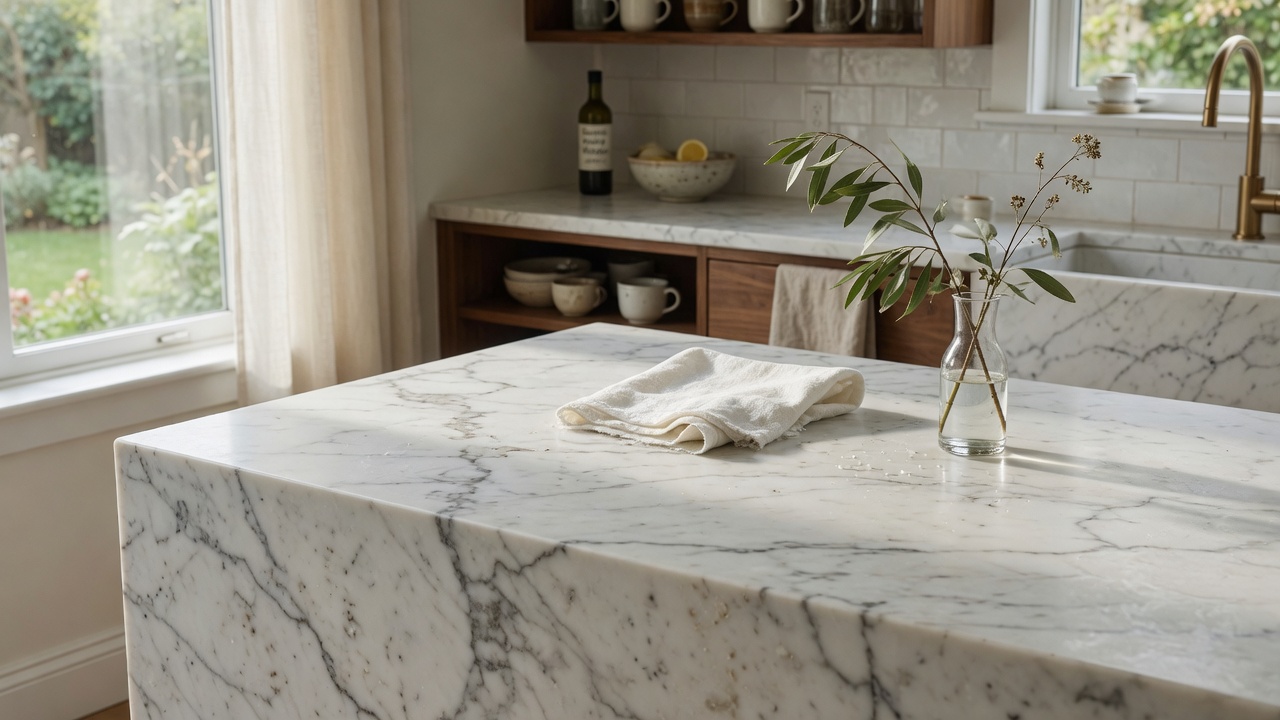
Blythewood has grown fast, and a lot of that growth is exactly the kind of house where marble gets a serious look: bigger primary bath layouts, kitchens with an island meant to be seen, and homeowners who've lived with granite before and want something with more movement. We get calls from that area often enough that it's worth laying out what we tell people in person.
The style fit
- Newer construction around Blythewood tends toward open kitchens with large islands, which is a good stage for marble's veining. A big slab with dramatic gray or gold movement reads as a real design statement on an island in a way it can get lost on smaller runs.
- A lot of the primary bathrooms we see from that area are built for a furniture-style vanity or a freestanding tub deck. Marble suits that softer, more traditional look better than it suits a high-traffic kitchen perimeter.
- We also see interest in marble for a butler's pantry or a bar area off the main kitchen. That's honestly one of our favorite uses. You get the look without putting marble where lemons and red wine live every day.
What people ask us most
- "Will it stain?" Marble is porous, so yes, it can stain if something sits on it, wine, oil, coffee. Sealing helps it resist stains and buys you time to wipe things up, but it doesn't make the stone immune. We tell people to treat a spill like a small emergency, not a maintenance chore for later.
- "What about lemons and vinegar?" This is the one that catches people off guard. Marble etches, meaning acids leave a dull mark on the polished surface. It's a chemical reaction with the calcite in the stone, not a sealing failure. No sealer stops it. If you cook with a lot of citrus or vinegar dressings right on the counter, that's good information to have before you commit, not after.
- "Is that dull spot normal?" Often, yes. Light etching and a soft, worn look over time is part of how marble ages, and a lot of homeowners come to like it. It's called a patina, and it's not a defect. If you want a countertop that looks brand new for twenty years with zero visible change, marble isn't that stone.
- "Can I put a hot pot on it?" We'd rather you didn't test it. Marble handles brief warmth reasonably well, but a trivet costs nothing and saves you a scorch mark you can't fully undo.
- "Do I need to reseal it?" Yes, and we tell every marble customer this up front. We seal at install with a good sealer applied by installers we train to do it right, so you're covered from day one. After that, plan on resealing roughly once a year, maybe more in a busy kitchen. It's a fifteen minute job, not a project.
Where we tell people to be careful
- A marble kitchen island that also serves as the prep counter is the riskiest combination we see. If you're chopping tomatoes, squeezing lemons, and setting down wine glasses in the same three feet of stone, expect some character to develop over the years. Some people love that look. Others regret it within a season. Know which kind of homeowner you are before you sign off on the slab.
- Honed marble hides etching better than polished marble because the surface is already matte. If you're set on marble for a busy kitchen, honed is worth a serious look over glossy polished.
- Quartzite gets sold as a low-maintenance alternative that looks like marble, and a lot of it holds up better to acids and scratching. But the name on a slab isn't a guarantee. Some stone sold as quartzite is really a softer calcite stone underneath, so we go by how a slab behaves at the shop, not just what the yard called it. If you want the marble look with fewer worries in a working kitchen, bring us your inspiration photos and let's show you a few real slabs side by side.
If you're weighing marble for a Blythewood kitchen or bath, come by our shop at 2015 Charleston Hwy in Cayce. Seeing a full slab in person, running your hand over honed versus polished, tells you more in five minutes than any photo will.