
Care and maintenance
Marble countertop care: what to expect day one versus year one
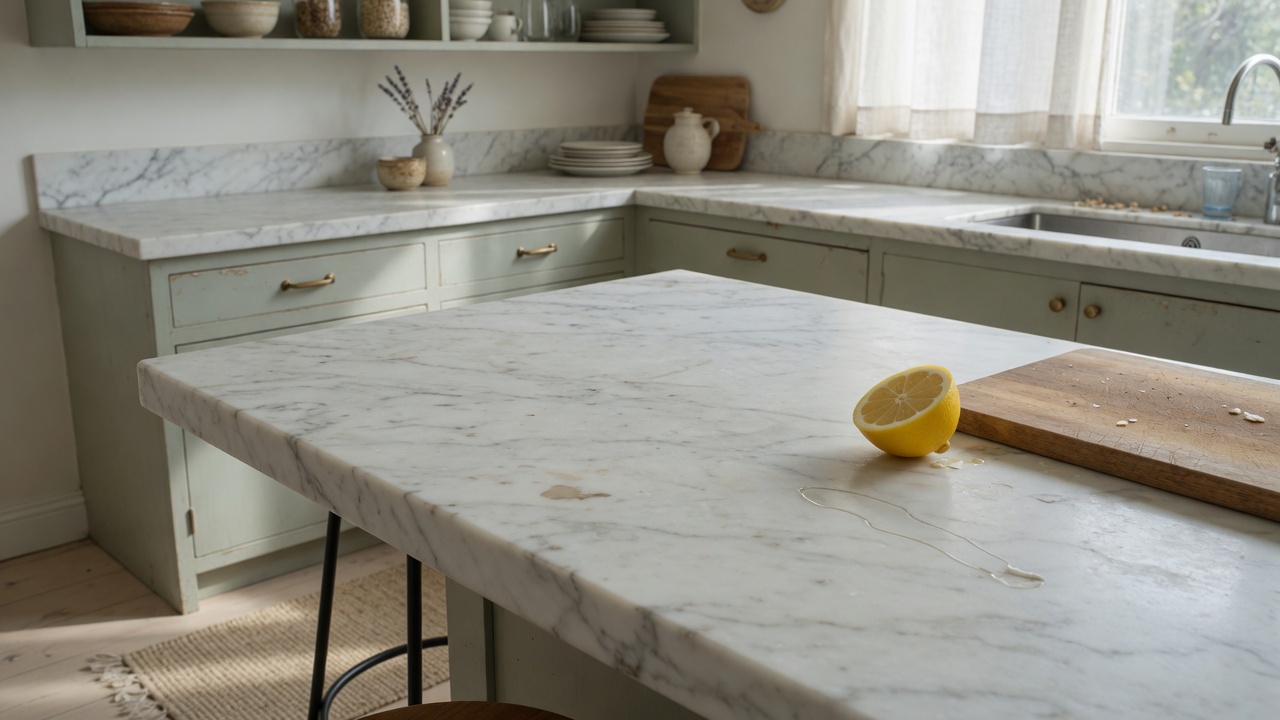
Marble sells itself in the showroom. The veining, the cool white background, the way light sits on a honed slab. What we want to walk through here is the gap between that first impression and how the stone actually behaves once it's holding your coffee cup every morning for a few years.
Day one versus year one
When a marble slab goes in, it looks close to perfect. Polished surface, even color, no marks. That's the showroom version.
A year in, most marble kitchens show some change:
- Small dull spots near the sink or stove where acid or heat touched the surface
- A softer, more matte look developing in high-use spots like next to the cooktop
- Slight color depth changes where oils have soaked in over time
None of that means the stone failed. It's just marble doing what marble does. A lot of our customers end up liking that lived-in look. Some don't, and that's worth knowing before you commit, not after.
Daily cleaning: what actually works
Marble doesn't need anything fancy day to day. Warm water, a soft cloth, and a pH-neutral stone cleaner handle almost everything.
What to do:
- Wipe spills as they happen, especially wine, coffee, and oil
- Use a stone-safe cleaner, not a general kitchen spray
- Dry the surface after wiping so water doesn't sit
What to avoid:
- Vinegar, lemon juice, or any acidic cleaner, ever
- Bleach or ammonia-based products
- Abrasive scrub pads or powders
That second list is the one people slip on. A splash of vinegar in a homemade cleaning mix seems harmless until you see the dull ring it leaves behind the next morning.
Sealing: what it does and what it doesn't
Marble is porous, so it should be sealed, and resealed periodically, usually about once a year in a kitchen that gets regular use. We seal every job at install with a top-shelf sealer, applied by installers we train to do it right. A lot of shops leave that step to the homeowner. We don't skip it, but you'll still want to keep up with resealing down the road.
Here's the part people get wrong: sealing helps the stone resist stains by slowing how fast liquid soaks in, giving you time to wipe it up. It doesn't stop etching. Etching is a chemical reaction between acid and the calcium in the stone, and no sealer blocks that reaction. A sealed marble counter can still dull where lemon juice sits.
Etching versus staining, and why the difference matters
These two get lumped together, but they're not the same thing.
- Etching is a dull, sometimes rough-feeling mark where acid ate into the polish. It's a texture change, not a stain. You'll see it from lemon, tomato sauce, vinegar, even some wines.
- Staining is color soaking into the stone from something like oil or coffee sitting too long. Sealing buys you time against this one.
You can sometimes buff out a light etch with a marble polishing powder. A stain usually needs a poultice. Knowing which one you're looking at saves you from trying the wrong fix.
How it wears with real use
Marble is a softer stone compared to granite or quartzite, so it takes scuffs and light scratches more easily. A cutting board isn't optional here, it's the single easiest thing you can do to keep the surface looking right. Set hot pans on a trivet too. Marble can handle brief warmth better than some materials, but thermal shock from a pan straight off the burner is a real risk, and it's an easy one to avoid.
Over years, a marble counter that gets normal care tends to develop a soft, worn character rather than looking damaged. Old European kitchens are full of marble that's decades old and still working hard, just with a story written into the surface.
Who marble suits, and who it doesn't
Marble is a good fit if:
- You like the look of a surface that ages and changes over time
- You're willing to wipe spills quickly and skip acidic cleaners
- You want a classic look for a bathroom vanity, bar area, or lower-traffic kitchen
Marble is a tougher fit if:
- You want a countertop that looks the same on day 3,000 as day one
- Your kitchen sees a lot of citrus, wine, or tomato-based cooking without much cleanup in between
- You'd rather not think about coasters, trivets, and cutting boards every single time
Neither answer is wrong. It's just about matching the stone to how you actually live in your kitchen.
If you're on the fence, come look at a few marble slabs in person at 2015 Charleston Hwy in Cayce. Seeing the veining up close, and hearing us walk through how a specific slab tends to behave, makes the decision a lot easier than scrolling photos online.