
Buying guides
How long do stone countertops actually last?
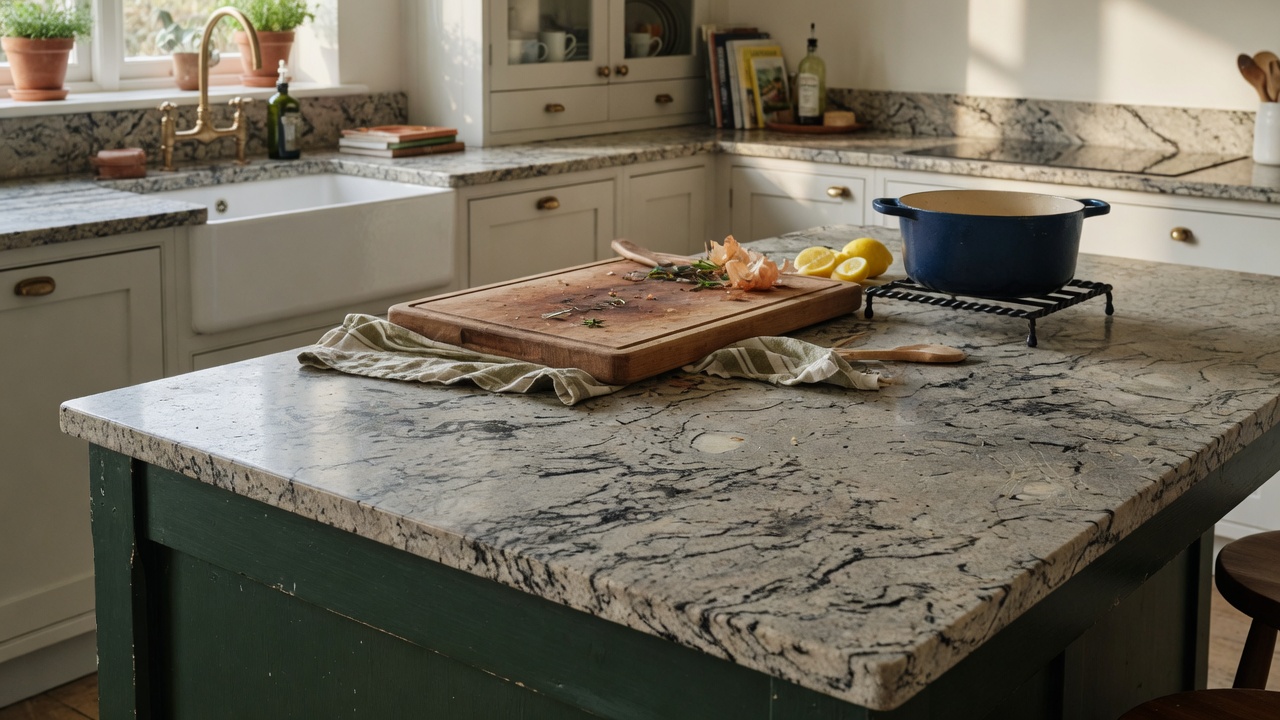
So what's the real number, in years?
Most granite, quartzite, and quartz countertops hold up for decades, often 20 to 50 years or more, if they're installed right and get basic care. We've cut into stone that was installed before some of our customers were born, and it was still solid. Stone doesn't wear out the way laminate or a cheap sink does. It's more likely that you'll remodel the kitchen around it before the countertop itself gives out.
Does the type of stone change the answer?
A little. Granite and quartzite are both very hard and dense, and they resist scratching and daily wear better than most surfaces. Marble is a softer, calcite stone, so it etches (dull marks) from things like lemon juice and vinegar, and it shows wear patterns over time. That's not a flaw, it's just how marble ages, and a lot of people like that look. Quartz is engineered, non-porous, and consistent, so it doesn't need sealing, but it's not something to set a hot pan on directly since the resin in it can scorch.
What actually shortens the life of a stone countertop?
A few things we see over and over:
- Skipping sealing on natural stone. Granite, quartzite, and marble are porous to some degree. If they never get sealed, or don't get resealed over the years, they're more open to staining from oil, wine, and other spills that sit too long.
- Skipping the cutting board. Granite and quartzite resist scratching better than most surfaces, but even they can pick up fine marks over time, and a knife dragged across the surface won't stay sharp long either. A cutting board protects both the stone and your knives.
- Heat straight from the stove. Granite and quartzite take brief heat better than most surfaces, but a hot pan set down over and over in the same spot isn't doing it any favors. Quartz is more sensitive to this because of the resin. A trivet costs nothing and saves you a headache.
- A bad install. Poor seams, unsupported overhangs, or a slab set on an uneven base can lead to cracks years down the road that have nothing to do with the stone itself and everything to do with how it went in.
Do I have to reseal it forever?
For natural stone, yes, periodically. Most kitchens need resealing about once a year, though it depends on the stone and how much you cook. It's a quick job, usually just wiping on a sealer and letting it sit. We seal every countertop we install with a good sealer before we leave, so you're not starting from scratch. Quartz never needs this step since it's non-porous.
If I take care of it, will it really outlast my kitchen?
In most cases, yes. Cabinets sag, hinges wear out, laminate peels, appliances get replaced two or three times, and the stone countertop is usually still sitting there looking the same as the day it went in. We've done plenty of jobs where the old cabinets underneath were falling apart but the granite on top was completely fine and got reused. That's the real selling point of stone: it's not disposable the way a lot of kitchen materials are.
Is there a way to make it last even longer?
Wipe up spills, especially wine, oil, and citrus, instead of letting them sit overnight. Use cutting boards and trivets as a habit, not an afterthought. Keep up with resealing if it's natural stone. None of this is complicated, it's just consistency. If you want to see what different stones look like up close and talk through what fits your kitchen and how you actually cook, come by 2015 Charleston Hwy in Cayce. We'll walk the slabs with you and give you a straight answer, no pressure.