
Buying guides
Is granite worth it for a kitchen?
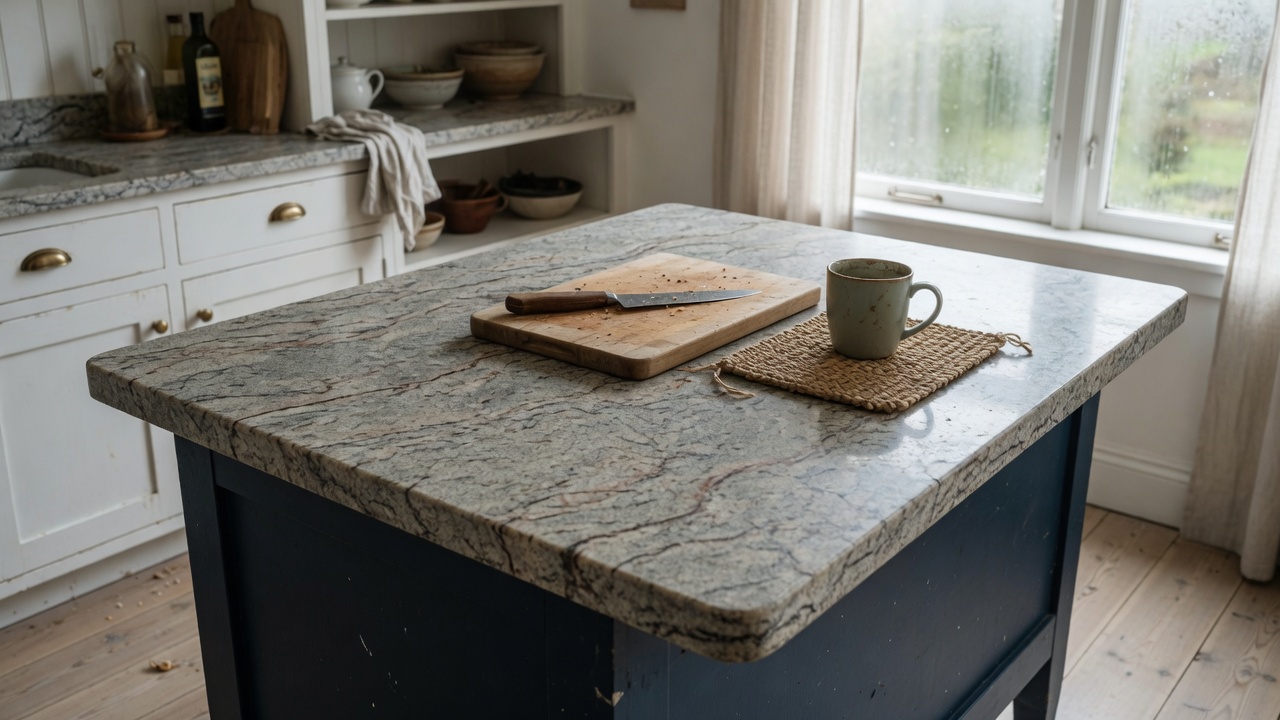
Granite's been the standard kitchen stone for so long that people forget to ask if it still earns that spot. Here's where it holds up and where it doesn't, no sales pitch attached.
What you get for the money
- Real depth and movement. Granite is an igneous rock, formed from cooled magma, so it's full of mineral crystals, quartz, feldspar, mica, that catch light differently as you move around the kitchen. No two slabs look alike, which is part of why people still pick it over uniform man-made surfaces.
- It holds up to daily kitchen abuse. Granite is one of the harder stones we sell. It resists scratching better than most surfaces in your house, though we still tell every customer to use a cutting board. It protects your knives as much as the stone.
- Heat isn't a big worry, but don't test it. Granite handles brief contact with a hot pan better than most countertop materials. Still, use a trivet or hot pad every time. It's a habit worth keeping no matter what stone you have.
- Resale familiarity. Buyers and appraisers know granite. It doesn't raise questions the way a less common stone might, and that matters if you're thinking about resale even a little.
Where it costs you
- Sealing is real maintenance, not optional. Granite is porous, some slabs more than others, and it needs to be sealed. We seal every job at install with a top-shelf sealer, so you're covered from day one. After that, plan on resealing roughly once a year for a busy kitchen. Skip it long enough and the stone stops shedding spills the way it should.
- Spills still need attention. Even sealed granite can stain if wine, oil, or coffee sits overnight. It's not a set-and-forget surface. Wipe it up like you would any counter.
- Seams show on big layouts. Granite comes in slabs of a fixed size, so a large island or wraparound counter usually needs at least one seam. A good fabricator places it where it's least visible, but it's there.
- Upfront cost isn't the cheapest option. Rough pricing for granite typically runs somewhere around 50 to 100 dollars per square foot installed, depending on the slab you pick and the complexity of the job. Basic quartz can undercut that in some cases, and granite can run higher for rarer slabs. Get it as an honest range, not a quote, until you've picked an actual slab.
- Color and pattern availability shifts. Because it's a natural, quarried material, the exact slab you fall in love with might not be reorderable later if you need to extend the kitchen or replace a broken piece. Buy enough slab for the whole job up front if you can.
Who granite suits
If you cook a lot and want a surface that shrugs off knife nicks and hot pots (with a trivet), granite's a strong fit. It also suits people who like the idea of a surface with visible mineral texture rather than a printed or engineered look, and who don't mind an annual sealing check as part of normal home upkeep, the same way you'd check caulk or filters.
It's also a good call for anyone remodeling a kitchen they plan to sell in the next several years. Buyers recognize it, and it photographs well in listings without needing an explanation.
Who might look elsewhere
If you'd rather skip sealing altogether, quartz is worth a look since it's non-porous and doesn't need it. Natural stone like granite should still be sealed and resealed periodically, so if that upkeep isn't for you, quartz fits better. If your heart's set on the soft, chalky look of marble, granite won't give you that, and marble brings its own tradeoff (it etches from acids like lemon and vinegar, which granite mostly avoids). And if budget is the tightest constraint in the project, laminate or a basic quartz line will beat granite on upfront cost every time.
The short version
Granite earns its long run in kitchens because it looks different in every slab, takes daily wear well, and doesn't punish you for owning a stove. The tradeoff is real: it's porous, it needs periodic resealing, and spills still need wiping. For most working kitchens, that trade is worth it. Come by 2015 Charleston Hwy in Cayce and look at a few slabs in person. Photos never do the crystal pattern justice, and seeing it under real light tells you more than any spec sheet.