
Local
Granite countertops for Pine Ridge homes: what to know before you pick a slab
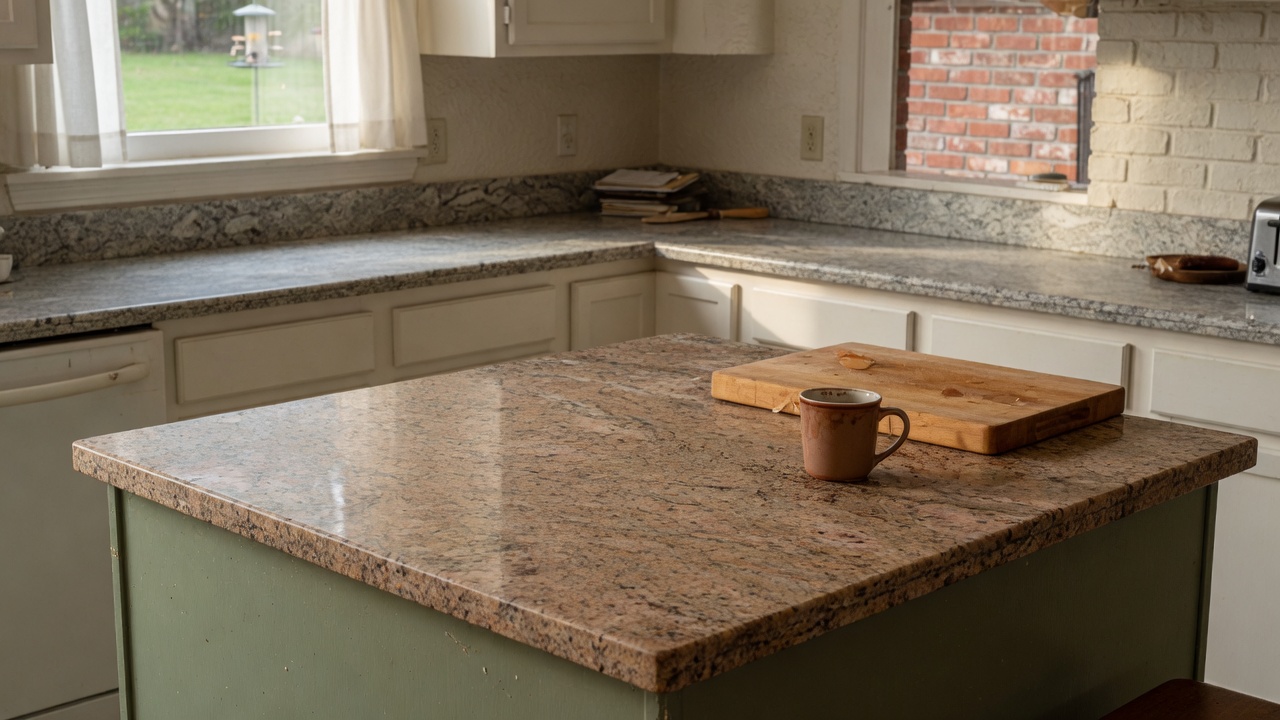
Pine Ridge sits close enough to our Cayce shop that we see a good number of jobs come from that area, mostly brick ranches from the 70s and 80s alongside newer construction filling in the empty lots. That mix matters when you're picking a countertop, because a stone that looks right in a builder-grade kitchen from 2022 might feel out of place against original oak cabinets from 1978.
The Pine Ridge housing mix and why it matters
Older Pine Ridge homes tend to have warm wood cabinets, smaller kitchen footprints, and laminate or tile counters that are original or close to it. Newer builds and remodels lean toward white or gray shaker cabinets with more open layouts. Granite works in both settings, but the slab you'd choose for one is often not the slab you'd choose for the other.
For the older ranches, we usually point people toward granites with warmer undertones (browns, golds, some movement) that play well with wood tones instead of fighting them. For newer white-cabinet kitchens, a lot of folks want the cooler, more uniform granites, or they start asking us about quartz because they like a cleaner, more consistent pattern.
What people ask us most
A few questions come up over and over from Pine Ridge customers, and they're worth answering plainly here instead of only at the counter.
- "Is granite still popular, or is everyone doing quartz now?" Both are popular. Granite still sells well, especially with buyers who want a natural look with real variation from slab to slab. Quartz has grown because of its consistency and lower upkeep.
- "Do I have to reseal it?" Yes, periodically. Granite is natural stone and porous to some degree, so it needs sealing, usually resealed about once a year for most kitchens. We seal every job at install with a top-shelf sealer, so you're covered from day one, but it's not a forever seal.
- "Will it scratch if my kids use it as a cutting board?" Granite resists scratching better than a lot of surfaces, but no stone is scratch-proof. We tell everyone to use a cutting board. It protects your knives too.
- "Can I set a hot pot on it?" Granite handles brief heat better than most countertop materials, but we still recommend a trivet every time. No sense testing it.
Granite versus quartz: a fair look
This is the real decision most Pine Ridge homeowners are weighing, so here's how they actually compare, no thumb on the scale.
Granite
- Natural stone, so every slab is genuinely one of a kind. No two are identical, which some people love and some find inconsistent.
- Needs periodic sealing (we handle the first one at install; you'll reseal every so often after that).
- Handles brief heat better than most surfaces, though a trivet is still the smart move.
- Resists scratching well but isn't immune, so a cutting board matters.
- Tends to fit warmer, traditional kitchens especially well, though plenty of granites work in modern spaces too.
Quartz
- Engineered from ground quartz and resin, so the pattern repeats and colors are very consistent from slab to slab.
- Non-porous. It doesn't need sealing at all.
- The resin means a hot pan can scorch or discolor it, so a trivet is a must, more so than with granite.
- Very good scratch resistance, but still use a cutting board.
- Fits clean, modern kitchens especially well, and it's a common pick in newer Pine Ridge builds with white cabinetry.
Neither one is the "right" answer across the board. It comes down to whether you want the one-of-a-kind look of real stone and don't mind occasional resealing, or you'd rather have consistent pattern and skip sealing altogether.
Granite versus quartzite: less obvious, but worth knowing
Quartzite comes up less often in casual conversation, but it's worth a quick mention because the name confuses people. Quartzite is a natural stone, harder than granite in many cases, and it resists scratching even better. It still needs sealing like granite does, and a trade name on a slab isn't a guarantee of what you're actually getting. Some slabs sold as "quartzite" behave more like a softer calcite stone that etches, so we always judge by how the stone performs in our shop, not just the label on it.
If you're drawn to granite's natural look but want something that stands up to heavier daily use, quartzite is worth a look alongside it.
Who each option really suits
If you want a natural material with real depth and variation, don't mind a yearly reseal, and you're working with warm or traditional cabinetry, granite is a solid, proven pick. It's what we'd suggest for most of the older Pine Ridge ranch-style kitchens we see.
If you want the lowest-maintenance option and a very consistent look for a modern white or gray kitchen, quartz probably suits you better.
If you want natural stone but with extra scratch resistance for a busy household, ask us about quartzite while you're comparing slabs.
We keep granite, quartz, and quartzite in stock at our Cayce shop on Charleston Highway, and honestly the best way to decide is to stand in front of actual slabs under real light rather than picking from a small sample chip. If you're in Pine Ridge and thinking about a countertop change, come by and we'll walk the yard with you.