
Local
Granite countertops in Lexington, SC: what homeowners ask us and how to choose
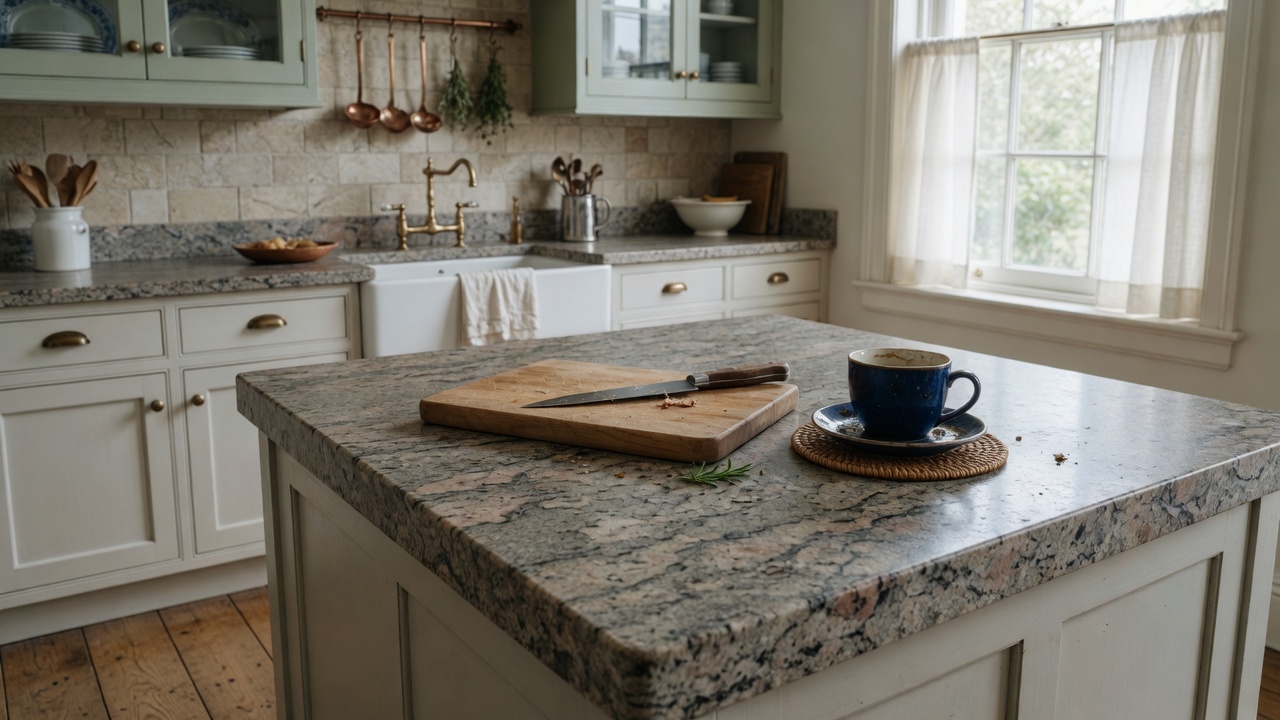
Lexington has grown a lot in the last decade, and we see it in the kitchens we quote. New construction off Sunset Boulevard and Corley Mill Road, lake houses near Lake Murray, and older brick ranches near downtown getting their first real renovation. Granite still comes up in almost every one of those conversations, usually alongside quartz. Here's how we walk people through it.
Why granite keeps coming up in Lexington kitchens
A lot of Lexington homes lean traditional or transitional, brick exteriors, painted cabinets, warm wood floors. Granite fits that look naturally. It's also a material we've worked with for years, so we know how it fabricates, how it holds an edge profile, and how it ages in a real kitchen, not just a showroom.
The most common questions we get from Lexington customers are pretty consistent:
- "Do I really have to seal it?"
- "Will it scratch if we're not careful with knives?"
- "Is it okay to set a hot pot near it?"
- "How is this different from quartz, really?"
That last one is worth a full answer, since it's the decision most people are actually trying to make.
Granite vs. quartz, side by side
What each one is
- Granite is a natural stone, quarried in blocks and cut into slabs. Every slab is a little different because it's a piece of the earth.
- Quartz is engineered, ground quartz mixed with resin and pigment. It's manufactured for a consistent, repeatable pattern.
How they handle daily use
- Granite handles brief contact with a hot pan better than most surfaces, but we still tell every customer to use a trivet. No countertop should take a pan straight off the stove.
- Quartz has resin in it, so a hot pan can scorch or discolor it. Trivet, every time, no exceptions on quartz.
- Granite is porous and needs sealing. We seal every job at install with a good sealer, applied by installers we train to do it right, and most kitchens need a reseal about once a year after that.
- Quartz is non-porous and skips sealing entirely. That's a real convenience if you don't want another yearly task on your list.
- Both resist scratching well, granite especially, but still use a cutting board on either one. It protects your knives as much as the counter.
- Even sealed granite can stain if something like wine or oil sits on it overnight, so wipe up spills instead of letting them sit.
Look and feel
- Granite has natural movement and depth, no two slabs identical. If you want a kitchen that looks like it came from the ground, this is it.
- Quartz gives you a consistent pattern across the whole run, which matters if you want a large island to look perfectly uniform with the perimeter.
- Granite comes in a wide range of colors from quarries all over the world, some patterns are dramatic, some are quiet and speckled.
- Quartz patterns are designed, including convincing marble looks, but they're still a manufactured repeat rather than a one-of-a-kind slab.
Cost and lead time
- Pricing on both varies a lot by color, thickness, and edge work, so we won't throw out a number that doesn't apply to your kitchen. What we can say is that granite and quartz often land in a similar range for mid-tier selections, with exotic granites and premium quartz lines running higher on both sides.
- Granite slabs are a natural product, so availability depends on what's actually in stock in the Midlands at a given time. We keep a good selection at the Cayce shop so you're seeing real slabs, not just a sample chip.
Who granite suits
Granite makes sense if you like the idea of a countertop that looks like natural stone because it's natural stone, and you don't mind an annual reseal as routine maintenance, about the same effort as changing your HVAC filter. It's a strong fit for traditional and transitional Lexington kitchens, outdoor kitchens (granite handles sun and weather well), and anyone who wants a one-of-a-kind slab rather than a repeatable pattern.
Who quartz suits
Quartz suits households that want zero sealing maintenance and a very consistent look, especially with large islands or waterfall edges where pattern matching matters. It's also a common pick for busy family kitchens where the idea of "nothing to seal, ever" outweighs wanting a natural stone look. Just remember the resin means it's less forgiving of hot pans than granite.
Honest guidance either way
We don't push one over the other. Both are good, durable choices for a Lexington kitchen when they're installed and cared for correctly. The real decision usually comes down to whether you want the natural variation of real stone and don't mind sealing it once a year, or you'd rather trade that natural look for a no-sealing, consistent pattern.
If you're in Lexington and trying to decide, come by 2015 Charleston Hwy in Cayce and look at slabs of both side by side under real light. Photos and samples only tell you so much. Seeing the actual granite block your countertop would come from usually settles it faster than any comparison list can.