
Local
Granite countertops for Chapin homes: your questions answered
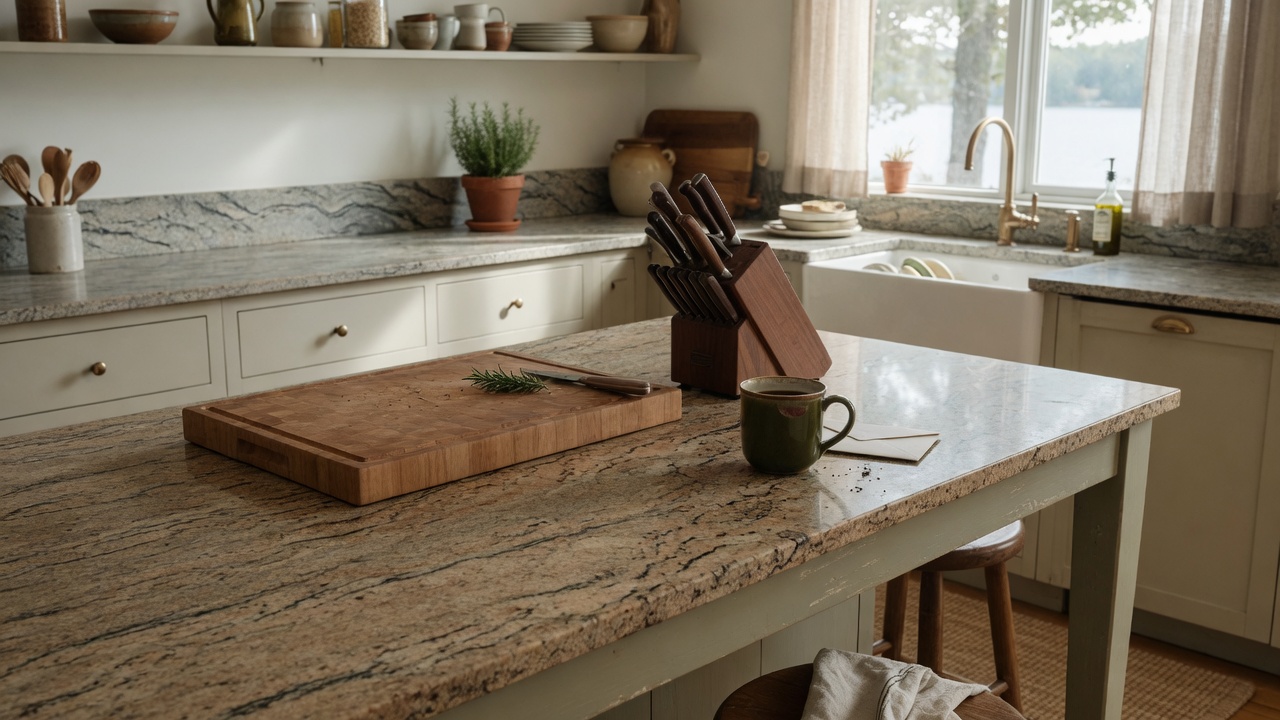
We see a lot of Chapin customers come through our Cayce shop, usually after a drive down 26 or over from Lake Murray. Chapin's got a mix of lake houses, newer builds off 76, and older homes closer to town, and granite comes up in almost every kitchen conversation. Here are the questions we hear most.
Does granite fit the style of Chapin homes?
Most of what we see going into Chapin kitchens leans toward warm, traditional looks, tan and gold granites for the lake houses, and cooler grays and blacks for the newer farmhouse-style builds near downtown. Granite works with both because it comes in such a wide range of colors and patterns. It's not a one-look stone. If your home has a lot of wood tones or stone fireplace work, which we see often out by the lake, granite tends to blend in better than a stark white quartz would.
We're on the lake. Does humidity or moisture near the water matter?
Not really, as long as the stone is sealed properly. Granite is porous to some degree, like all natural stone, so it should be sealed at install and resealed periodically, usually about once a year for a normal kitchen. Lake houses that see more cooking, more guests, and more wine spills might want to check the seal a little more often. Humidity in the air doesn't hurt the granite itself, but a damp sponge left sitting on it every day isn't doing it any favors either.
What do Chapin customers usually ask about durability?
Mostly about hot pots and knives. Granite handles brief contact with a hot pan better than most surfaces, but we still tell everyone to use a trivet, no exceptions. It's the same idea with knives. Granite resists scratching better than a lot of surfaces, but it's not something you want to test with a blade. Always use a cutting board, both for the stone's sake and for your knife edge, which is the part that actually loses that fight.
Is granite still a good value compared to quartz?
Depends what you're after. Quartz is engineered and doesn't need sealing, which some people like for the lower upkeep. But granite is a natural material, no two slabs look alike, and a lot of our Chapin customers like that their kitchen isn't going to look exactly like the one three doors down with the same builder-grade quartz. Cost-wise, granite and quartz often land in a similar range, roughly 50 to 100 dollars per square foot installed depending on the slab and edge work, though that's a rough range and we'll always give you a real number once we know your layout.
Can I match granite to my existing cabinets without seeing it in person?
We'd rather you didn't try. Photos and online slab pictures never show the real veining, movement, or flecking accurately, and granite can shift in tone depending on the lighting in your kitchen versus a showroom. If you're in Chapin, it's a short drive down to our shop on Charleston Highway in Cayce. Bring a cabinet door or a paint chip if you've got one, and we'll walk the yard with you.
Do you install in Chapin, or just sell the slabs?
We handle both, fabrication and installation, and we already do a fair amount of work out that way. We seal every job at install with a good sealer, applied by installers we train ourselves. Plenty of shops leave the sealing step up to the homeowner. We don't. You'll still want to reseal down the road, but the first and most important seal is already done when we hand you the keys to your new kitchen.
If you're planning a kitchen out in Chapin, come by 2015 Charleston Hwy in Cayce and walk the slabs yourself. Seeing granite in person, under real light, tells you more in five minutes than any photo will.