
Care and maintenance
How to take care of granite countertops
What do you actually clean granite with?
Warm water, a few drops of dish soap, and a soft cloth handle almost everything that lands on a granite countertop. That's it. You don't need a special granite spray, though the mild ones sold for stone won't hurt anything. What you want to skip are the harsh stuff: bleach, ammonia-based glass cleaners, and vinegar. Those can wear down the sealer over time and dull the surface. Wipe up spills, especially wine, coffee, and oil, when they happen rather than letting them sit overnight.
Does granite need to be sealed?
Yes. Granite is a natural stone and it's porous to some degree, even though it doesn't feel like it. Sealing fills those small pores so spills bead up instead of soaking in. We seal every countertop we install with a good sealer, so you're covered from day one. After that, plan on resealing about once a year for a kitchen that gets regular use. A quick way to check: splash a little water on the surface. If it soaks in fast instead of beading, it's probably time to reseal.
Even with a fresh seal, a spill that sits overnight can still leave a stain, so don't rely on the sealer alone. Wipe things up.
What about cutting and hot pans?
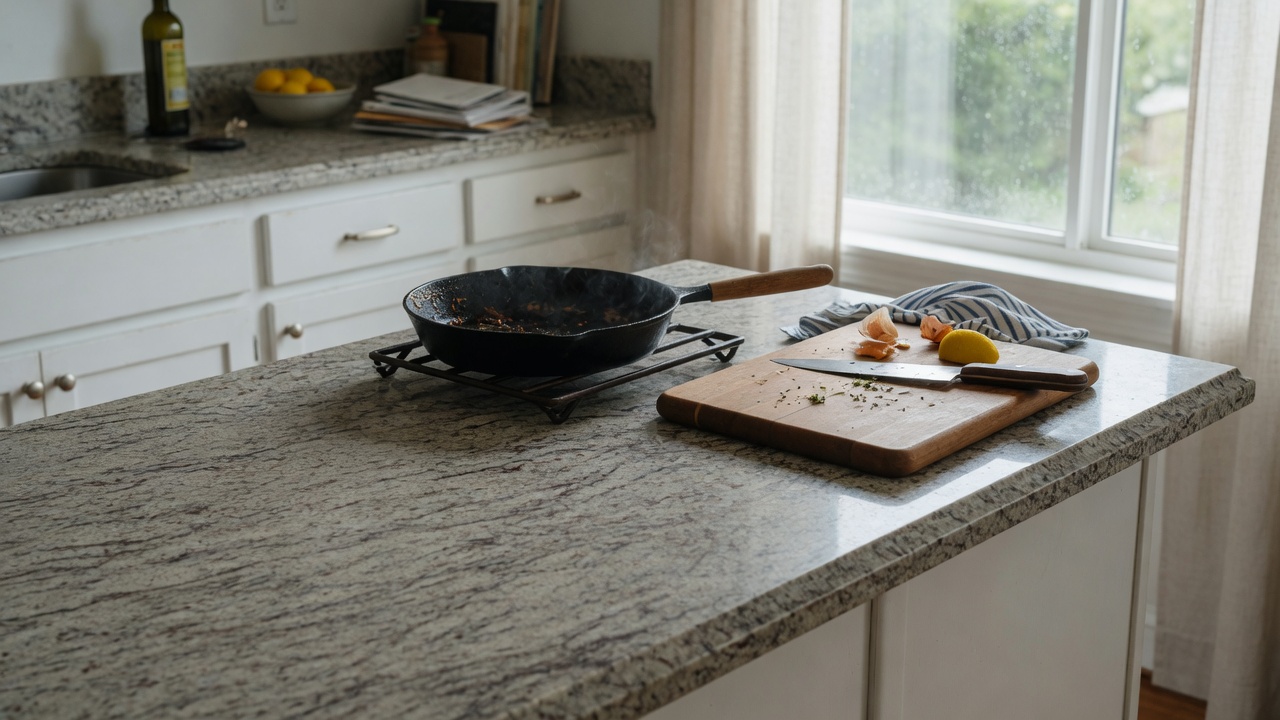
Granite handles brief contact with a hot pan better than most countertop materials, but we still tell every customer to use a trivet or hot pad. Thermal shock from a pan straight off the stove can, in rare cases, cause a crack, and there's no reason to risk it when a trivet costs a few dollars.
Same idea with knives. Granite resists scratching well, it's one of the harder stones we cut, but