
Buying guides
Full-height backsplash or a 4-inch splash? Questions we hear at the slab
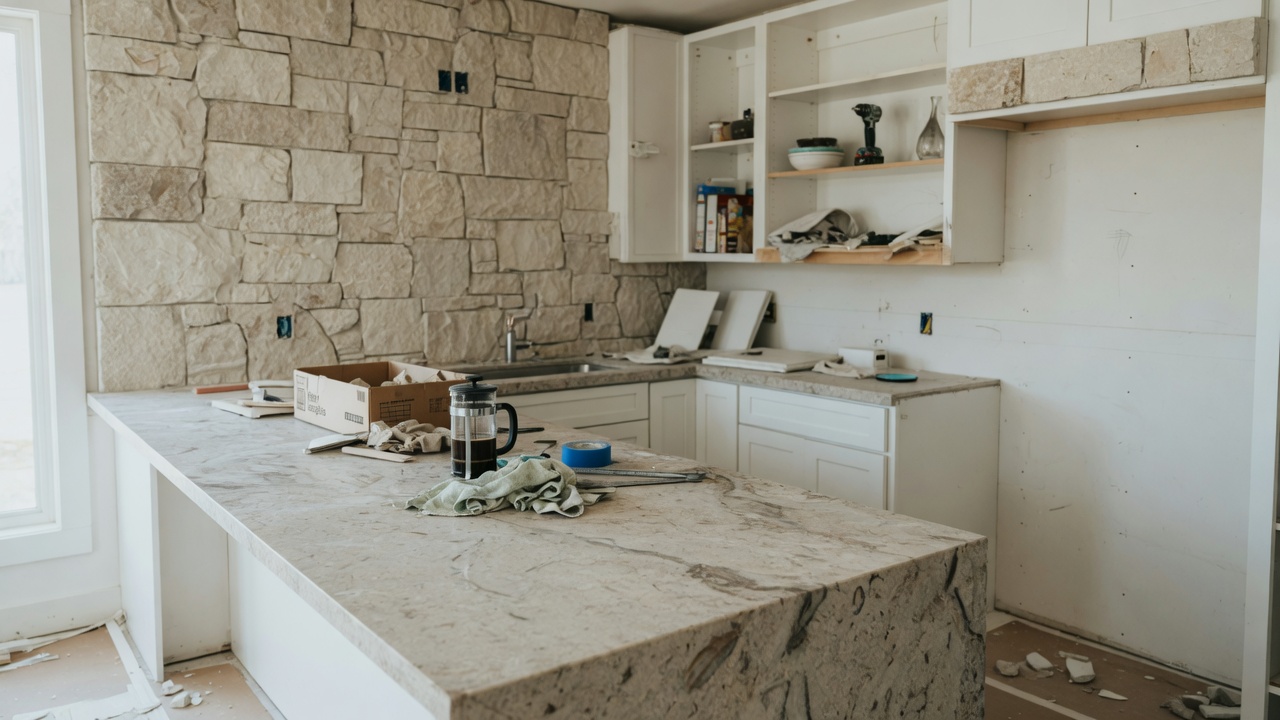
What's the actual difference?
A 4-inch splash is a short strip of stone, usually cut from the same slab as your countertop, that stands up along the wall behind it. It covers the gap where counter meets wall and stops there. A full-height backsplash runs the stone all the way up to your upper cabinets, or higher behind a range, covering the whole wall instead of tile or paint.
Which one costs more?
Full height costs more, sometimes a good bit more, because you're buying and fabricating a lot more square footage of slab. A 4-inch splash might use scrap material left over from your countertop cuts, which keeps the price low. Full height usually means an extra slab or a large chunk of one, plus more time on the fabrication table for cutouts around outlets and windows. If budget is tight, the 4-inch option gets you a finished, protected edge without stretching the job.
Which one looks better?
That's really a style call, not a right-or-wrong one. Full height gives you a clean, monolithic wall of stone, especially nice if you picked a slab with strong veining you want to show off as a feature. It reads more custom and more current. A 4-inch splash is simpler and lets your paint color or tile do more of the visual work above the counter. Some kitchens look great with a 4-inch splash and a tile backsplash above it, so you get stone where it matters most and a pop of color or pattern higher up.
Which one is easier to keep clean?
Full height wins here, plainly. One continuous surface of sealed stone wipes down in one pass with no grout lines to scrub and no seam between stone and tile catching grease. Behind a range especially, a full-height splash handles splatter and steam better over time than tile grout does. A 4-inch splash still protects the wall right behind your counter, but anything above it, paint or tile, needs its own care and eventually its own touch-up.
Does either one need special maintenance?
Both get treated the same as your countertop, since it's the same stone. If it's granite, quartzite, marble, or soapstone, it's porous to some degree and should be sealed, then resealed periodically, usually about once a year for most kitchens. Quartz backsplash material is non-porous and skips the sealing step entirely. One thing to flag on full height near the cooktop: quartz is engineered with resin, so a hot pan or a stray flame flare can scorch or discolor it, and natural stone like granite or quartzite handles brief heat better but still deserves a hood and a little care. Marble will etch from acid splatter (tomato sauce, wine) whether it's on your counter or climbing your wall, so wipe it down after cooking rather than letting things sit.
Which one fits my kitchen?
If you're working with a tight budget or you love your current paint or tile above the counter, a 4-inch splash is the honest, practical choice. If you cook a lot, hate scrubbing grout, or picked a slab with movement you want to show off, full height earns its keep. A lot of our customers land in the middle: full height behind the range where mess happens most, and a shorter splash or open wall everywhere else. There's no rule that says it has to be all one or the other in a single kitchen.
If you're on the fence, bring your cabinet color and a photo of your kitchen by 2015 Charleston Hwy in Cayce. Seeing a slab standing up against your actual space tells you more than any of this can.