
Buying guides
Is dolomite worth it for a kitchen?
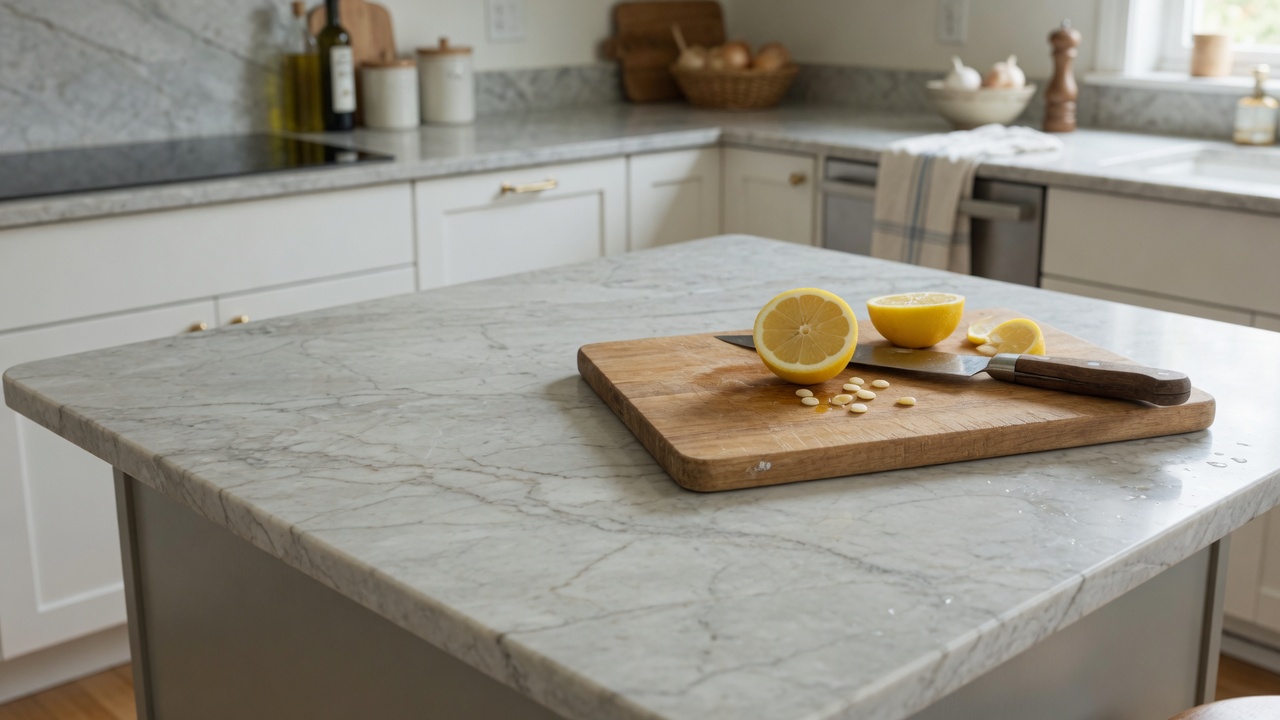
Dolomite gets pitched as the answer for people who want marble's look without marble's fuss. That's half true. It's a real improvement over marble in some ways, but it's still a calcite-based stone underneath, and that matters more than most sales pitches let on. Here's how it actually breaks down.
The look
Dolomite usually has that soft white or gray background with fine, wandering veins, close enough to marble that most people can't tell the difference standing in a showroom. If you want the marble aesthetic in your kitchen without hunting through pure marble slabs, dolomite gives you a strong option. Some slabs sold as dolomite lean more dramatic with heavier movement, others stay quiet and subtle. Worth seeing a few slabs in person before you commit, since the range is wide.
The durability question, honestly
Dolomite is harder than marble on the Mohs scale, and that's the whole reason it exists as a category people ask for by name. It resists scratching better than marble does, which is a real point in its favor for a busy kitchen. But harder than marble doesn't mean granite-tough. It's still a calcite-adjacent stone, and depending on the specific slab, it can behave closer to marble than to granite or quartzite. That's not a knock on dolomite, it's just the honest range you're buying into.
It still etches
Here's the part that trips people up. Dolomite contains calcite, so it can etch from acids like lemon juice, vinegar, and tomato sauce, the same way marble does. Some dolomite slabs resist etching better than straight marble, but none of them are immune to it. If you're chasing dolomite specifically because you heard it