
Care and maintenance
Sealing dolomite: when, how often, and the water test
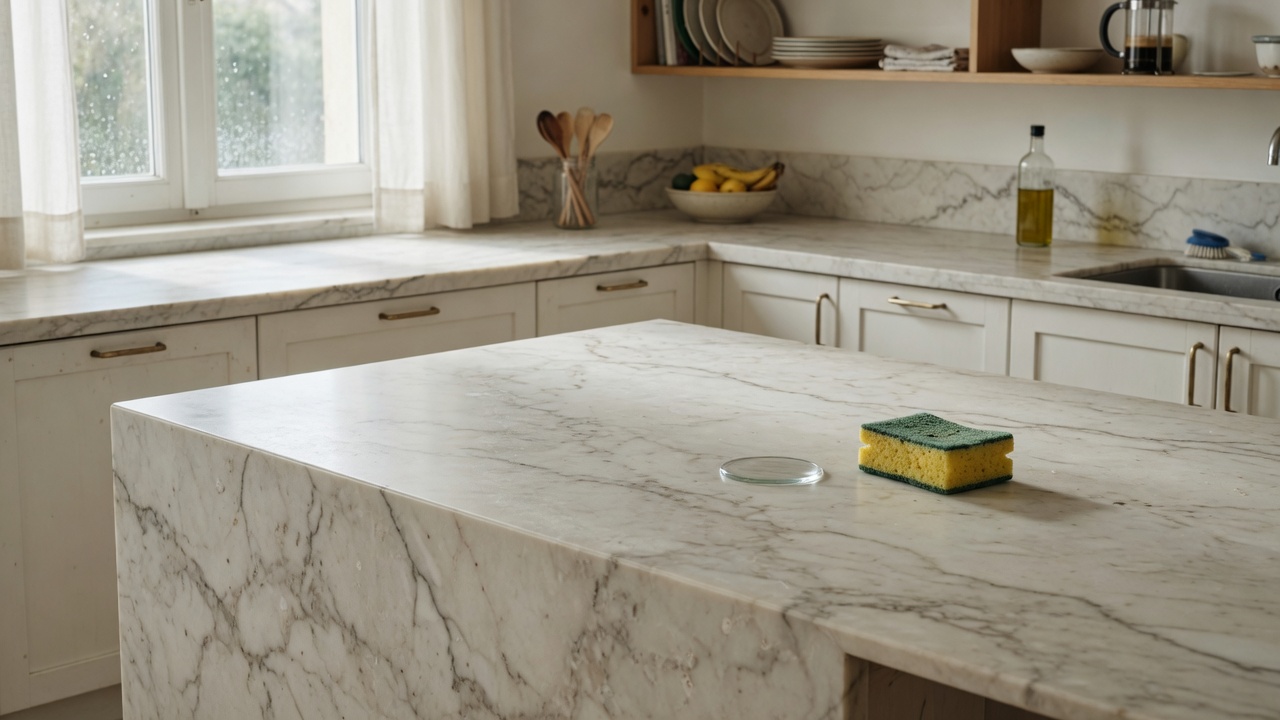
Does dolomite need sealing?
Yes. Dolomite is a natural stone, and like granite, marble, and quartzite, it's porous to some degree. That means it can absorb liquids if it isn't sealed. We seal every dolomite countertop we install with a good sealer, applied by installers we train to do it right. But sealers wear down over time, and you'll need to reseal periodically to keep that protection going.
If you're working with quartz instead, none of this applies. Quartz is engineered with resin and is non-porous, so it doesn't need sealing at all. But dolomite is a real stone from the ground, and it plays by natural stone rules.
The water test
The simplest way to check if your dolomite needs resealing is the water-bead test. It takes two minutes:
- Pick a spot near the sink or stove, somewhere that sees regular use.
- Pour a small puddle of water, about the size of a quarter.
- Let it sit for 5 to 10 minutes.
- Check what happened.
If the water beads up and sits on top, your seal is still doing its job. If it soaks in and darkens the stone, or if the spot still looks wet and dark after you wipe it, that's a sign the sealer has worn thin and it's time to reseal.
Run this test in two or three spots, not just one. Areas around the sink and cooktop get more wear and can need resealing sooner than the rest of the countertop.
A realistic reseal schedule
Most kitchens do fine with resealing dolomite about once a year. That's a general guideline, not a hard rule. A few things push that timeline:
- Heavy cooking and prep work near the sealed spot wears it down faster.
- Honed or matte finishes tend to be a bit more porous than polished ones, so they may need attention more often.
- Bathroom vanities usually go longer between reseals since they see less daily abuse than a kitchen island.
Don't just go by the calendar though. The water test is the real answer. If it's beading after 14 months, you don't need to reseal yet. If it's soaking in after 8 months, don't wait for the one-year mark.
What sealing does and doesn't do
Sealing helps dolomite resist stains and buys you time to wipe up a spill before it sets in. It won't stop every stain if something sits overnight, so still wipe up wine, oil, and citrus when they happen. And sealing doesn't stop etching. Dolomite has some calcite content, so it can etch (dull marks) from acids like lemon juice or vinegar. That's a chemical reaction on the surface, and no sealer prevents it. Sealing and etching are two different things, and it's worth knowing the difference before you're staring at a dull ring wondering what went wrong.
If you want to see how a polished versus honed dolomite slab handles water and light before you commit, come look at what we've got at 2015 Charleston Hwy in Cayce. We're happy to walk through the maintenance side with you at the slab, not just after it's installed.